If you want to know more information (such as product/process price, etc.), please contact us 24-hour telephone
Global copper markets remain tight in 2026 as demand from AI infrastructure, electric vehicles, renewable energy, and grid upgrades continues to outpace new mine supply. According to the International Copper Study Group (ICSG), global mined copper production is expected to grow by only 1.6% this year, while copper prices have remained significantly higher than in 2025.
For mining investors, the challenge is no longer finding copper resources—it is bringing projects into production quickly enough to capture favorable market conditions. Delays in engineering, procurement, or construction can postpone revenue and reduce the opportunity to benefit from today's strong copper market.
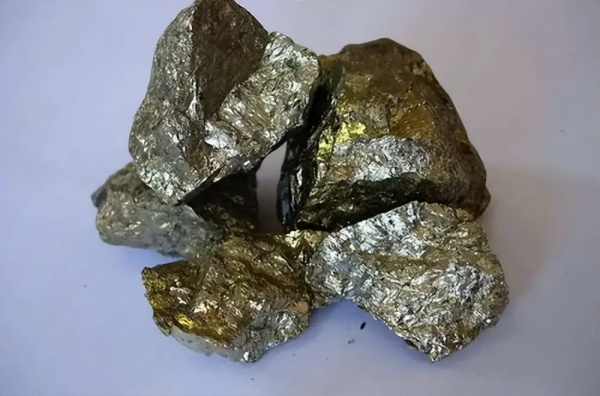
Many mine owners hold high-quality copper resources but struggle to convert them into commercial copper concentrate efficiently.
One major reason is the lengthy development cycle. A new copper mine typically requires more than a decade to progress from exploration to commercial production. When engineering design, equipment procurement, and construction are managed by different contractors, communication gaps, repeated design revisions, and scheduling conflicts can significantly extend project timelines.
The technical complexity of modern copper deposits creates another challenge. Many projects involve polymetallic ores with complex mineralogy. Without comprehensive metallurgical testing during the early stages, projects often experience lower-than-expected recovery rates, delayed commissioning, unstable plant performance, and higher-than-planned CAPEX and OPEX.
These challenges have made project delivery—not simply resource ownership—the key factor in determining whether a copper project can capitalize on today's market opportunities.
As copper prices remain strong, shortening the time from resource to production has become a competitive advantage.
An integrated Engineering, Procurement and Construction (EPC) model enables mine owners to manage the entire project through a single contractor responsible for engineering, equipment procurement, construction, commissioning, and project coordination. Instead of coordinating multiple suppliers, owners benefit from unified project management, fewer interface risks, and more efficient decision-making throughout the project lifecycle.
For large-scale copper projects, an EPC approach can significantly reduce coordination delays while improving construction efficiency and accelerating commissioning, allowing production to begin earlier.
Not every EPC contractor offers the same level of capability. Some suppliers focus only on equipment manufacturing, while others provide construction services without sufficient engineering expertise. A qualified copper mine EPC contractor should possess integrated capabilities across the entire mining value chain.
Comprehensive Mining Engineering
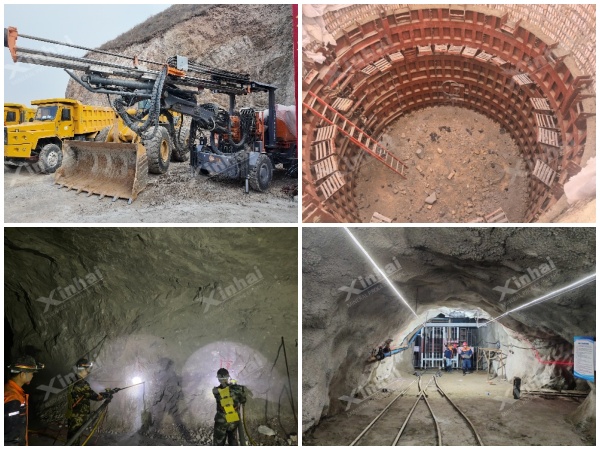
A reliable contractor should be able to independently deliver:
Mine feasibility studies
Open-pit and underground mine design
Slope stabilization engineering
Tailings storage facility (TSF) planning
Mine construction supported by appropriate engineering and blasting qualifications
Without strong engineering capabilities during the early planning stage, projects are more likely to encounter inefficient mining methods, safety risks, permitting delays, and extended construction schedules.
Advanced Mineral Processing Expertise
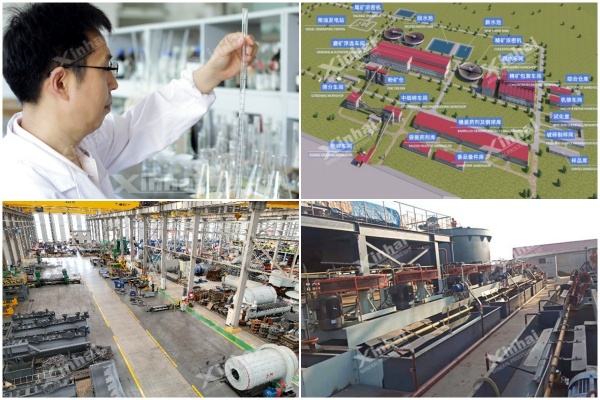
Mineral processing ultimately determines project profitability. A complete EPC provider should offer four core capabilities.
Independent metallurgical testing. Professional laboratories should conduct beneficiation tests for complex polymetallic copper ores to determine the most suitable flotation, gravity separation, or hydrometallurgical process.
Customized process engineering. Process flowsheets should be optimized according to ore mineralogy, liberation characteristics, and impurity composition, covering crushing, grinding, flotation, and concentrate production.
In-house equipment manufacturing. Manufacturing complete mineral processing equipment internally reduces dependence on third-party suppliers and shortens equipment delivery schedules.
Commissioning and operational support. During the early operating stage, rapid technical support helps stabilize plant performance, resolve process fluctuations, and maintain consistent concentrate production.
Intelligent Digital Mining Systems
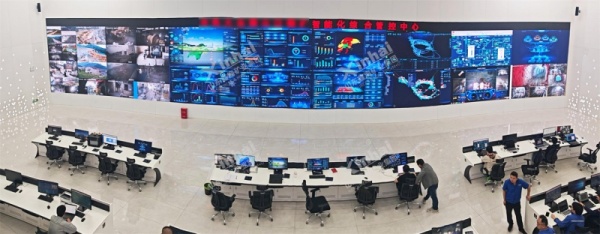
Digital technologies have become an increasingly important part of modern copper projects.
Leading EPC contractors now integrate intelligent mine management systems based on 5G connectivity, Industrial Internet of Things (IIoT), digital twin technology, and AI-powered optimization. These platforms enable three-dimensional geological resource modeling, real-time PLC control of grinding and flotation circuits, AI-assisted production monitoring, and intelligent tailings safety management.
Beyond improving copper recovery, digital systems reduce labor requirements, enhance operational stability, and shorten investment payback periods.
Few EPC contractors combine mining engineering, mineral processing, equipment manufacturing, and intelligent mining technologies within a single organization. Xinhai Mining provides integrated capabilities across the entire copper mine development process, helping clients reduce project interfaces and accelerate delivery.
For mining projects, Xinhai holds First-Class Qualification for General Contracting of Mine Engineering Construction together with licensed blasting qualifications, enabling the company to deliver feasibility studies, mine design, slope protection, and TSF planning in-house.
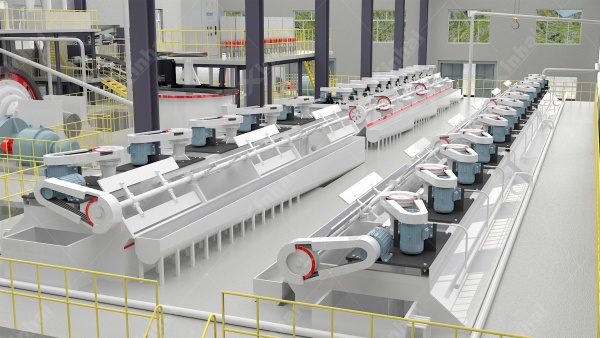
In mineral processing, Xinhai offers metallurgical testing, process design, in-house equipment manufacturing, commissioning, and operational support. The company also integrates intelligent mining technologies, including digital geological modeling, process automation, and real-time production monitoring, to improve plant efficiency and operational stability.
From ore testing and engineering to construction, commissioning, and long-term operation, Xinhai manages every stage under a unified EPC framework, helping clients bring copper projects into production more efficiently.
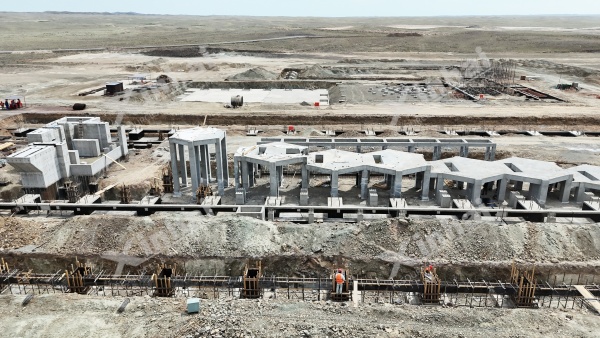
Kazakhstan 1.5 Mt/y Copper Mine EPC Project
Challenge: The project is located in a high-latitude region where the effective construction season lasts only two months each year. Remote logistics and limited local infrastructure added further complexity to project execution.
Solution: Xinhai delivered an integrated EPC solution covering mining support, complete engineering for a 5,000 tpd copper processing plant, equipment manufacturing, civil construction, installation, commissioning, and intelligent control systems. All engineering, procurement, construction, and commissioning activities were managed under a single project team.
Result: The integrated delivery model shortened the overall construction schedule by approximately 30% compared with the industry average, allowing stable copper concentrate production ahead of schedule and enabling the client to benefit from favorable copper market conditions.
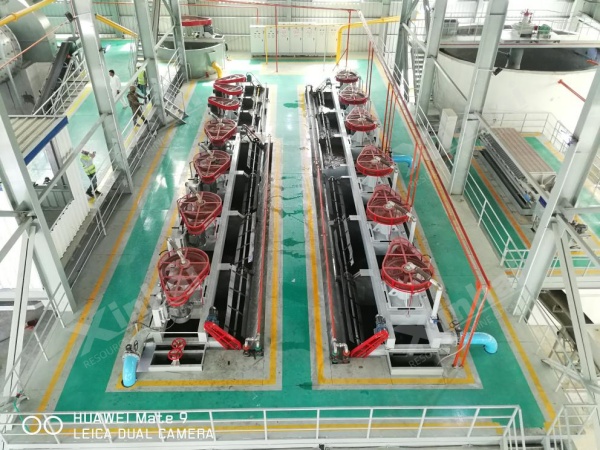
Pakistan 1,500 tpd Copper Processing Plant Project
Challenge: The ore contained a significant amount of oxidized associated minerals, making it difficult for conventional flotation to achieve the required concentrate grade.
Solution: Xinhai carried out multiple rounds of laboratory beneficiation testing to optimize reagent schemes and grinding fineness before developing a customized compact intelligent processing solution. Complete equipment was manufactured in China and delivered in batches to the project site.
Result: From engineering design to commissioning with ore, the entire project was completed in just six months, demonstrating that even medium-sized copper projects can accelerate resource monetization through an integrated EPC approach.
1. What are the advantages of an EPC contract for a copper mining project?
An EPC contract combines engineering, procurement, construction, and commissioning under one contractor. This reduces coordination risks between multiple suppliers, improves schedule control, and helps copper projects reach production faster.
2. How long does it take to build a copper processing plant?
The timeline depends on plant capacity, ore characteristics, permitting, and site conditions. Smaller plants may be completed within months, while large greenfield copper projects typically require several years from engineering to commercial production.
Look for a contractor with proven experience in mine engineering, metallurgical testing, process design, equipment manufacturing, construction, and commissioning. Integrated capabilities across the entire mining value chain usually provide better schedule control and lower project execution risk.
Global copper supply is expected to remain constrained for the foreseeable future, but the market opportunity will not remain open indefinitely. For mining companies, project delivery speed has become just as important as resource quality.
An integrated EPC approach minimizes these risks by coordinating every stage of project execution under a single management system.
With comprehensive mining engineering, advanced mineral processing technology, intelligent digital solutions, and proven international project experience, Xinhai Mining helps clients shorten the journey from mineral resource to commercial copper concentrate while delivering projects on schedule and supporting stable long-term production.
 +86 13811510145