If you want to know more information (such as product/process price, etc.), please contact us 24-hour telephone
In my 20-plus years working on copper projects across different continents, I’ve seen the industry change in ways that few predicted. What used to be straightforward flowsheets have become sophisticated operations, and the humble processing plant now sits at the heart of project success. Copper processing plants aren’t just nice-to-have anymore—they’re mission-critical.
The world is electrifying at an incredible pace. Electric vehicles need roughly three times more copper than traditional cars. Grid upgrades to handle renewable energy and the massive power demands of AI data centers are pulling even more. Solar farms, wind turbines, battery storage, and expanded transmission lines all rely heavily on copper’s excellent conductivity.
This isn’t a short-term spike. Analysts project global copper demand growing substantially in the coming decades, driven by the energy transition and digital infrastructure. Mines that can reliably deliver clean, high-recovery concentrates are suddenly in the spotlight. For project owners, a well-designed processing plant is no longer just about meeting production targets—it’s about turning marginal deposits into profitable, long-life operations while meeting stricter environmental standards.
From an engineer’s perspective, the challenge is clear when you look at the ore itself. Many new deposits feature lower grades, more complex mineralogy, higher levels of impurities, and ores that are simply harder to liberate and separate. What worked ten or fifteen years ago often falls short today. Grinding energy consumption climbs, reagent use increases, and tailings volumes grow. Operating costs rise quickly if the flowsheet isn’t tailored to the specific rock. That’s why Copper Processing Plant Design has moved from a supporting role to center stage. A thoughtful design can mean the difference between 75% recovery and 90%+, or between a plant that runs smoothly for decades and one that fights scaling, sanding, or reagent issues every shift.
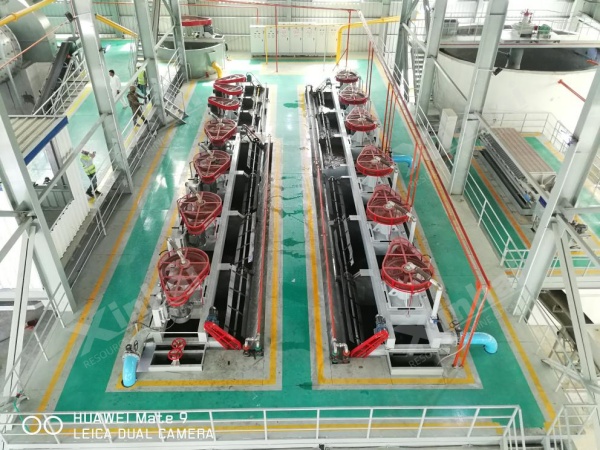
I can’t emphasize this enough: every strong project I’ve been part of began in the laboratory. At Xinhai, we always start with a systematic program that includes detailed mineralogical studies to understand mineral associations and liberation characteristics. Grindability tests help us size the comminution circuit properly so we’re not wasting energy or creating excessive fines. Flotation tests—both open and locked-cycle—allow us to optimize collectors, frothers, pH, and depressants. Collector optimization and closed-cycle tests then confirm that the flowsheet performs well under simulated plant conditions. These aren’t checkbox exercises. They reveal the little behaviors that can make or break a plant: whether a certain clay mineral will slime and coat valuable particles, or how pyrite behaves under varying oxidation conditions. Skipping or rushing this stage is one of the most expensive mistakes I’ve seen in the field.
Modern design goes far beyond choosing big-name flotation cells or mills. It must integrate the unique ore characteristics with practical realities on site. We pay close attention to water balance—especially important in water-scarce regions. Tailings management has become a core part of the flowsheet, not an afterthought. Automation and control systems now allow operators to maintain stable performance even when ore feed varies. And smart designers always leave room for future expansion or retrofits as the mine life evolves. A good design feels seamless on the ground: logical layout that minimizes pumping distances, safe and maintainable equipment access, and process controls that actually help operators rather than overwhelm them.
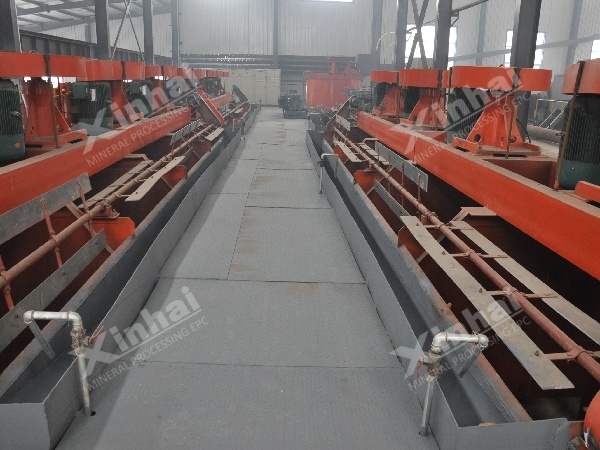
One of the biggest advantages I’ve seen is delivering projects under a true EPC model—Engineering, Procurement, Construction, plus commissioning and support. A genuine EPC isn’t just supplying equipment. It means the same team that did the testwork and detailed engineering stays involved through procurement, civil works, steel structures, equipment installation, piping, electrical, automation, and the dewatering plant. Everything moves under one coordinated schedule. Take our 1.5 million t/a copper flotation project in Kazakhstan. Coordinating civil construction, structural steel, mechanical installation, and all the ancillary systems under a single plan dramatically reduced interface risks and kept the project on track. When the same experienced group handles everything, surprises during commissioning become much smaller and more manageable.
After working on many different copper beneficiation projects, one lesson stands out: the biggest risks rarely come from the flotation cells or grinding mills themselves. They usually start much earlier—during ore characterization, process selection, and early engineering decisions. A small misunderstanding of mineral texture in the lab can lead to months of poor performance later. Choosing the wrong scale-up factor or underestimating water chemistry effects can create headaches that no amount of extra equipment can easily fix. The projects that run best are the ones where the team treated the early data with respect and built everything around it.
What is included in a Copper Processing Plant EPC project?
A complete EPC typically covers testwork and flowsheet development, detailed engineering (process, civil, structural, mechanical, electrical, instrumentation), procurement and quality control, construction and installation, commissioning, operator training, and ramp-up support. Some models like EPC+M+O also include ongoing operation and maintenance services.
What factors affect copper recovery?
Key factors include liberation size and degree, mineral associations (e.g., locked grains with pyrite or gangue), ore texture and hardness, presence of clays or soluble salts, water quality, reagent selection and dosage, pH control, and operating stability of the plant. Good characterization and a tailored flowsheet address most of these.
Copper processing plants of the future will be more than just concentrators. They will be centers of resource efficiency, advanced water management, digital operation, and sustainable production. Real-time monitoring, predictive maintenance, and optimized reagent systems will help squeeze more value from every tonne of ore while minimizing environmental footprint.
If you’re planning a new copper project, I strongly recommend completing systematic ore amenability testing and engineering assessments before locking in the process. Teams like Xinhai that offer integrated Copper Processing Plant Design, Copper Processing Plant EPC, and Copper Processing Plant Construction services can help translate laboratory results smoothly into reliable industrial production—avoiding the costly rework that happens when pieces are put together separately. We’d welcome the chance to review your project data and discuss a tailored approach that fits your ore and site conditions. Feel free to reach out to our engineering team. Many of the best projects I’ve worked on started with exactly that kind of open conversation.
 +86 13811510145