If you want to know more information (such as product/process price, etc.), please contact us 24-hour telephone
Global interest in copper is accelerating once again. Throughout history, every major commodity cycle has been underpinned by the rise of a transformative industry. A decade ago, copper demand was largely fueled by the rapid expansion of electric vehicles, solar power, and wind energy. Today, a new driver has emerged: artificial intelligence.
At first glance, AI appears to be a software-driven technology. In reality, every AI model depends on an extensive physical infrastructure of data centers, high-performance computing clusters, power distribution systems, cooling facilities, substations, and transmission networks. All of these require significant quantities of copper.
As AI adoption continues to expand worldwide, it is creating a new, long-term source of structural copper demand that extends well beyond the traditional energy transition.

Unlike previous commodity cycles driven by a single industry, today's copper market is supported by four powerful demand drivers simultaneously.
1. AI Data Center Expansion
The rapid construction of AI data centers is generating sustained demand for electrical infrastructure. Servers, transformers, switchgear, cooling systems, and power distribution equipment all rely heavily on copper, making data center development an increasingly important source of long-term consumption.
2. Grid Modernization and Expansion
To support growing electricity demand from AI computing and renewable energy, governments and utilities worldwide are investing heavily in grid upgrades. New substations, long-distance transmission lines, and modern distribution networks require substantial volumes of copper, reinforcing demand across the power sector.
3. Renewable Energy Deployment
Global investment in wind, solar, and energy storage projects continues to increase. Copper is an essential material throughout renewable energy systems, from power generation and transmission to energy storage and grid integration, ensuring strong and sustained demand.
4. Continued Growth of Electric Vehicles
Although EV market growth has moderated from its earlier rapid pace, electric vehicles remain significantly more copper-intensive than conventional vehicles. Motors, battery systems, charging infrastructure, and power electronics continue to support a robust baseline of copper consumption.
With AI joining renewable energy and electrification as a major demand driver, the global copper market is entering a period of sustained structural tightness. This is one of the primary reasons why mining companies and institutional investors are increasing their exposure to copper assets.
Growing downstream demand is rapidly transmitting upstream throughout the mining value chain. Existing mining capacity and processing infrastructure are increasingly unable to meet projected future consumption.
Over the coming years, the industry is expected to accelerate investment in:
Development of new copper mines
Expansion of existing concentrators
Modernization of mineral processing plants
Process optimization to improve metal recovery
Capacity expansion for large-scale operations
The industry's development path is becoming increasingly clear:
Growing copper demand → widening supply gap → new mine development → new processing plant construction → concentrator expansion and modernization → improved recovery from lower-grade and more complex ores.
For mining investors, future competitiveness will depend not only on securing quality mineral resources but also on operating efficient processing plants capable of delivering stable production and high recovery rates.
After decades of mining, many of the world's high-grade, easily processed copper deposits have already been developed. Future growth increasingly depends on lower-grade deposits and complex polymetallic ores that present greater metallurgical challenges.
These resources often require advanced beneficiation technologies to achieve commercially viable recoveries. Conventional processing methods are frequently insufficient to maximize project economics.
As a result, competitive advantage is shifting from resource ownership alone to technical capability.
Before committing to project development, investors should complete comprehensive metallurgical testing to understand ore characteristics, optimize the process flowsheet, and identify the most efficient recovery strategy. Well-designed beneficiation processes can significantly improve concentrate quality, increase metal recovery, and enhance long-term project profitability.
A new copper investment cycle is underway, but successful projects will depend on disciplined planning rather than rapid expansion alone.
Before developing a new copper project or constructing a processing plant, investors should prioritize several key steps:
Conduct Comprehensive Metallurgical Testing
Understand ore grade, mineralogy, processing characteristics, and achievable recovery rates before making major capital commitments.
Develop a Customized Process Flowsheet
Design a beneficiation process tailored to the specific characteristics of the orebody, particularly for low-grade or complex polymetallic deposits, to maximize recovery and economic returns.
Complete a Technical and Financial Evaluation
Assess CAPEX, OPEX, processing performance, project economics, and expected payback period using reliable engineering data and realistic market assumptions.
Select an Experienced EPC Partner
Working with an experienced EPC contractor helps streamline engineering, procurement, construction, equipment integration, commissioning, and project delivery while reducing schedule risks and lifecycle costs.
Build a Reliable and Sustainable Processing Facility
Standardized engineering, quality construction, and efficient plant operation provide the foundation for long-term production stability and sustainable profitability.
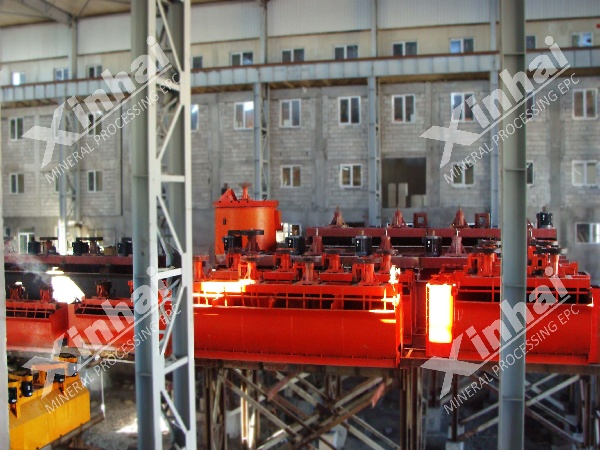
With decades of experience in international mining EPC projects, Xinhai Mining has successfully delivered large-scale copper processing plants across major copper-producing regions.
In China, the company has completed projects in key mining provinces including Yunnan, Jiangxi, and Inner Mongolia. Internationally, Xinhai has delivered copper concentrator projects in Kazakhstan, the Democratic Republic of the Congo, Peru, the Philippines, and other important copper-producing countries.
Xinhai provides integrated, end-to-end project services covering:
Metallurgical and beneficiation testing
Process design and flowsheet optimization
Project feasibility and investment evaluation
Equipment manufacturing and system integration
EPC project delivery
Site construction, installation, commissioning, and operational support
This comprehensive approach helps mining companies reduce project risk, improve plant performance, and accelerate the path from resource discovery to commercial production.
The global copper industry is entering a new growth phase driven by AI infrastructure, electrification, renewable energy, and power grid expansion. For investors planning to develop new copper assets or upgrade existing processing facilities, technical preparation will be a decisive factor in project success.
Whether you are evaluating a new copper deposit, planning a concentrator expansion, or seeking to improve recovery and reduce operating costs, Xinhai Mining provides integrated engineering and EPC solutions to support every stage of project development—from metallurgical testing and process design to plant construction and commissioning.
With proven technical expertise and successful project experience across major copper-producing regions, Xinhai is committed to helping investors transform copper resources into efficient, profitable, and sustainable mining operations.
 +86 13811510145