If you want to know more information (such as product/process price, etc.), please contact us 24-hour telephone
The Kazakhstan copper mine project is designed to process 1.5 million tonnes of sulfide copper ore annually. Many mining projects separate engineering design, civil construction and equipment procurement among different contractors, often creating coordination challenges, schedule delays and cost overruns.
To streamline project execution, the client adopted an integrated EPC delivery model covering engineering, procurement and construction under a single contract framework.
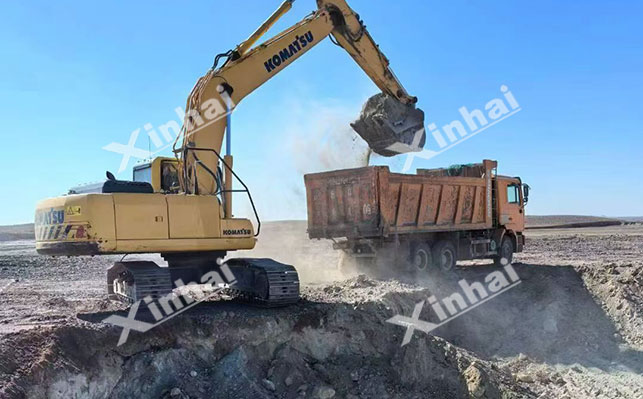
The project was developed with the following objectives:
Process 1.5 Mt/y of sulfide copper ore with an average feed grade of 0.86% Cu;
Establish a stable and efficient mineral processing operation;
Reduce coordination risks associated with multiple contractors;
Maintain project schedule and construction quality throughout execution.
Several factors influenced project planning and execution:
Coordination difficulties commonly associated with multiple contractors;
Seasonal construction interruptions caused by Kazakhstan's harsh winter climate;
Remote project location requiring reliable material supply and logistics management;
Tight construction schedule for a large-scale processing plant.
The client awarded the project under a full EPC contract covering metallurgical testing, engineering design, equipment manufacturing, civil construction, installation and commissioning.
The concentrator adopts a proven sulfide copper processing flowsheet:
Three-stage closed-circuit crushing → grinding and classification → 1 roughing, 2 scavenging and 3 cleaning flotation → thickening and filter-press dewatering.
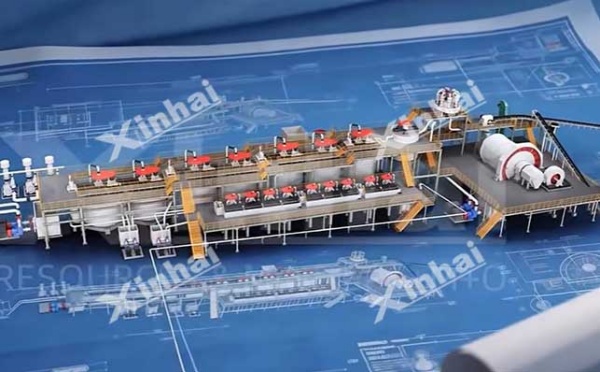
The plant was designed using an integrated 3D engineering platform to identify potential layout and piping conflicts before construction.
The project is designed to produce copper concentrate grading approximately 22%, with an expected overall copper recovery of around 90%.
Large-capacity equipment, including MQY5074 ball mills and 100 m³ pneumatic flotation cells, was selected to support efficient large-scale operation.
The plant is also equipped with a centralized automation system featuring automatic reagent dosing and real-time process monitoring.
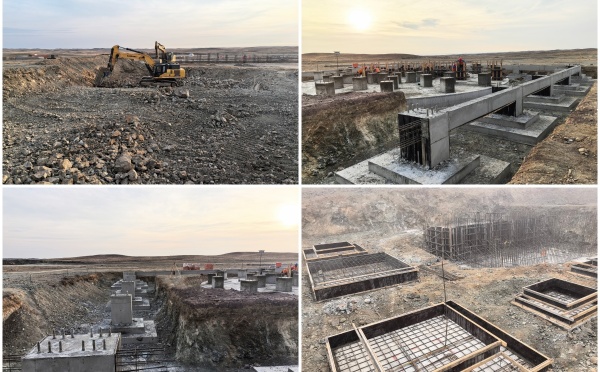
Construction commenced in October 2025. Due to seasonal weather conditions, site activities were temporarily suspended in December 2025 and resumed in April 2026.
To support construction efficiency, an on-site aggregate production line and concrete batching plant were established to provide locally sourced construction materials and reduce logistics dependence.
Thermally insulated integrated workshop structures were adopted to accommodate Kazakhstan's winter operating conditions.
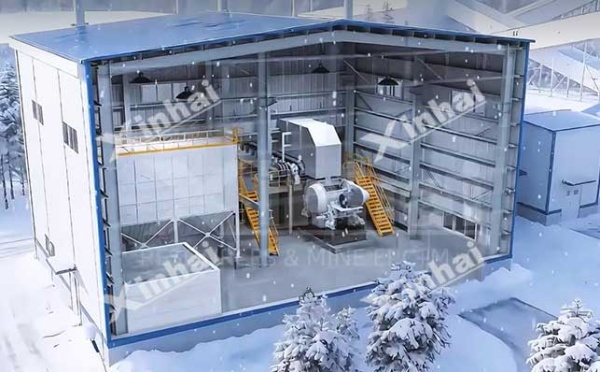
Project execution is supported by:
Advanced engineering optimization and schedule planning;
Regular project coordination meetings for issue resolution;
Dedicated procurement and translation support for overseas operations;
Reuse of suitable construction materials to improve resource efficiency.
A dedicated project team of 70 personnel is deployed on site, including project managers, civil engineers and multi-skilled construction workers. Company-owned construction equipment is used throughout the project to support schedule control and construction efficiency.
Civil works are scheduled for completion by late September 2026, with commissioning and project handover planned before year-end.
Foundations for key equipment, including ball mills, flotation cells and thickeners, have been completed, while major workshop structures remain under construction.
The project combines integrated EPC delivery, large-scale processing equipment, automation technology and cold-climate construction measures to support efficient project execution and long-term plant operation.
For mining companies planning copper processing projects in Kazakhstan or other international markets, integrated EPC delivery can help simplify project management, improve coordination efficiency and reduce execution risks throughout the project lifecycle.
 +86 13811510145