If you want to know more information (such as product/process price, etc.), please contact us 24-hour telephone
Rising copper, lead, and zinc prices are creating strong incentives for producers to convert mineral resources into higher returns. Many early-generation Cu-Pb-Zn concentrators, however, still operate with outdated flowsheets that deliver sub-standard concentrate grades and allow significant losses of copper, lead, zinc, and associated gold and silver to tailings. Generic flotation circuits applied without site-specific testing rarely solve these problems. A recent brownfield upgrade executed by Xinhai Mining Technology & Equipment at a copper-lead-zinc operation in Inner Mongolia demonstrates how a test-work-driven preferential flotation circuit can unlock value from complex polymetallic ore while maximising reuse of existing infrastructure.
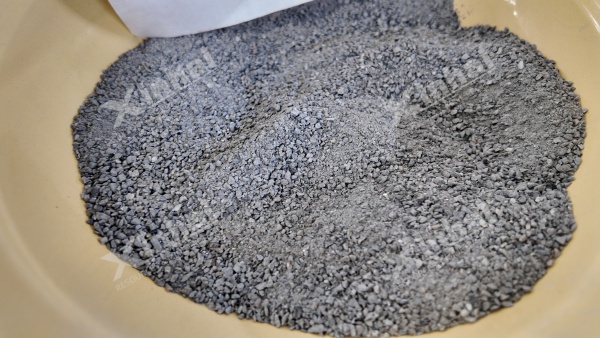
The original plant processed only 300 t/d. The upgrade targets an annual throughput of 300 000 t. Head grades of the run-of-mine ore are 0.96 % Cu, 0.43 % Pb, 6.47 % Zn, 0.36 g/t Au and 20.21 g/t Ag; the dominant gangue mineral is quartz. Three principal metallurgical difficulties were identified:
Complex intergrowth of copper, lead and zinc minerals that makes clean Cu–Pb separation especially challenging.
A conventional copper–lead bulk flotation followed by zinc flotation from the tailings could not produce a marketable lead concentrate; lead recovery remained unacceptably low.
The ore is soft and prone to over-grinding; uncontrolled generation of slimes rapidly impairs flotation selectivity.
Selecting a flowsheet capable of recovering copper, lead, zinc and the associated precious metals at commercially acceptable grades therefore became the central technical objective.
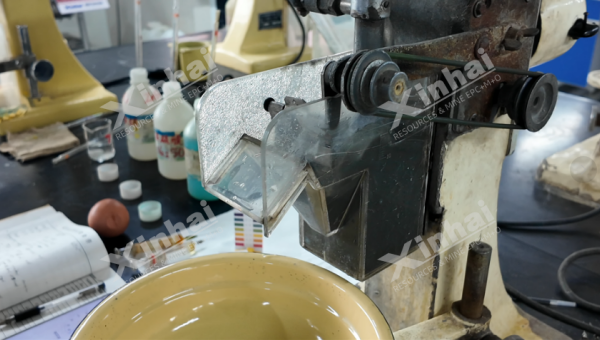
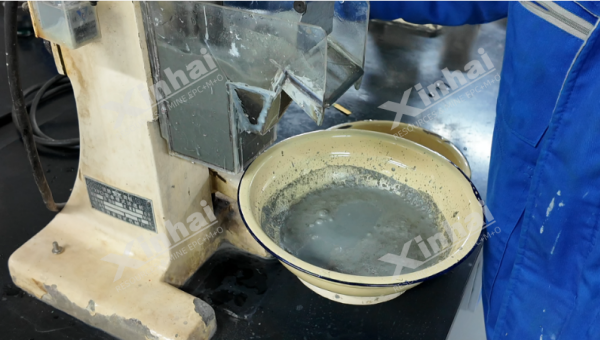
Xinhai’s mineral processing laboratory received 274 kg of representative sample and systematically evaluated three options: copper–lead bulk flotation + zinc flotation; copper–lead bulk flotation with subsequent separation + zinc flotation; and sequential preferential flotation of copper, lead and zinc. In the bulk-then-separate route, lead recovery into a saleable concentrate reached only 20.27 %, with the majority of lead reporting to the copper concentrate. Preferential flotation delivered clean separation of all three concentrates and was therefore adopted as the process basis. Locked-cycle tests established the following key parameters:
Primary grind: 73 % passing 200 mesh
Copper circuit: one roughing, two scavenging, two cleaning stages
Lead circuit: two roughing, two cleaning stages
Zinc circuit: one roughing, two scavenging, three cleaning stages
Closed-circuit results were:
Copper concentrate: 3.41 % mass pull, 25.49 % Cu, 90.48 % recovery
Lead concentrate: 0.56 % mass pull, 46.43 % Pb, 60.00 % recovery
Zinc concentrate: 12.23 % mass pull, 47.49 % Zn, 89.07 % recovery
Gold and silver reported preferentially into the respective concentrates, providing additional revenue.
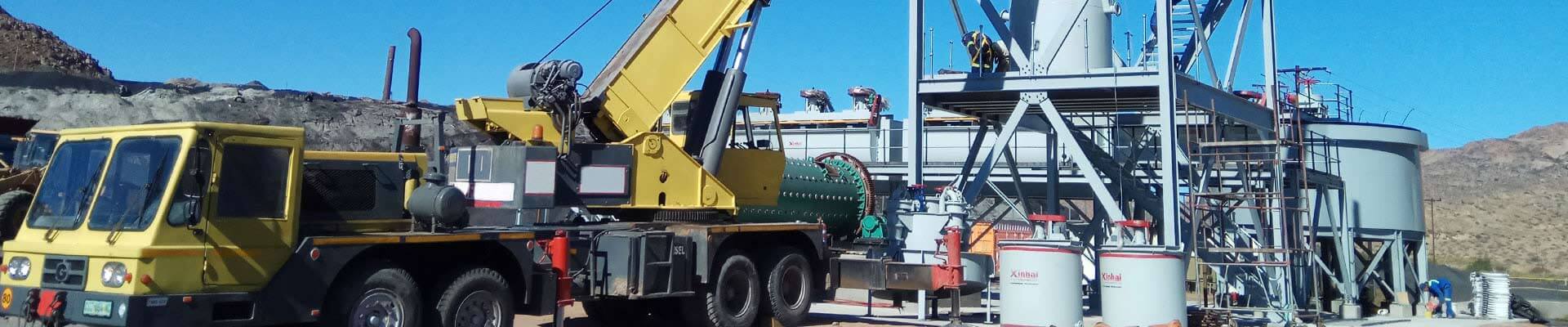
Because the project is an expansion of an operating plant rather than a greenfield development, existing buildings, electrical rooms and other infrastructure had to be retained. Xinhai prepared the preliminary design and detailed construction drawings, with work executed in carefully sequenced phases. Dewatering and filtration equipment was supplied by a third-party vendor selected by the owner; Xinhai’s design team adapted all interfaces accordingly and supplied the complete suite of flotation, grinding and ancillary process equipment. Installation is being performed by a separate contractor. Construction sequencing is constrained by seasonal freeze–thaw conditions typical of northern China, and the project remains on the agreed schedule.
Complex polymetallic ores demand rigorous comparative test work before any flowsheet is finalised. Only systematic evaluation of bulk versus preferential routes identified the circuit that meets commercial concentrate specifications.
Brownfield projects succeed when existing civil and structural assets are fully utilised and when interface data for multi-vendor equipment packages are rigorously managed.
Associated gold and silver should be quantified and incorporated into the process design from the outset so that overall project economics capture the full metal value.
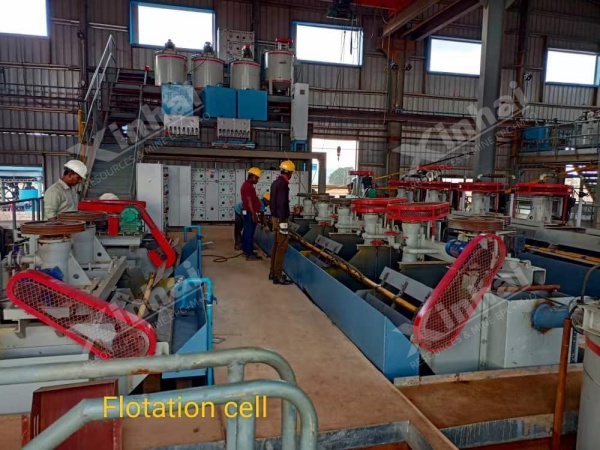
Xinhai operates its own mineral processing laboratory capable of conducting comprehensive amenability studies on copper, lead, zinc and other complex sulphide ores. The company delivers an integrated service chain—test work, process design, detailed engineering and supply of complete processing equipment—for both concentrator upgrades and new greenfield plants. For ores with difficult mineral intergrowths or tight metal-separation requirements, Xinhai develops customised flowsheets that maximise recovery and concentrate quality. Operators experiencing suboptimal concentrate grades or incomplete metal separation in existing Cu-Pb-Zn plants, or those planning new polymetallic concentrators, are invited to submit representative samples for laboratory evaluation. Xinhai will provide a full metallurgical assessment and practical recommendations tailored to the ore and site conditions.
 +86 13811510145