If you want to know more information (such as product/process price, etc.), please contact us 24-hour telephone
Sulfide gold ore flotation is a mineral processing method that uses reagents and air bubbles to selectively recover gold-bearing sulfide minerals as a sulfide concentrate. Depending on ore mineralogy and impurity content, the concentrate can then be treated by cyanide leaching, thiourea leaching, or roasting followed by leaching.
Key Takeaways
Sulfide gold flotation is mainly used to concentrate gold associated with sulfide minerals such as pyrite and galena.
Flotation alone may not be sufficient for some oxidized or clay-rich gold ores.
Gold flotation concentrates can be further treated by cyanide leaching, thiourea leaching, or roasting–acid washing–cyanide leaching, depending on ore characteristics.
A 1,000 t/d low-sulfidation gold flotation plant delivered by Xinhai achieved 92% gold recovery and produced a 46 g/t gold concentrate from 1.76 g/t ROM ore.
Gold flotation uses reagents to modify the surface properties of mineral particles and promote their attachment to air bubbles. After crushing and grinding, the ore is conditioned into a slurry and treated with the appropriate reagents. Gold-bearing sulfide minerals attach to the bubbles and rise into the froth, while gangue minerals remain in the slurry and are discharged as tailings.
The process is primarily suited to sulfide gold ores, where gold is associated with sulfide minerals such as pyrite and galena. Flotation concentrates the gold-bearing minerals into a sulfide concentrate, from which gold can then be recovered through downstream treatment.
For oxidized ores and gold ores with high clay content, however, standalone flotation may have limitations. In practice, gravity separation is often incorporated to form a combined flowsheet better suited to the ore characteristics.
For many gold ores, flotation produces a gold concentrate that requires further leaching to recover gold from the mineral matrix. The appropriate flowsheet depends largely on the mineralogy and impurity content of the ore.
| Process | Suitable Ore | When to Consider |
|---|---|---|
| Flotation–Cyanide Leaching | Low-impurity sulfide gold ore | When flotation can produce a relatively clean gold concentrate suitable for cyanidation |
| Flotation–Thiourea Leaching | High-As, high-S, clay-rich refractory ore | When conventional cyanide leaching is constrained by ore characteristics |
| Flotation–Roasting–Acid Washing–Cyanide Leaching | High-As, high-S refractory concentrate | When arsenic and sulfur must be removed before cyanide leaching |
These flotation–leaching routes are combined mineral processing and metallurgical flowsheets. Depending on environmental assessment requirements, investment conditions, and local regulations, some mines may construct only the flotation concentration section and transport the resulting gold concentrate to a third-party smelter for subsequent leaching and roasting.
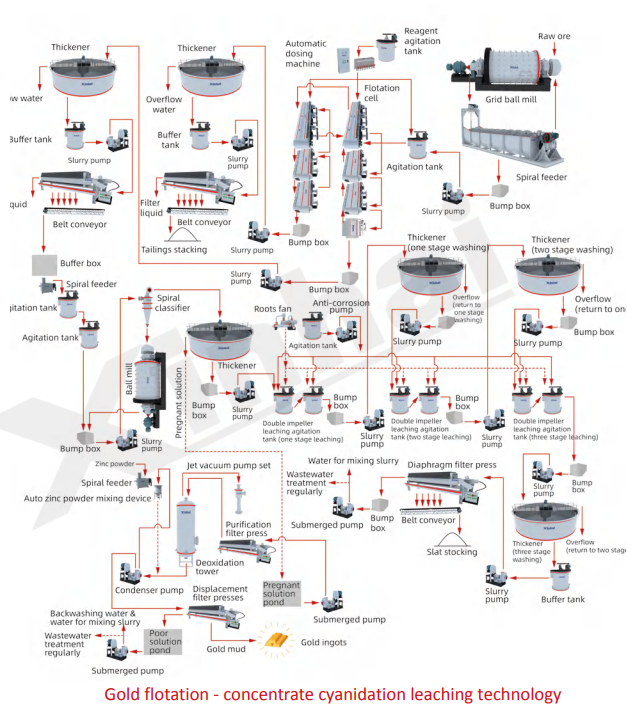
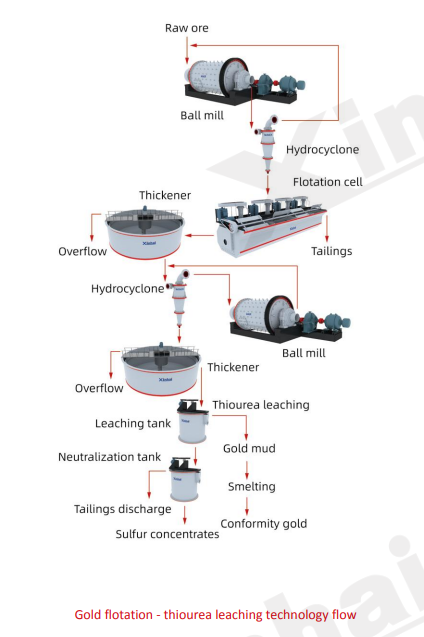
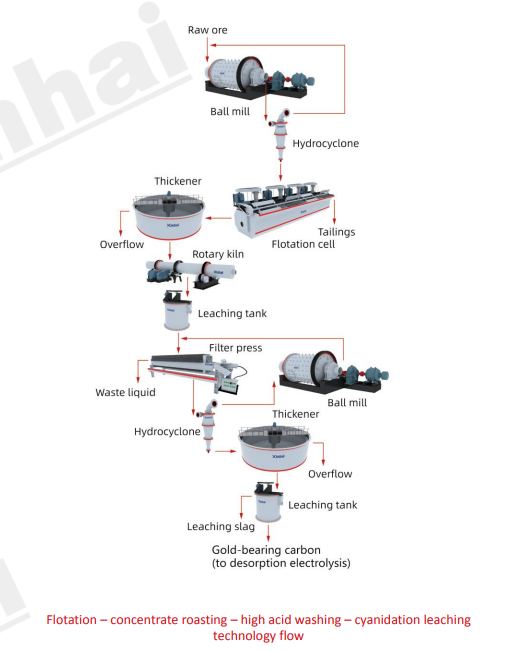
Xinhai Mining can undertake either a complete flotation and in-plant leaching circuit or a flotation concentration plant alone, with the flowsheet selected according to the client's ore characteristics, project conditions, and downstream treatment requirements.
The deposit is a low-sulfidation deposit with multiple stages of mineralization. The ore contains electrum, native gold, sphalerite, galena, hematite, and other metallic minerals. The main gangue minerals are quartz, sericite, feldspar, calcite, chlorite, and others.
A clay-rich fault gouge layer occurs along the main fracture surfaces, with a thickness of 5–20 cm. The clayey material can interfere with the separation process.
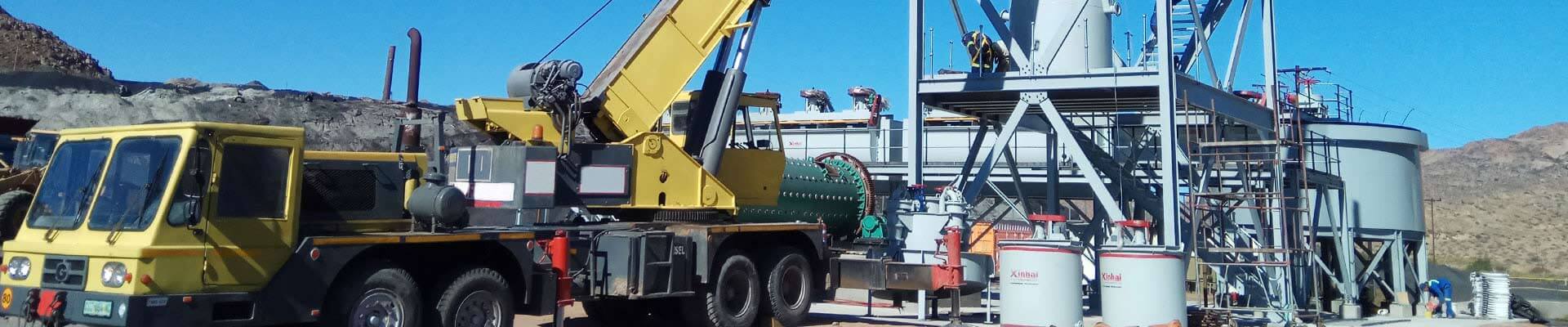
The plant was designed for flotation concentration only. The resulting gold concentrate is transported off-site to a smelter for downstream leaching treatment.
| Project Parameter | Data |
|---|---|
| Plant Capacity | 1,000 t/d |
| Deposit Type | Low-sulfidation |
| ROM Gold Grade | 1.76 g/t |
| Gold Concentrate Grade | 46 g/t |
| Gold Recovery | 92% |
| Grinding Fineness | 55% passing 200 mesh |
| Final Concentrate Treatment | Off-site smelter leaching |
Crushing and screening: A single-stage open-circuit crushing process is used, with the crushed product controlled at ≤160 mm.
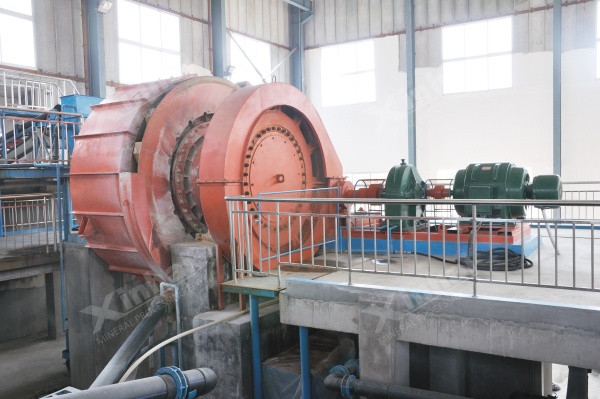
Grinding and classification: The circuit uses one-stage open-circuit autogenous grinding followed by one-stage closed-circuit grinding and classification. The grinding fineness is 55% passing 200 mesh. Steel balls are added during operation, and the autogenous mill operates under semi-autogenous grinding conditions. Hydrocyclones are used for classification.
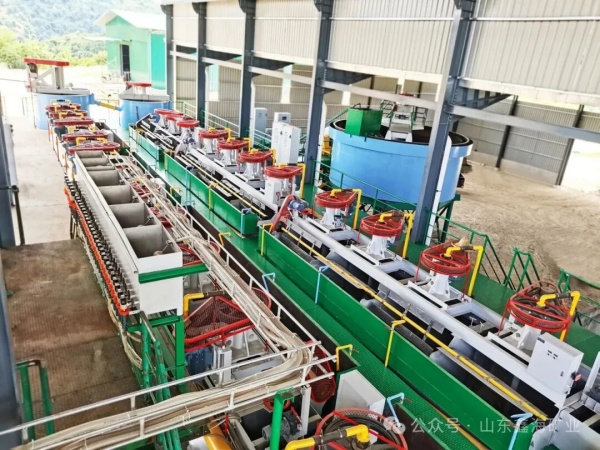
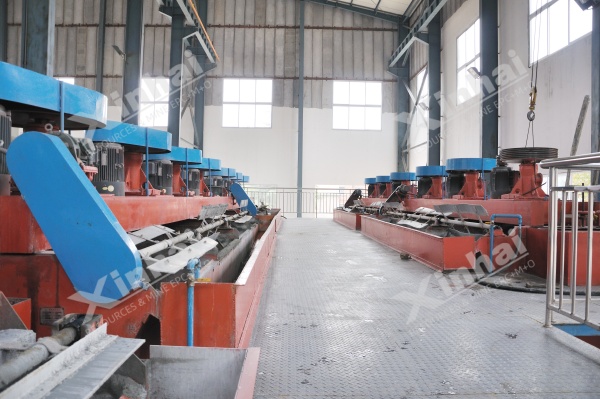
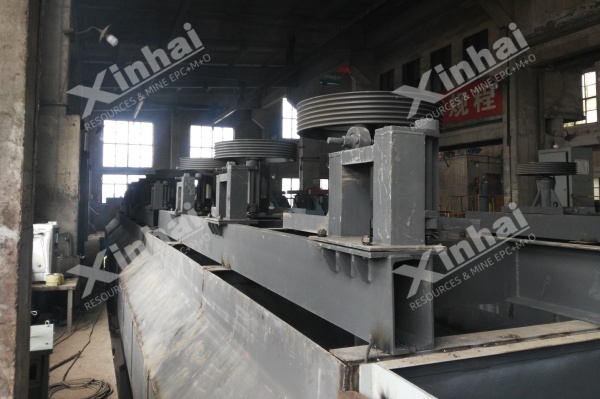
Flotation: The flotation section is equipped with XCF–KYF combined flotation units, while SF-type flotation machines are used for the cleaning stage.
Product handling: Gold concentrate is pumped to the existing concentrate dewatering facilities. Tailings are transported to the existing TSF, with a portion of the tailings used for underground backfilling.
Production performance: The ROM ore has a gold grade of 1.76 g/t. The resulting gold concentrate reaches 46 g/t, with a gold recovery of 92%.
Equipment maintenance: The equipment package offers moderate operating and maintenance requirements and is well suited to the site's operating conditions.
More than 30 years of mineral processing experience, covering primary gold ores, refractory gold ores, and gold tailings reprocessing;
EPC+M+O mining services covering the full project lifecycle, from beneficiation testing and engineering design to equipment manufacturing, civil works, installation, commissioning, and operation and maintenance;
An in-house Mineral Processing Research Institute laboratory, where beneficiation tests are conducted first to determine the appropriate flotation or combined flowsheet and reagent regime, helping reduce commissioning and production risks;
Flexible process design, including standalone flotation, flotation–gravity separation, and flotation combined with various leaching routes. Solutions can be developed for greenfield plants, brownfield upgrades, and tailings reprocessing. Depending on project conditions, Xinhai can design either a flotation concentration plant or a flotation plant integrated with in-plant leaching;
Integrated environmental solutions, including tailings dry stacking and process water recycling, to support environmental compliance for projects in China and overseas markets.
The appropriate gold flotation flowsheet should not be selected based on ore type alone. Mineralogical characteristics, gold occurrence, sulfide mineral association, liberation size, clay content, and impurity levels should be evaluated through beneficiation testing before the process is finalized.
For new gold processing plants, plant upgrades, or gold tailings reprocessing projects, clients can submit ore samples for beneficiation testing. Xinhai Mining can then develop a customized flotation flowsheet and provide project investment and return estimates based on the test results.
 +86 13811510145