If you want to know more information (such as product/process price, etc.), please contact us 24-hour telephone
Gold ore concentrator operators often face headaches over tailings treatment.
As environmental laws grow stricter, non-compliant tailings management may lead to rectification, output limits, or even production halts. Many mine owners randomly copy mature processes, investing heavily yet failing to meet eco standards.
In fact, standard gold tailings treatment is easy to achieve with proper planning and proven cases. This article introduces two mainstream solutions: tailings storage facility construction and tailings dry stacking, with practical project cases for your reference.
All tailings treatment methods must abide by the following core environmental protection standards, which are key inspection items across regions:
Strictly implement anti-seepage, anti-loss, and dust suppression measures to eliminate groundwater and soil pollution;
Realize closed-circuit circulation of production wastewater to reduce effluent discharge and improve water resource utilization rate;
Complete all formalities for project construction and process renovation, and conduct design, construction, and operation in accordance with specifications;
Select rational tailings treatment solutions based on site conditions, concentrator scale, and local policies.
There is no one-size-fits-all solution. Only schemes tailored to actual ore properties and plant layout can achieve full compliance, cost control, and easy operation.
Ideal for mines with spacious reserved land and stable ore dressing capacity. Standard flat-ground or valley-type tailings storage facilities are constructed with reasonable storage capacity, matched anti-seepage, drainage, and monitoring systems for long-term safe tailings stockpiling. This method features mature operation and low overall operating cost.
Suitable for mines with limited land resources, strict surrounding environmental requirements, and no conditions for constructing new tailings storage facilities. Tailings are concentrated and filter-pressed into dry materials for stockpiling or comprehensive utilization. All wastewater is recycled back to the production process, featuring eco-friendliness and small land occupation.
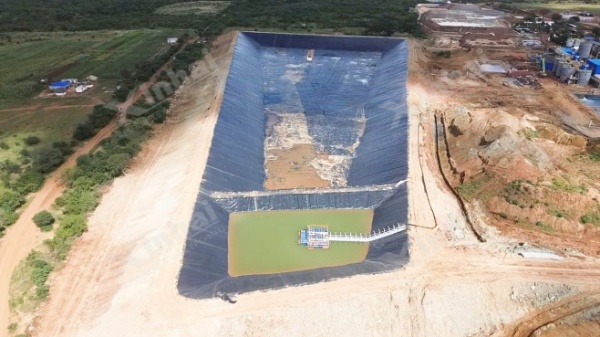
This flat-ground tailings storage facility adopts a four-sided dam enclosure design with a total storage capacity of 400,000 cubic meters. The project started on January 10, 2026, and was fully completed on March 28, lasting only 77 days.
During construction, the construction team overcame severe weather such as heavy rainfall and strong winds, and rationally arranged the construction schedule without being affected by the Spring Festival holiday. More than 22 sets of large-scale machinery, including excavators, dump trucks, and road rollers, were deployed. The project completed earthwork excavation and transportation of over 400,000 cubic meters, and laid over 50,000 square meters of geomembrane and geotextile, respectively. It was finished 33 days ahead of schedule with all engineering quality and anti-seepage indicators up to standard, laying a solid foundation for continuous and stable operation of the concentrator.
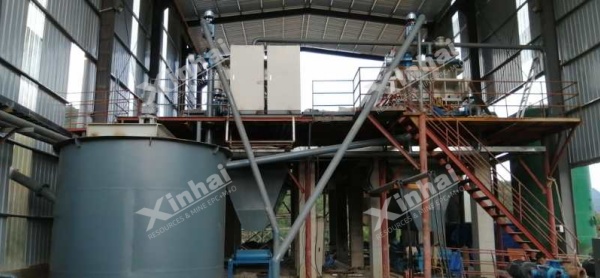
The main construction of this concentrator was not undertaken by our company, and the client exclusively entrusted us with the general contracting of the tailings dry stacking project.
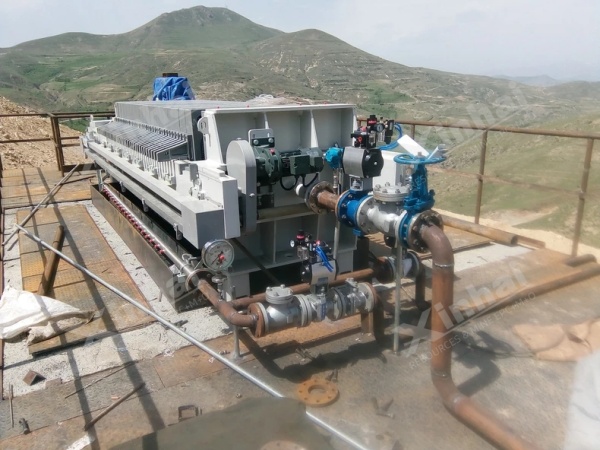
The whole system is equipped with core equipment, including XPA wear-resistant rubber slurry pumps, double-impeller leaching agitators, and high-efficiency single-chamber air-flow filter presses. The workshop is closely connected with the existing flotation workshop, and the process layout is reasonably designed by making full use of the plant terrain. New-type filter presses are adopted to effectively reduce tailings moisture content.
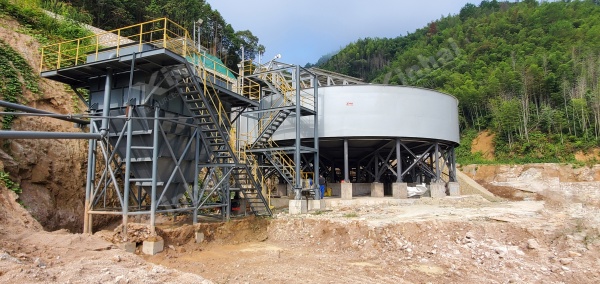
In terms of technological flow, flotation tailings are concentrated by thickeners. Underflow slurry is delivered by feeding pumps to filter presses for dehydration to realize standard tailings dry stacking. Overflow water from thickeners and filtrate from filter presses are fully recycled to the flotation workshop, achieving zero excess wastewater discharge and fully complying with current environmental protection regulations.
Do not blindly copy other projects; prioritize site conditions, production capacity, and local environmental policies first.
Attach great importance to dam construction and anti-seepage laying for tailings storage facilities, and carry out regular inspection and maintenance in later operation.
Do not only pursue low-cost equipment for dry stacking; ensure full parameter matching of thickening and filter pressing systems.
Complete process planning and official filing in advance, rather than starting construction before obtaining approval.
For years, Xinhai Mining has specialized in gold ore processing and tailings management, delivering integrated services including design, equipment supply, and general contracting.
We customize fully compliant schemes for TSF construction and tailings dry stacking based on your ore properties, site layout, production scale, and local environmental rules, offering full one-stop solutions from design to final delivery.
If you have any concerns about standardized gold tailings handling, welcome to contact Xinhai Mining via WhatsApp: +8613811510145. With rich field experience, we will design economical and eco-friendly solutions to ensure steady and compliant operation of your concentrator.
 +86 13811510145