If you want to know more information (such as product/process price, etc.), please contact us 24-hour telephone
Alluvial gold often looks like simple ore to new miners. You get loose gold grains, no chemical reagents, and you can get your wash plant up and running within just a few weeks. But gold loss usually hides in plain sight. Tiny gold grains escape alongside oversized rock pieces. They stick to muddy clay coatings and flow straight into tailings piles. Some even slip under sluice mats that do not match your raw feed material. I have talked with many site operators who struggle with low gold recovery. When we trace where the lost gold goes, the answer rarely points to a bad equipment brand. It almost always comes from one stage that people skipped, sized too small, or ordered in the wrong order.
A wash plant works as a connected chain with five key stages. These include feed capacity sizing, screening, scrubbing, gravity recovery, plus the supporting water and tailings loop below everything. Each part of this chain shapes how much gold the next step can collect. Let’s walk through them in the order you would build the whole system.
Raw material throughput sets hard limits for every downstream part of your plant. A machine marked with a 50 t/h rating means your screen, scrubber, and gravity recovery line all need to handle that full tonnage when the ore holds peak moisture. Dry lab test readings will not reflect real site conditions. If you size these machines too small, you hit a very common failure case. Your plant runs smoothly while processing only half the feed volume, but gold recovery drops sharply at full load. Material rushes past gold retention devices too fast. The heavy gold particles cannot settle and separate properly.
Feed sizing also shapes your whole project’s economics. At 200 t/h, which counts as large for alluvial mining, fixed screen systems beat mobile processing trains in cost. Your water demand turns into a critical permit item. The large volume of tailings also makes stacked dry storage more practical than simple settling ponds. Smaller plants need to follow this same basic logic, just scaled down. Miners should not skip this step just because their daily tonnage is lower.
Scalping takes out large coarse gravel before it touches any other processing gear. There are two practical reasons, and both tie back to your project budget. Big boulders wear down liner plates, pumps, and chute floors, and they give you zero gold in return. This is also one major spot where gold leaks out. When oversized rock moves into a sluice or concentrator, it lifts up the material bed. It opens fast shortcuts for water flow, and it carries stone chunks that still hold trapped gold grains right through the system.
Pick your screen based on your actual feed ore, not just product catalog descriptions. Trommel screens work best for sticky ore with mixed particle sizes from the mine. Inclined vibrating screens deliver sharper size cuts when you handle clean, free-flowing gravel. If a certain size range of rock carries no gold at all, removing it early is the cheapest upgrade you can add to any wash plant. I’ve seen many small mine operators save thousands just by adding this simple pre-screen step.
If gold grains arrive wrapped in thick, sticky clay, gravity separation cannot pick them up. That mud shell can carry a 2 mm gold flake all the way into fine waste discharge, and it moves just like plain sand. This explains why plants built only from a supplier’s basic flow chart often perform worse than their own lab bench tests. Those simple designs only include screening and sluicing, and they ignore clay entirely.
A scrubber uses a rotating drum fitted with lifting bars, or an agitating washer. It breaks apart clay’s tight grip on gold grains before particle sizing becomes important. You can easily tell if you need this unit. Watch for mud smears left on screen oversize material. Or check if wash water turns cloudy within minutes after startup. When you see these signs, your ore needs scrubbing. Treat scrubbing as part of the screening workflow, not as a tiny optional add-on. This point trips up many teams new to Placer Gold Mining.
Free gold comes in a very wide range of grain sizes. No single machine can catch every piece of gold by itself. The reliable solution uses a staged processing train. Each machine is sized to capture the gold fraction that the previous device missed:
| Stage | Catches | Role in the train |
|---|---|---|
| Fixed or portable sluices | Coarse flakes, typically above ~0.5 mm | First call on the free gold; cheap bulk capture |
| Jigs | Medium grains, roughly 0.1–2 mm | Bed stratification pulls heavy gold from sand between sluice passes |
| Centrifugal concentrators | Fine free gold below jig efficiency | High-G film catches micronised-but-free particles before they reach ponds |
The order of these machines matters just as much as your equipment selection. Catch coarse gold first. This setup protects fine-gold machines from heavy tonnage they were never built to handle. If you place a concentrator before proper scalping, it will just grind through useless grit and wear out fast. Every single stage also needs regular cleaning cycles. If a jig sits uncleaned for one full work shift, trapped gold stays locked inside, and you lose that value forever. Site crews often overlook this simple maintenance rule.
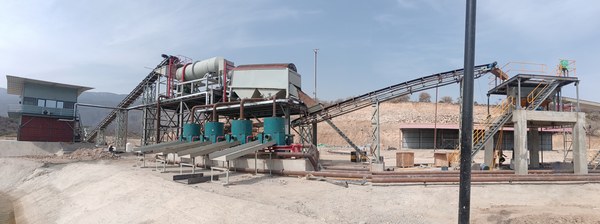
The 200 t/h alluvial line in Somaliland, assembled on site
Gold washing really runs on water, even if people treat it like pure mining work. A plant that uses one-time, single-pass water loses lots of volume to evaporation, ground seepage, and fine slime that never fully settles. By month three, operators end up buying expensive water delivered by tanker trucks. Closed water circuits change this picture. Settling sumps send cleaned water back to pump intakes. Thickener tanks help when your ore carries heavy clay content. This turns water from a consumed resource into reusable circulating asset.
Tailings make up the second half of your project budget and planning. Wet discharged sand builds unstable ponds, and these ponds create big problems for permit approvals. Filtered or stacked tailings shrink your land footprint. They return clean water right away and cut your final site reclamation costs. In dry regions, this is simple arithmetic. Every tonne of recovered water lets you wash one extra tonne of ore in the next operating season. Any solid alluvial gold processing layout will close both water and tailings loops before ordering steel equipment.
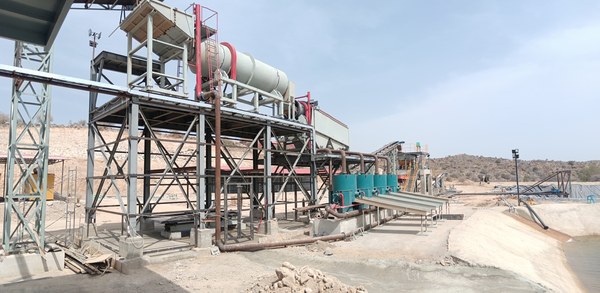
Washing circuit under operation — water runs where the ledger decides
Xinhai designed and delivered a 200 t/h alluvial gold production line for a site in Somaliland. The scope includes flowsheet design, equipment build and shipping, plus on-site installation guidance from Xinhai’s field engineers. All these details come directly from Xinhai’s internal project records. This circuit relies fully on gravity processing. It uses screening, ore washing, and multi-stage concentration. Engineers sized every part to solve exactly this coarse-to-fine free gold challenge we talked about earlier. Before this build, Xinhai finished a second separate 200 t/h line for another operator within the same region. That repeated local work builds real, proven field credibility for this setup.
The core difference is gold liberation. A wash plant handles alluvial deposits. The gold here already sits as free, separate grains. Screening, scrubbing and gravity work to collect it. A hard-rock plant crushes and grinds ore where gold stays locked inside rock. These hard rock systems usually need flotation or chemical leaching. If you pan raw ore samples and spot visible free gold flakes, a wash circuit is your natural starting point for Placer Gold Mining.
These tests are simpler than the full programs needed for hard rock mines, but you cannot skip them completely. Run a screen size analysis on your real feed ore, and add a simple gravity recovery test. These tests show your gold grain size distribution. They also tell you how much gold escapes each processing device. This data sets screen opening sizes, scrubber workload, and the whole recovery train layout. Many operators copy ready-made flow sheets to new ground without testing, and those copied plans often fail.
There is one very common cause. The recovery train stops after the sluice box. Fine free gold stays suspended in fast, turbulent water. It flows out with overflow waste unless a jig or centrifugal concentrator catches it before material enters settling ponds. Adding one fine-gold capture unit costs less money than the gold it can recover in just one month of operation. Many small mine owners underestimate how much fine gold they throw away each day.
Build a closed recirculation loop. Sump and pump systems send most process water back for reuse. Thickeners and filter presses push water recovery higher, and they create stackable dry tailings at the same time. In dry, arid mining areas, your water balance sheet, not gold grade, sets the maximum amount of ore you can process each season.
Count your clay volume and gravel share in raw feed before you compare machine catalogues. These two simple numbers help you select those five processing stages. Those five stages together decide how much gold ends up in your pan after a full week of site work.
 +86 13811510145