If you want to know more information (such as product/process price, etc.), please contact us 24-hour telephone
When people think of mining projects, they often picture roaring equipment and complex, highly technical processes. But at the Ried Mining Project in Zimbabwe, where 80 Chinese employees work alongside 170 local colleagues, the daily interactions tell another story—one of trust, respect, and genuine partnership.
Beyond delivering mineral processing technologies and equipment, Xinhai Mining is committed to building strong relationships with local teams and communities, working side by side with partners to grow together throughout every project.
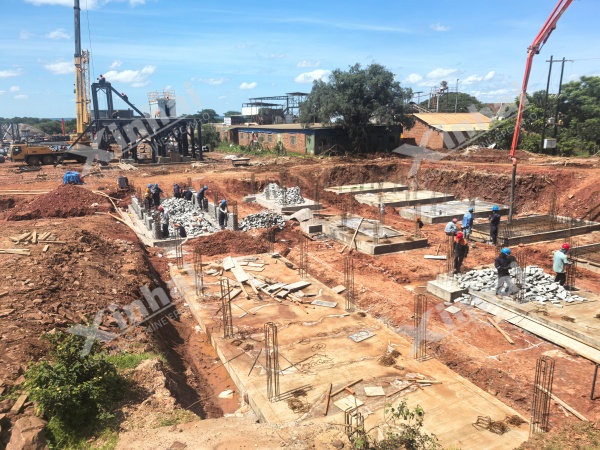
At the beginning of the project, language was one of the biggest barriers facing the teams. Chinese supervisors were familiar with specialized technical terminology, while local workers often found even basic equipment operating instructions difficult to understand. Miscommunication could easily lead to operational errors.
Instead of relying solely on professional interpreters, processing plant administrator Du Hongliang took the initiative to build an additional communication channel through WeChat.
When explaining flotation equipment operation or workshop safety procedures, he would record short videos of actual operations, add Chinese voice instructions, and send them to his local assistant, Michael. Real-time text translation helped bridge the language gap, while complicated procedures were broken down into simple visual steps.
At first, Michael simply received the information. Over time, however, he began actively messaging Du whenever he encountered a minor equipment problem or had questions about an operation. A voice message or a photo taken on site was often enough to clearly communicate a production issue without the need for a face-to-face discussion.
As Du often says, a mobile phone is not just a tool for leisure—it has become a bridge for communication at work.
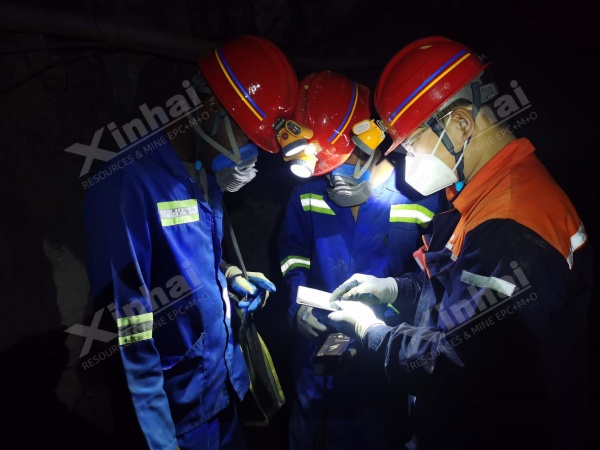
Experienced civil construction workers also developed their own simple ways to communicate. By learning a few basic Chinese words such as “up,” “down,” and “stop,” and combining them with hand signals and demonstrations, they could show local workers exactly how a task should be performed. Rather than relying on complicated explanations, they first completed a sample operation themselves and then guided workers to follow the example.
Bilingual Chinese-English safety cards are posted throughout the workshops. Before each shift, a five-minute safety briefing is conducted, with workers asked to repeat and confirm the key instructions before starting work. These small practices help maintain safety standards while bringing the teams closer together.
James is a young local surveyor in the project's technical department. Having graduated from university only recently, he was initially reserved and hesitant to operate precision surveying instruments. His theoretical knowledge was largely limited to textbooks, and he had little practical experience in the field.
Chinese engineers Engineer Yan and Engineer Li took James on as an apprentice and developed a step-by-step training plan tailored to his needs.
Under the intense sun in the stockyard and in the humid underground environment, the two engineers repeatedly explained instrument components and demonstrated surveying procedures. While teaching practical skills, they also took time to learn local everyday expressions and technical English used in mining, making complex procedures easier to understand and apply.
After only two months, James was able to independently complete the full range of surface and underground surveying work. During a survey assignment at the heap leach site, he volunteered to work independently, and all of the resulting data met the required accuracy standards.
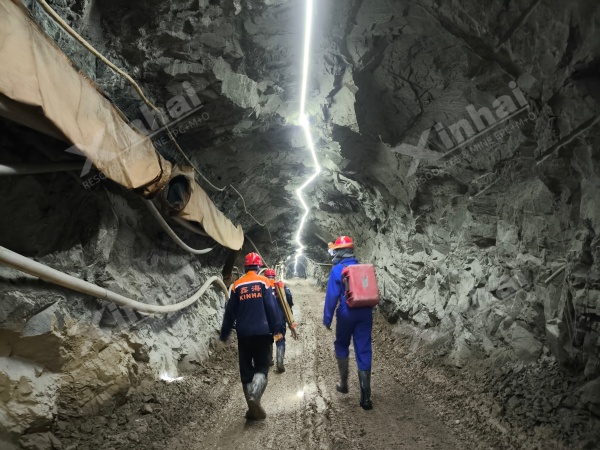
Today, James is confident and proactive, often sharing the surveying techniques he has learned with his colleagues. He says that his Chinese mentors were willing to share their knowledge without reservation, helping him acquire a professional skill that can support his long-term career.
There are many similar mentor-apprentice relationships across the processing plant. In crushing, laboratory testing, maintenance, and other areas, Chinese employees provide hands-on training. One group of local workers after another has progressed from having little practical experience to becoming skilled operators capable of working independently.
During the early stages of the project, differences in expectations around salary payments and leave arrangements occasionally caused misunderstandings.
Local workers were accustomed to receiving their wages on fixed dates, and delays in payroll processing could cause concern. In some cases, employees left the site without written notification after receiving their wages, disrupting the overall production schedule.
Rather than responding with rigid disciplinary measures, the project team sat down with employees to understand their concerns and gradually improved the arrangements.
Salaries were moved to unified bank-card payments, making every transaction clear and traceable. The leave approval process was formally documented. Local festivals and community gathering dates were also identified in advance so that work schedules could be adjusted accordingly, with performance allowances used to help cover staffing gaps. When employees faced difficulties at home, the team also worked flexibly to adjust their working hours where possible.
One cleaning worker at the mining area was responsible for all cleaning duties and was under considerable financial pressure at home. After discussions with the HR team, the project chose not to recruit additional staff. Instead, her salary was appropriately increased, and her workload was reasonably adjusted. The employee's income improved, while the company avoided additional recruitment and training costs.
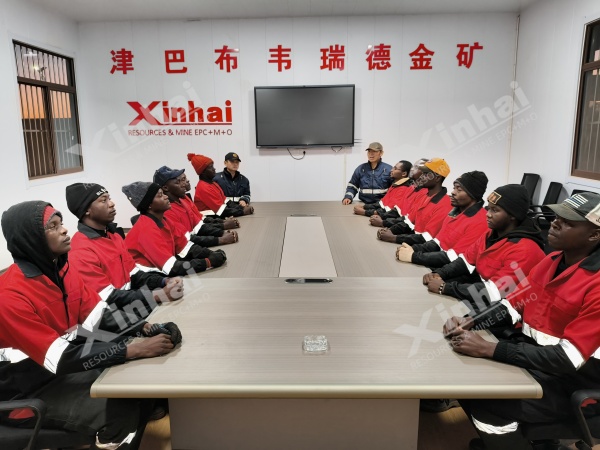
It was a practical example of mutual understanding and a win-win solution.
The project has always maintained clear non-negotiable standards for safety, quality, and employee compensation. At the same time, the team is willing to show patience and understanding toward local customs and personal circumstances rather than imposing external standards rigidly on everyone.
To residents, the Ried Mining Project is more than a processing plant. It is also a neighbor that values genuine relationships with the surrounding community.
During important local festivals, the project team prepares supplies and visits elders and residents in nearby villages. By respecting local customs and maintaining regular communication with the community, the project has built a long-standing relationship based on mutual respect and goodwill.
During breaks from work, Chinese and local employees often work together to organize the plant site and clean operational areas. No complicated translation is needed. Working side by side provides its own form of communication.
The civil construction team has established a workforce structure based on “Chinese technical oversight, local team leadership, and frontline execution.” Experienced and respected local employees are given priority for promotion to team leader positions and receive position-based incentive allowances. This encourages local employees to take greater responsibility for managing their own teams, reducing communication barriers while creating more opportunities for local career development.
Many local employees have come to appreciate the project for its fair and transparent approach. The project strictly complies with local labor laws, with employment contracts and occupational injury compensation procedures clearly defined and openly communicated. Employees receive equal pay for equal work and are treated fairly regardless of background.
For those who are committed to their work, opportunities are available to increase their income and learn new technical skills. There is no place for prejudice—only colleagues working side by side toward the same goals.
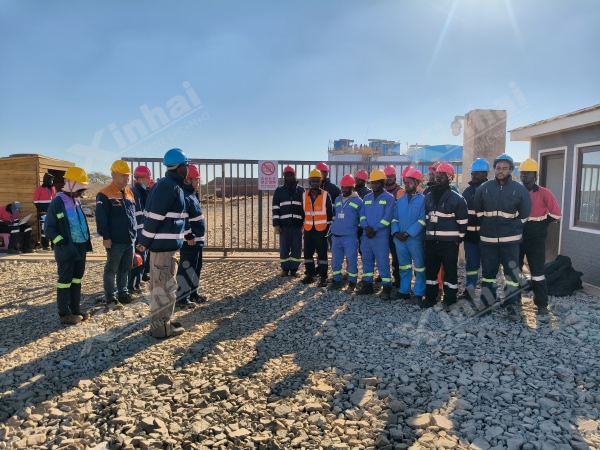
From the initial language barriers and occasional misunderstandings to today's close cooperation and mutual trust, the daily life of the Ried project demonstrates what equal and mutually beneficial collaboration can look like.
Mining equipment may be made of steel and concrete, but the relationships built around a project are human.
When Xinhai Mining delivers mining projects overseas, it brings complete mineral processing technologies and equipment. But it also brings a willingness to bridge cultural differences, respect local customs, share technical knowledge, and support the development of local teams.
Beyond plant capacity and engineering achievements, this shared journey across borders—built on trust, knowledge, and mutual growth—is one of the most valuable outcomes of an overseas mining project.
 +86 13811510145