If you want to know more information (such as product/process price, etc.), please contact us 24-hour telephone
Chile holds the largest copper smelting capacity in Latin America. It runs at about 60%.
That is the point Cochilco, the Chilean Copper Commission, made on 9 September, according to a market briefing that day: lift the operating performance of what you already have before committing capital to more.
Chilean copper output fell to a 19-year low in the second quarter and full-year guidance was cut 2.6%. Adding capacity in that market changes nothing if the units already built sit idle.
Cochilco was talking about smelters. The question behind the number — how much installed capacity you actually turn into product — lands just as hard on the concentrator side.
Most plants carry a gap between nameplate capacity (the throughput the plant was designed for) and what they produce. It is rarely one dramatic failure — usually several small losses, stacked.
Nameplate capacity is a design promise; actual throughput is an operating result. The gap comes from a handful of places, and they compound.
Ore that no longer matches the design. Hardness, grade and clay content drift as the pit moves, and a circuit tuned to the original sample then loses recovery and throughput together.
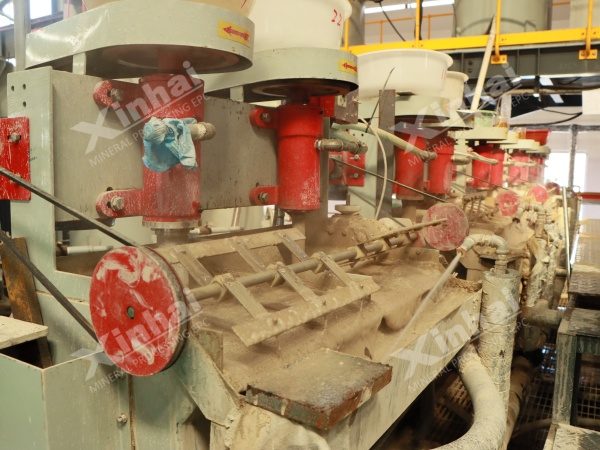
Grinding and classification (sizing of ground particles, usually by hydrocyclone). Grinding takes about half of a concentrator's power, so over-grinding is throughput you paid for and never got.
Dewatering and water balance. Thickener and filter capacity set a hard ceiling. Short process water throttles the plant back whatever the mill delivers.
Availability. Unplanned downtime, slow spares and uneven operator response remove more tonnes than most studies allow for.
Utilities. Power headroom and water supply sit outside the flowsheet and still cap it.
| Symptom | What to measure | What usually fixes it |
|---|---|---|
| Throughput falls at constant grind size | Mill power draw, feed hardness | Rebalance grinding and classification |
| Grind size coarsens under load | Cyclone feed density, circulating load | Reconfigure cyclones |
| Thickener or filter at its limit | Underflow density, filter cycle time | Add thickening or filtration capacity |
| Availability below target | Unplanned downtime, repair time | Maintenance system, spares, training |
| Plant throttles back seasonally | Fresh water intake, power demand | Water reuse, supply headroom |
When throughput drops, the instinct is to blame a machine. Usually the equipment is fine and the ore has changed.
Testwork (laboratory and pilot testing that sets the flowsheet and design parameters for a specific ore) re-establishes what the current ore needs, not what the plant was designed around. At a scheelite operation in Yunnan, single-stage flotation returned 62% recovery at no more than 45% WO3. A three-stage test programme — liberation analysis, bench and pilot work — produced a magnetic-flotation circuit that lifted recovery to 78% and cut reagent cost by 18%.
Not a new plant — a flowsheet corrected against the ore actually being fed. Pilot testing makes it bankable.
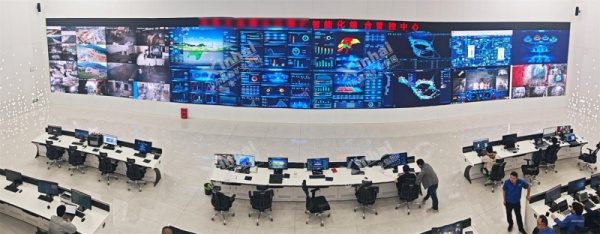
You cannot fix a bottleneck you cannot see, and manual operation hides it. Two operators on different shifts produce different recovery from one feed.
Instrumentation removes that noise. An online XRF analyzer scans slurry composition every two minutes; a froth imaging system tracks bubble size and stability; a control loop doses reagent to within ±0.5% and holds pH inside ±0.3. Circuits running this package report recovery gains of 5–15% that hold from shift to shift.
Measure first. Change one thing. Measure again.
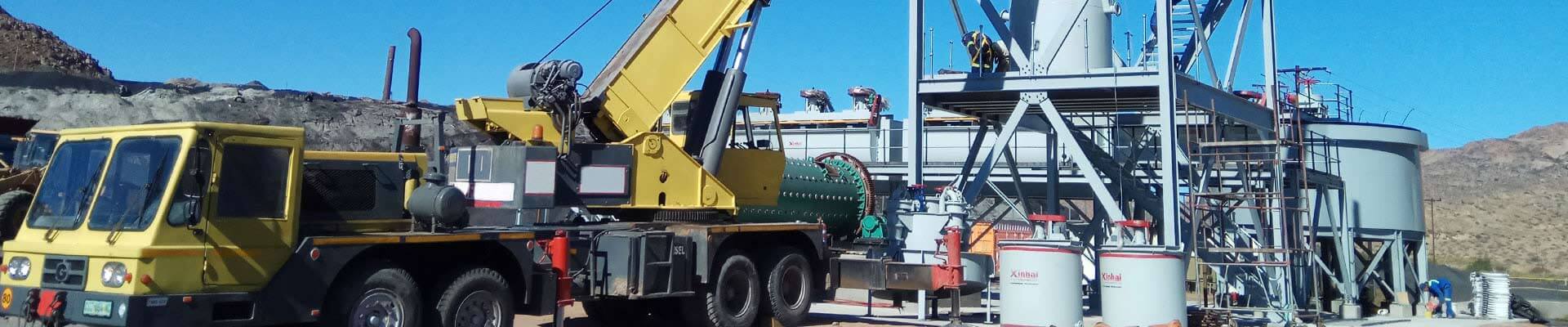
Retrofitting is harder than building new. The designer works inside someone else's structure, and the brief is to add capacity with as little new civil work as possible.
That constraint is where the return comes from. At a chrome concentrator in South Africa, annual capacity went from 360,000 t to 480,000 t — 33% — with no additional civil construction. The platinum-palladium circuit added to recover value from tailings repaid its investment in 18 months. At a polymetallic operation in Henan, keeping the main building and rebuilding the separation stage delivered 30% more capacity in 90 days.
Neither project bought a new tonne of installed capacity. Both produced more.
Before the capital request goes in, work through these:
Compare nameplate against actual throughput over twelve months, not one good week
Re-run testwork on the ore you mine now, not the original sample
Find which unit hits its limit first — grinding, classification or dewatering
Check water balance and power headroom before sizing anything
Price the retrofit on zero, or minimal, new civil works
Cost the downtime of each option, not only the capital
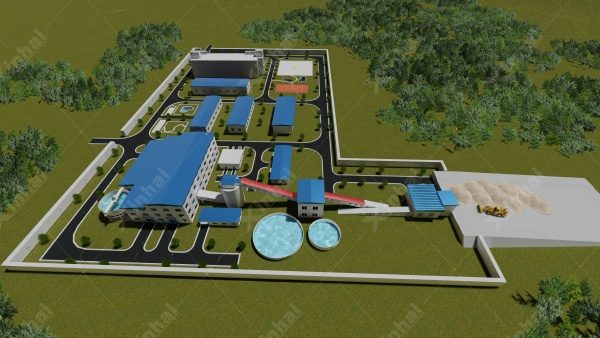
Where the site caps the retrofit, new capacity is the honest answer. Where it does not, retrofit paired with EPC+M+O delivery and disciplined operation and management holds the gain.
Actual throughput divided by nameplate capacity over a representative period. At 60%, four tenths of the capacity you paid for produces nothing. Measure across twelve months: one good week hides ore changes.
Find where the plant stops. Track mill power draw against feed hardness, circulating load, thickener underflow density and filter cycle time. The unit that reaches its limit first is the constraint; upgrading anything upstream adds nothing.
Often, because the civil work already exists. A polymetallic plant in Henan gained 30% capacity in 90 days keeping its main building; a chrome plant in South Africa added 33% with none.
When the ore body supports more tonnes than the site can handle, when utilities or footprint cannot carry extra load, or when testwork shows the flowsheet is wrong for the ore. Then a retrofit treats symptoms.
The cheapest tonne you will add is usually one you have already installed and are not producing — and finding it costs a survey, not a greenfield budget.
At Xinhai, the first question is how much installed capacity a plant is already losing.
If your plant runs below nameplate, share your throughput record and ore description with us.
 +86 13811510145