If you want to know more information (such as product/process price, etc.), please contact us 24-hour telephone
Global copper concentrate supply remains tight in 2026, encouraging mine operators to maximize production from existing assets rather than relying on new greenfield developments. Strong demand from electrification, renewable energy, power grid expansion, and AI data centers continues to outpace the growth of new mine supply, making every tonne of recovered copper increasingly valuable.
At the same time, many operating copper processing plants were built years ago and now face limitations caused by aging grinding and flotation circuits, outdated dewatering systems, and fixed plant layouts. Industry experience shows that many existing concentrators still have significant room to improve copper recovery and processing capacity through targeted process optimization or phased expansion, often without constructing an entirely new plant.
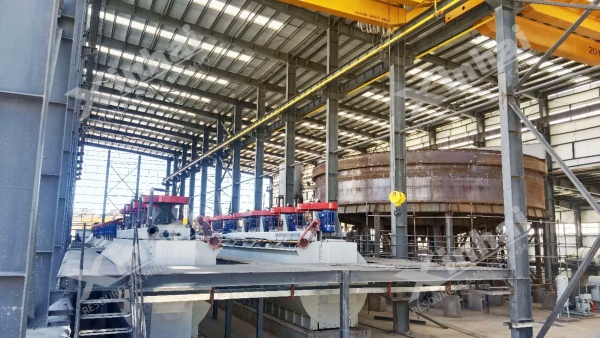
For many operators, upgrading an existing copper processing plant offers a faster and more economical way to increase production than building a new concentrator. Depending on the condition of the mine, upgrades may include process optimization, modular plant expansion, or complete mine restart under an EPC delivery model.
Operating Copper Concentrators
Many operating concentrators suffer from aging grinding and flotation circuits, limited plant throughput, declining copper recovery, and environmental facilities that no longer meet current standards. Existing equipment often becomes the primary bottleneck preventing production expansion.
Long-Term Idled Copper Mines
For mines that have been shut down for years, underground workings are frequently flooded, mineral processing equipment has deteriorated beyond repair, environmental and safety permits have expired, and utility systems such as water and power supply are no longer operational. Many owners lack a comprehensive roadmap covering underground rehabilitation through plant recommissioning.
Capacity-Constrained Aging Plants
Older concentrators often operate at full capacity within fixed plant layouts. Conventional plant reconstruction requires substantial capital investment, extended construction periods, and complete production shutdowns, resulting in significant revenue losses and cash flow pressure.
Targeted Process Optimization
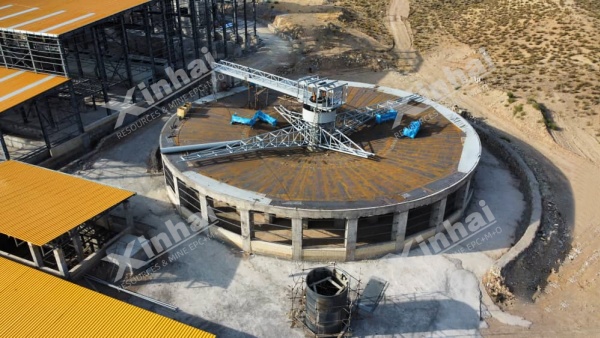
This approach is suitable for operating mines where only specific sections—such as grinding, flotation, or concentrate dewatering—have become production bottlenecks. Construction can be completed in stages while the remainder of the plant continues operating, minimizing downtime while delivering rapid improvements in copper concentrate production.
Modular Phased Expansion
For mines with sufficient ore reserves but limited space for conventional expansion, standardized process modules can be added without demolishing existing facilities. This allows production and expansion to proceed simultaneously while spreading capital investment over multiple phases.
Comprehensive Mine Restart and Plant Rehabilitation
This solution is designed for suspended mines with valid mining rights but obsolete underground infrastructure and processing facilities. A full EPC program typically includes underground dewatering, equipment replacement, process modernization, environmental system upgrades, automation, and commissioning.
Project Overview
| Item | Details |
|---|---|
| Location | Namibia |
| Capacity | Phase I: 1100 t/d; Phase II: 2,200 t/d |
| Ore Type | Copper Ore |
| Service | Feasibility Study, EPC, Mine Restart, Plant Expansion |
Challenge
The mine had been idle for 14 years after underground flooding in 2007. Although the plant structures remained intact, the processing equipment and drainage system had become inoperable, making a complete mine restart necessary.
Solution
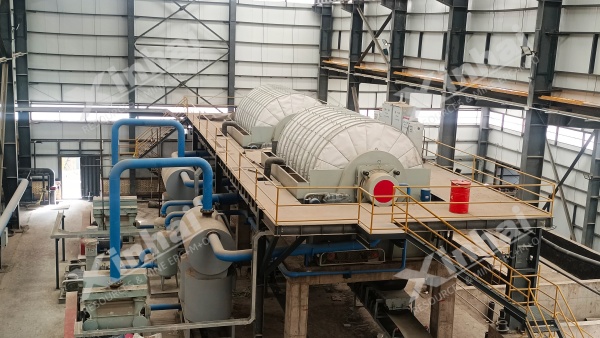
Xinhai completed the feasibility study before carrying out a phased EPC program that restored underground drainage, upgraded the crushing, flotation, and dewatering circuits, and later expanded the plant with a modular process flowsheet.
Result
Copper concentrate production resumed after a 14-year shutdown.
Plant capacity increased from 1100 t/d to 2,200 t/d.
Existing infrastructure was reused, reducing construction time and investment while accelerating the mine's return to production.
Project Overview
| Item | Details |
|---|---|
| Location | Yunnan, China |
| Capacity | Expanded to 4,400 t/d |
| Ore Type | Polymetallic Copper-Sulfur Ore |
| Service | Plant Upgrade, Modular Expansion, EPC |
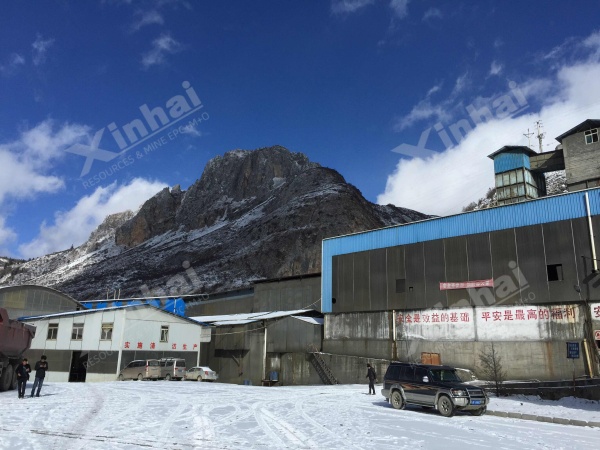
Challenge
The existing grinding, flotation, and dewatering circuits had reached their design limits. A complete plant rebuild would have required a lengthy shutdown and significant production losses.
Solution
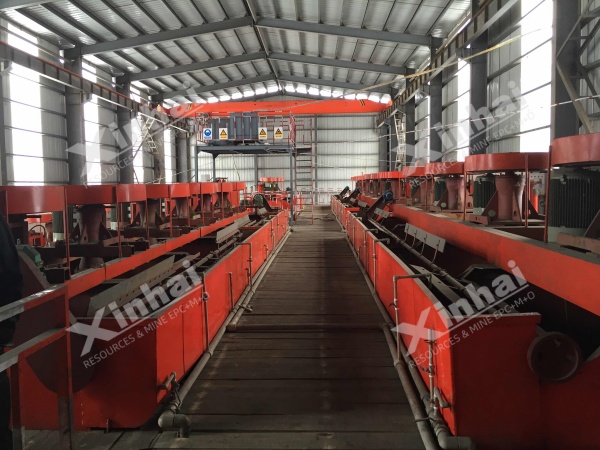
Xinhai adopted a modular expansion strategy by retaining serviceable equipment while adding new grinding, flotation, dewatering, and intelligent tailings monitoring systems, allowing construction to proceed in phases with minimal disruption.
Result
Plant capacity increased to 4,400 t/d.
Overall copper recovery improved by 4 percentage points.
The upgraded flowsheet enabled the production of copper, sulfur, and iron concentrates while keeping the plant's core production line operating during most of the construction period.
Many equipment suppliers can replace individual machines but cannot coordinate the full scope of a brownfield mining project, including geological evaluation, metallurgical process optimization, civil engineering, environmental compliance, automation, installation, and commissioning.
A qualified EPC contractor provides a fully integrated solution covering:
On-site mine and plant assessment
Customized upgrade, expansion, or restart engineering
Process design based on metallurgical testing
In-house equipment manufacturing
Overseas installation and commissioning
Long-term operational support after startup
An integrated EPC approach reduces coordination risks, minimizes engineering conflicts, shortens project schedules, and delivers a more efficient path to production for both domestic and international mining operations.
Projects such as the suspended copper mine in Namibia and the capacity-constrained concentrator in Yunnan demonstrate how different brownfield assets require different engineering strategies. Leveraging its own metallurgical laboratory, equipment manufacturing facilities, and international project execution teams, Xinhai delivers customized EPC solutions for mine restart, phased expansion, and plant modernization worldwide.
Whether you are improving recovery, expanding capacity, or restarting an idle copper mine, our engineering team can evaluate your operation and recommend the most suitable upgrade strategy based on ore characteristics, existing infrastructure, and project objectives.
Contact Xinhai to discuss your copper processing plant upgrade project.
 +86 13811510145