If you want to know more information (such as product/process price, etc.), please contact us 24-hour telephone
At the start of 2026, copper prices continued their strong performance from 2025, hitting a record high of 14,527 US dollars per ton in mid-January. However, the fundamentals of the copper market are not optimistic. Affected by mine production disruptions and the US tariff policies, the global copper market is facing a severe supply shortage, with many institutions warning that the risk of a shortage is approaching.
Against this background, how to efficiently develop and utilize copper ore resources has become the focus of the industry. For copper ore separation, the first question to answer is: are you dealing with sulfide copper ore or oxide copper ore? The difference in beneficiation processes between the two may be much larger than you think.
Flotation is mainly used for sulfide copper ore. According to the different types of ores, it can be divided into single sulfide copper ore flotation and polymetallic sulfide copper ore flotation.
The mineral composition of single sulfide copper ore is simple, and there is a large difference in floatability between copper minerals and gangue minerals, so flotation is mostly used for separation. According to the different dissemination sizes of copper minerals, process flows such as one-stage grinding-flotation, one-stage grinding-flotation-regrinding of rough concentrate, and two-stage grinding-two-stage flotation can be selected.
For ores with coarse and uniform dissemination size, the one-stage grinding-flotation process is adopted. When the raw ore is ground to 50-60% of -200 mesh, the copper minerals can be basically monomerically dissociated, with a simple process and low beneficiation cost.
Polymetallic sulfide copper ore is much more complex. Such ores not only contain a variety of copper minerals but also often coexist with pyrite, galena, sphalerite, etc., with complex mineral structures and dense symbiotic relationships. Therefore, process flows such as multi-stage flotation, step-by-step priority flotation, and flotation-mixed concentrate separation are required.
Taking step-by-step priority flotation as an example, due to the different floating speeds of various copper minerals, the easily floatable copper minerals are first roughly selected, then the difficult-to-float copper minerals are reground, and the middlings are reselected, and the copper concentrate is recovered in combination to ensure the grade and recovery rate.
In contrast, the beneficiation of oxide copper ore is much more difficult. The main separation methods of oxide copper ore include sulfidization, flotation, and chemical leaching.
Sulfidization flotation is a commonly used method at present. First, the oxide copper minerals are sulfidized with sodium sulfide, and then xanthate-based collectors are used for flotation. However, this method is selective to minerals—it is mainly applicable to carbonate-type oxide copper, such as malachite and azurite, but has a poor effect on chrysocolla and cannot even sulfidize it.
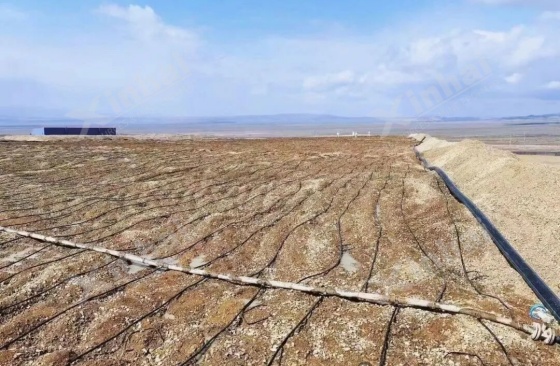
For extremely refractory oxide copper ore with high combined copper content, fine dissemination size, and high mud content, chemical leaching is usually adopted:
Acid leaching is divided into heap leaching, tank leaching, and in-situ leaching according to the leaching method. It is mainly used to treat medium and high-grade oxide copper ore that is difficult to recover by physical methods. Copper is concentrated and recovered after the leaching solution flows through the ore to dissolve copper-bearing minerals.
Alkaline leaching mostly uses ammonia-based leaching agents (such as ammonium carbonate, ammonium bicarbonate, etc.), which are suitable for treating chrysocolla with a high combination rate. However, it faces challenges such as ammonia volatilization loss, high environmental pressure, and slow dissolution rate of some copper minerals, such as cuprite.
The oxidation rate of mixed copper ore is between 10% and 30%, which is a transitional type between sulfide copper ore and oxide copper ore. Sulfidization flotation is generally used for its beneficiation, and there are two process flows to choose from.
One first selects sulfide copper minerals, and then selects oxide copper minerals after sulfidizing the tailings.
The second is to sulfidize the oxide copper minerals and float them together with the sulfide copper minerals.
| Comparison Dimensions | Sulfide Copper Ore | Oxide Copper Ore |
| Floatability Difference | Naturally hydrophobic, can be directly floated with xanthate-based collectors | Hydrophilic, requires prior sulfidation to modify surface properties, or the use of special collectors |
| Process Complexity | For single sulfide copper ore, a simple process can adopt a one-stage grinding-flotation process | Oxide copper ore often requires more complex processes, and even combined leaching and other metallurgical processes |
| Reagent System Difference | Mainly uses xanthate-based collectors, lime, and other regulators | Requires sulfiding agents and special collectors (fatty acids, amines, chelating agents, etc.), with higher reagent costs |
| Grinding Fineness Requirement | Conventional grinding fineness can meet the indicators | Oxide copper ore often requires finer grinding fineness to obtain ideal indicators |
| Separation Indicators | Under the same grade, the recovery rate and concentrate grade are usually higher | Under the same grade, the recovery rate and concentrate grade are usually lower than those of sulfide copper ore |
Against the background of an increasingly tight global copper supply, the efficient development of copper ore resources is of great significance. Due to the natural differences in ore properties between sulfide copper ore and oxide copper ore, their beneficiation process routes are completely different—the former is relatively direct, while the latter is extremely challenging. Even for the same type of ore, customized process schemes are required due to factors such as dissemination size, symbiotic relationship, and mud content.
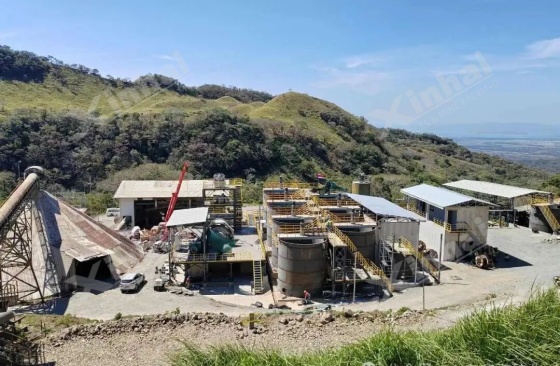
Before the actual construction of a beneficiation plant, it is recommended first to conduct beneficiation tests to systematically study the material composition and structure of the ore, find out the occurrence state and oxidation rate of copper, and scientifically and reasonably formulate the beneficiation process on this basis. Only by deeply understanding the ore properties and selecting the appropriate process flow and reagent system can ideal beneficiation indicators and economic benefits be obtained. After all, in the era of high copper prices, choosing the right process is equivalent to seizing the opportunity.
 +86 13811510145