If you want to know more information (such as product/process price, etc.), please contact us 24-hour telephone
Africa boasts some truly massive gold reserves, and you'll find promising mines popping up all over the West, East, and Southern parts of the continent. Still, turning those reserves into profit isn't only about the sheer amount of metal underground. A lot rides on choosing tools that actually suit the particular rock and the day-to-day challenges in the area. Africa's gold beneficiation equipment (equipment used to upgrade raw gold ore into a higher-grade, recoverable product) needs to tackle some unique challenges, such as ore that's complex and constantly changing in composition, not to mention locations with unstable roads and unreliable electricity. All that demands solutions tailored just for these setups.
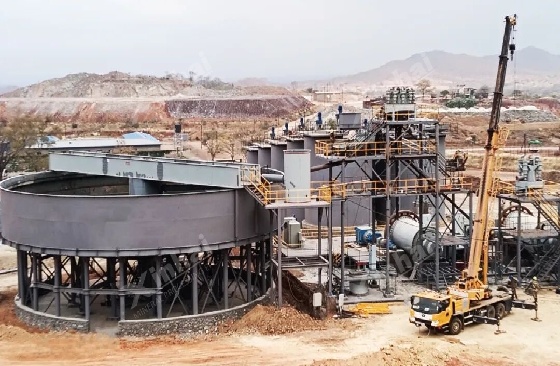
Selecting appropriate gold beneficiation equipment directly affects gold recovery and operating stability because each equipment type is designed to target specific gold particle sizes and mineral associations.
If the equipment does not match the ore characteristics, recovery losses increase, and operating costs rise.
As a result, mismatched equipment often leads to underperforming plants and reduced project profitability.
The point of this guide is to give project bosses and backers a fast rundown on the key kinds of machinery, simple guidelines for matching them to ore types, and honest ballpark figures for budgeting a decent gold processing plant in Africa.
The core gold beneficiation equipment used in Africa can be grouped into gravity separation equipment, flotation equipment, and leaching/CIL systems, each matching a specific gold mineralisation type. Most modern gold processing equipment in Africa installations use a combination of these technologies in an integrated flowsheet.
You'll usually start with this for recovering bigger, liberated gold grains in free-milling setups. Popular gravity recovery tools for gold involve jigs, high-speed centrifugal devices (such as Knelson or Falcon models), plus shaking tables. It's pretty effective, comes with cheap ongoing costs, and gets deployed a lot as an early enrichment phase to pull out a sizable amount of gold quickly, easing the pressure on the rest of the circuit.
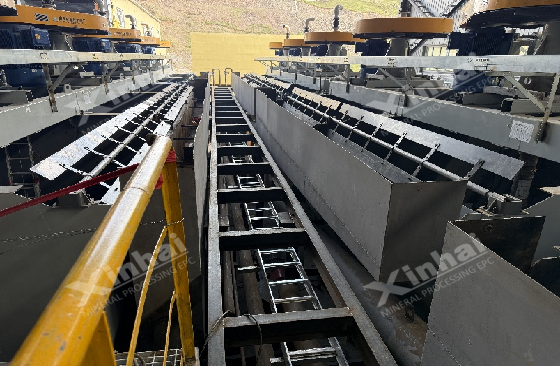
For gold locked in sulfide minerals or those stubborn refractory types where it's embedded in host rocks, proper flotation machinery is vital. Conventional mechanical cells float off the hydrophobic sulfide particles loaded with gold from the barren material, yielding a top-quality concentrate. People might sell this concentrate directly or treat it more thoroughly through on-site leaching. Flotation proves critical for the intricate ores that show up so often in numerous deposits throughout Africa.
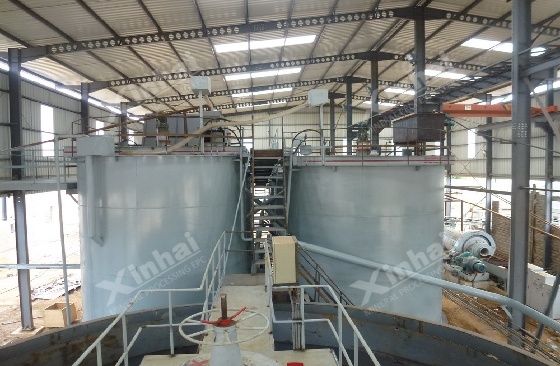
The most widespread method for processing low-grade( typically below 2–3 g/t ), fine-grained ores is cyanide leaching, typically within a Carbon-in-Leach (CIL) circuit. Gold leaching equipment consists of a series of agitated tanks where gold is dissolved. A CIL system for gold integrates activated carbon into these tanks to simultaneously adsorb the dissolved gold, offering high recovery and a streamlined process. It is the backbone of many medium to large-scale African operations.
In summary, the majority of African gold plants are not single-process operations but rather carefully designed combinations of gravity, flotation, and/or leaching circuits to maximise overall recovery.
Equipment selection for a gold beneficiation plant depends heavily on ore type, and misalignment here is a primary cause of project underperformance. A rigorous metallurgical test-work program is non-negotiable.
These are typically the simplest to process. A combination of gravity (for any coarse gold) and straightforward cyanide leaching (tank or heap leaching) is often sufficient. This path generally involves lower technical complexity and capital expenditure, making it attractive for smaller African gold projects.
When gold is associated with sulfide minerals like pyrite or arsenopyrite (refractory or semi-refractory), a flotation circuit is usually required to produce a concentrate. The flowsheet may then involve flotation + CIL or flotation + direct leaching of the concentrate. This requires stronger process control and higher CAPEX(Capital Expenditure, which means the upfront cost of building and equipping a gold beneficiation plant), but is essential for economic recovery.
Many African deposits have heterogeneous ore bodies. In many African gold projects, mixed ores require a flexible flowsheet design, often incorporating both gravity and flotation upfront, followed by leaching. Modular or expandable plant designs can be advantageous.
The critical reminder is that an estimated 80% of project failures stem from insufficient ore understanding and incorrect equipment selection, because equipment selection is directly based on metallurgical test results. Testing must inform the design, not anecdotal experience from other sites.
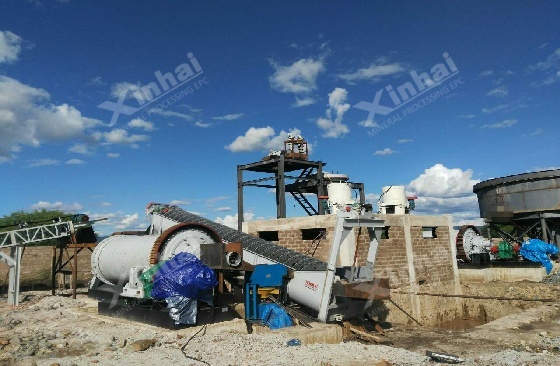
Discussing the price of gold beneficiation equipment in Africa requires understanding key variables: processing capacity (Tonnes Per Day - TPD), ore complexity (which dictates process complexity), the level of automation, and local infrastructure conditions (requiring additional generators, water treatment, etc.). Therefore, the gold processing plant cost is highly project-specific.
As a guideline for budget planning:
Often gravity-dominated or simple leach systems. This represents the entry-level investment range, focusing on simplicity and low capital outlay.
These commonly employ combined processes like Gravity+CIL or Flotation+CIL. Investment here balances CAPEX with achieving higher, more consistent recovery rates. This is a very common range for expanding operations in West Africa.
These are full, automated facilities, often with complex CIL or flotation-CIL circuits. The capital cost is significantly higher, justified by superior recovery, process stability, and integrated tailings management.
A vital principle for investors: the lowest upfront cost rarely equals the lowest lifecycle cost. Robust, appropriately specified equipment saves money in operational efficiency and recovery over time.
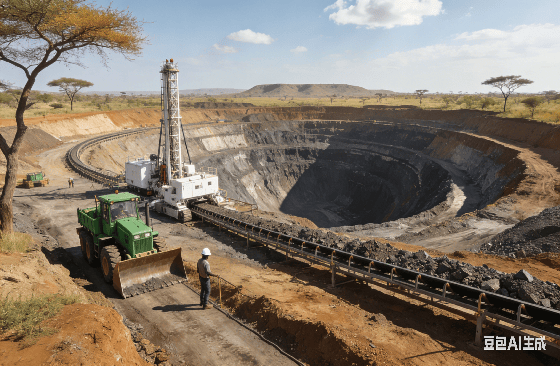
The gold beneficiation plant configuration evolves significantly with scale and ore type. For a gold processing plant in Africa, common examples include:
A gravity-dominant configuration is typical, using a crusher, ball mill, and a bank of centrifugal concentrators or jigs. The layout is simple, allowing for fast commissioning and relocation if needed.
This medium-scale range often sees combined processes. A popular configuration in West Africa for free-milling ores is a gravity circuit for coarse gold recovery, followed by a CIL circuit for fine gold. For sulfide ores, a compact flotation circuit may be added.
These are major installations. A full, multi-stage CIL plant with thickeners, extensive leaching/adsorption tanks, carbon handling, and elution circuits is standard. For refractory ores, a substantial flotation section precedes the leaching circuit. Emphasis is on maximising recovery, automation for stability, and comprehensive tailings storage facility management.
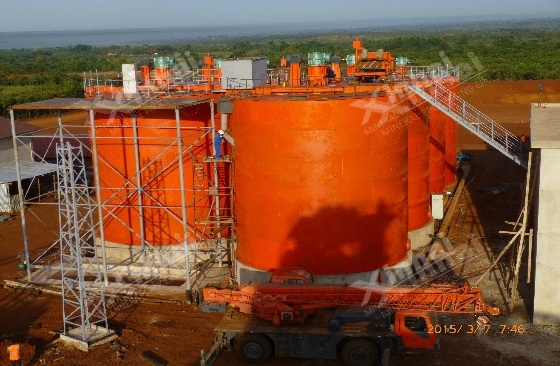
Selecting a gold beneficiation equipment supplier goes beyond comparing machinery price lists. For success in Africa, the supplier must be a project partner. Key evaluation factors include:
Process Design Capability: Can they translate your metallurgical test results into an efficient, bankable flowsheet?
Equipment Manufacturing Quality: Durability and reliability are paramount to withstand harsh operating conditions.
EPC/EPCM Experience in Africa: Proven track record in delivering Engineering, Procurement, and Construction (Management) projects on the continent, understanding logistical and regulatory hurdles. Xinhai Mining has undertaken many EPC/EPCM projects in countries such as Tanzania and Ghana.
Local Service & Commissioning Support: The availability of skilled technicians for installation and commissioning and reliable after-sales support in Africa is critical for minimising downtime. Xinhai Mining is a Chinese mining equipment manufacturer. Xinhai opened a branch in Ghana in July 2025 to provide localized services to the African market.
The core distinction is between a company that simply sells machinery and one that delivers a fully functional gold plant equipment supplier in Africa. The latter provides peace of mind and long-term value.
Navigating the selection and investment for your African gold project requires a clear, customized plan. We provide tailored support for Africa gold beneficiation equipment selection, from conceptual design to commissioning.
Xinhai Mining will work with your ore data to provide:
√ A detailed gold beneficiation plant equipment list specific to your ore type and target capacity.
√ A recommended process flowsheet and preliminary budget estimation.
√ Direct experience supporting African gold projects through all phases.
Request your gold beneficiation equipment solution today. Let's help you build a robust, profitable operation based on the right technical foundations. Get a complete Africa gold beneficiation equipment solution tailored to your ore and capacity.
 +86 13811510145