If you want to know more information (such as product/process price, etc.), please contact us 24-hour telephone
Sudan has really solidified its place as one of Africa's top gold producers, with substantial mineral resources buried deep beneath its land. This success is part of a broader narrative of efficient gold processing across the continent. The country's gold reserves mainly consist of oxidized and altered ores, where the metal usually appears as loose, tiny particles. This kind of geology has made the Carbon-in-Leach (CIL) and Carbon-in-Pulp (CIP) techniques the mainstays of Sudan's gold mining sector. These approaches, known for their effectiveness and reliability over the years, remain the go-to options for extracting gold from the typical ore types found there. The successful implementation of a 300TPD Gold CIL plant by Xinhai Mining in Sudan serves as a prime example of adapting this mature technology to local conditions to deliver exceptional economic returns.
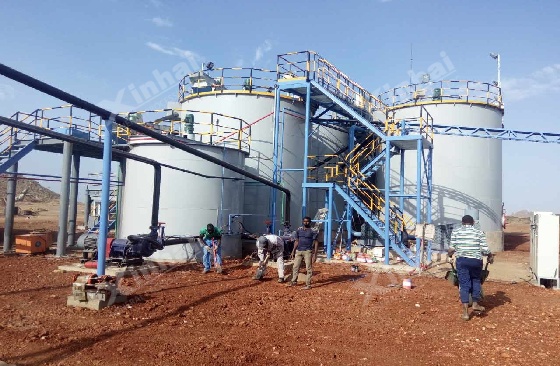
Sudan's geological past has caused widespread surface oxidation in its gold deposits, you see. In these oxidized ores, the gold isn't trapped inside stubborn sulfide stuff, so it's pretty easy for cyanide to get at it and dissolve it out. With the CIL method—where you add activated carbon directly to the leach tanks to adsorb the dissolved gold—it achieves impressively high recovery rates. Take that 300TPD setup as an example; overall gold recovery can exceed 91%, and the leaching and adsorption sections often reach 95-99%. That kind of performance really boosts the bottom line for these projects.
CIP and CIL are basically tried-and-true, off-the-shelf technologies that come in modular pieces. That means you can design, build, and set up the plant pretty quickly—super crucial in places where getting things running fast makes or breaks the profits. Projects like the one from Xinhai use steel frames for the concentrators, which let you adjust the layout to whatever hilly or uneven ground you've got, and it cuts down massively on all that concrete pouring and waiting around. Running the thing isn't rocket science either. Once folks get some decent training, they can handle it without too much hassle, whether it's a small outfit or something bigger.
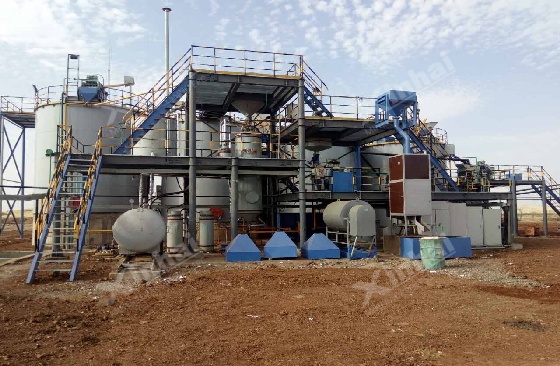
Compared with alternative gold recovery methods such as flotation or gravity-only circuits, a well-designed CIL plant offers a favorable balance of capital and operating costs. The reagent system (cyanide, lime) is proven and manageable, and energy consumption is primarily for grinding and agitation. The process's robustness ensures good economic performance even amidst fluctuations in gold prices, providing investors with a reliable return model.
The same principles of efficiency and adaptability have driven the successful implementation of CIL plants in other regions, such as West Africa.
Sudanese gold ores are primarily oxide or weathered residual types, often associated with quartz veins. Gold grades can vary widely, commonly ranging from 1 to 8 g/t. A frequent challenge is the fine dissemination of gold particles and the presence of clay minerals in some deposits, which can affect pulp viscosity and filtration. Ores may also contain impurities like rag, wood, or bottles, as noted in the project case, necessitating effective pre-screening and trash removal stages in the plant design.
1. Crushing and Grinding
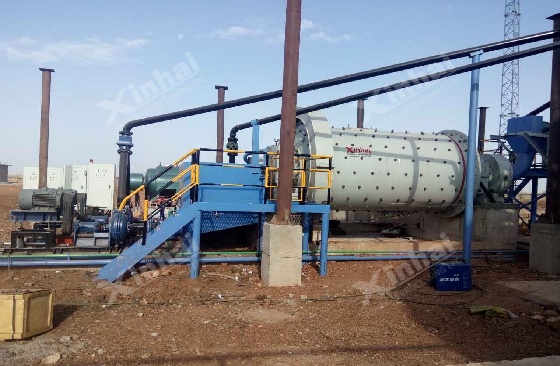
For tailings or alluvial materials, crushing may be minimal. Run-of-mine ore typically undergoes multi-stage crushing. The ore is then ground in a ball mill in closed circuit with a hydrocyclone classifier to achieve a target fineness (often around 80% passing 74 μm), thereby liberating the fine gold for leaching.
2 . Leaching and Carbon Adsorption (CIL)
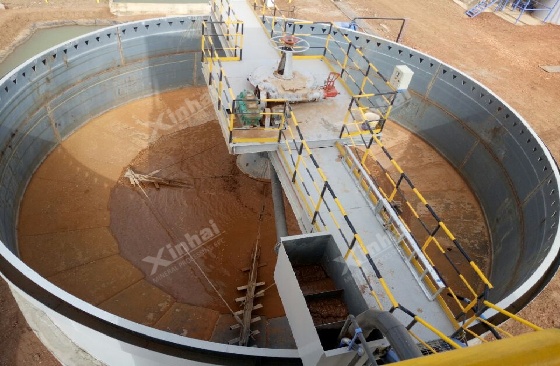
They thicken the ground slurry first to make it denser, then pump it into a bunch of stirred-up CIL tanks. You add sodium cyanide (NaCN) and some lime to keep the leaching alkaline. At the same time, they throw in granular activated carbon. As the cyanide starts dissolving the gold, the carbon grabs it right away. They bubble air through the tanks too, to keep oxygen levels up—the reaction must keep going.
3. Elution, Electrowinning, and Smelting
Once the carbon's loaded with gold, they screen it out from the pulp and move it over to this desorption column—basically the elution step. A hot mix of caustic and cyanide solution strips the gold off the carbon there. That rich solution, the pregnant eluate, then goes into an electrowinning cell, where the gold plates onto steel wool cathodes. Finally, they dry that gold sludge and smelt it in a high-frequency furnace to get doré bullion bars.
4. Tailings Treatment
The leftover slurry from the CIL—those barren tailings—is a big deal when it comes to looking after the environment. In newer setups, such as those in Sudan projects, they dewater the tailings with a chamber filter press, resulting in a fairly dry cake with only about 20-25% moisture. That makes it safe for dry stacking. The liquid that comes out gets treated and mostly recycled back into the process—they're aiming for basically zero liquid discharge.
CIP vs CIL for Sudan: Both work fine, but folks tend to lean toward CIL. It's got a more straightforward setup and handles the usual oxide ores really well. The nice thing is that it does the leaching and adsorption all in one go, so you need less equipment, and the whole plant takes up less space. That’s a real plus when you're trying to keep things compact and not spend a fortune.
The performance of any CIP/CIL plant hinges on the selection of robust and efficient beneficiation equipment, a principle we apply across our African projects.
The 300TPD project exemplifies the core equipment list:
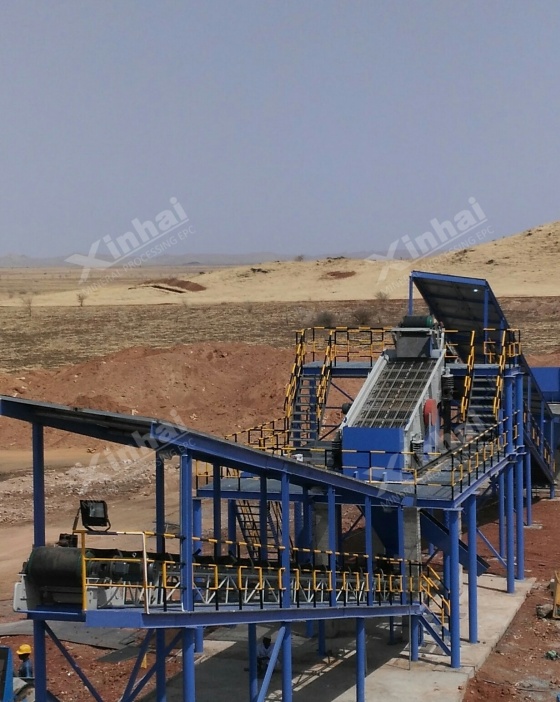
Pre-Screening: Double-layer circular vibrating screen for removing impurities.
Grinding: Overflow ball mill with a hydrocyclone unit for classification.
Thickening: High-capacity thickener for pulp density control.
Leaching & Adsorption: Series of dual-impeller, high-efficiency leaching tanks.
Gold Recovery: Desorption electrolysis system and high-frequency gold smelting furnace.
Tailings Management: Chamber filter press for dry stacking and supporting water treatment tanks.
The capital expenditure (CAPEX) for a CIL plant in Sudan depends heavily on plant capacity (e.g., 300TPD vs. 1000TPD), ore characteristics (grinding hardness, clay content), and site-specific infrastructure. A modular, steel-structured design can significantly reduce civil works costs and construction time. Operating costs (OPEX) are dominated by grinding media, reagents (cyanide, carbon), power, and labor. An optimized design that maximizes recovery and minimizes reagent consumption, as achieved in the referenced project, is critical for long-term profitability.
Managing Clay-Rich Ores: Clays can increase viscosity and hinder filtration. Solutions include using appropriate dispersants, optimizing thickening, and selecting robust filtration equipment, such as membrane plate filter presses.
Controlling Cyanide Consumption: Certain ore constituents can lead to high cyanide use. A staged reagent addition strategy and close control of pH and oxygen levels help optimize consumption.
Ensuring High Carbon Activity: Carbon must be regularly screened, cleaned, and thermally regenerated to maintain its gold adsorption capacity. A well-designed carbon handling system is vital.
Water Conservation and Environmental Compliance: In arid regions, implementing a fully closed-circuit water-recycling system and secure dry tailings stacking are not just environmental imperatives but also practical necessities, as demonstrated by the Sudan project.
Every Sudanese gold deposit has its unique signature—varying in grade, mineralogy, hardness, and clay content. A standard, off-the-shelf flowsheet cannot guarantee optimal recovery and cost-efficiency. Just as Xinhai's 300TPD project was tailored to specific ore characteristics (including pre-screening for impurities and a tailored leaching-adsorption circuit), your project deserves a bespoke design.
Contact us for a customized CIP/CIL process design based on comprehensive metallurgical test work. We will engineer a solution that maximizes your recovery, controls your costs, and ensures sustainable operation, turning your Sudanese gold resource into a profitable and compliant operation.
Our expertise is not limited to Sudan; we have also delivered tailored solutions for gold mining operations in other key African nations, including Ghana.
 +86 13811510145