If you want to know more information (such as product/process price, etc.), please contact us 24-hour telephone
When the roar of an iron ore mine falls silent, and the main processing circuit delivers profitable concentrates, a similarly massive but often underestimated "by-product" quietly accumulates — iron tailings. Characterized by fine particle size, high moisture content, and complex composition, these seemingly waste materials occupy vast tracts of land.
Facing increasingly stringent environmental regulations and continuously rising tailings storage facility (TSF) operating costs, more and more mine managers are beginning to ask: Are iron tailings merely an environmental burden, or are they undiscovered hidden wealth?
The answer depends on the iron tailings processing technology we choose. Selecting the right technological path can transform a burden into wealth and a challenge into an opportunity.
To find a solution, we must first understand the challenges posed by the nature of iron tailings:
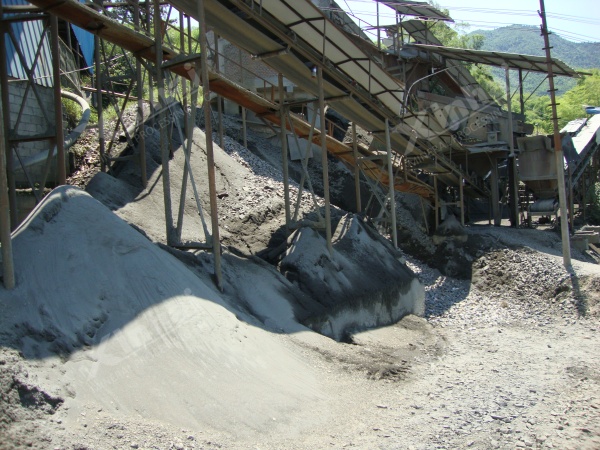
The Processing Dilemma of Fine Particle Size: Iron tailings particles are extremely fine, behaving like "silt," making them difficult to settle and separate from water. Traditional storage methods not only require enormous reservoir capacity but also pose long-term safety risks related to dam stability.
The Economic and Environmental Pressure of High Moisture: Tailings slurry typically has very high water content. This means vast amounts of water resources are locked away and wasted, while transportation and storage costs remain high. Seepage also poses a potential threat of contaminating the surrounding soil and groundwater.
Complex Composition Hiding Value and Risk: Besides residual iron minerals, tailings often contain other valuable elements (such as rare earth elements or precious metals) or environmentally harmful components. Simple storage is both a waste of resources and a potential environmental risk.
These pain points are forcing mining companies to seek more advanced and comprehensive solutions for iron tailings processing and utilization.
The following are three mainstream iron tailings processing technologies. Choosing one or a combination depends on a scientific decision-making process considering tailings properties, local regulations, site conditions, and return-on-investment objectives.
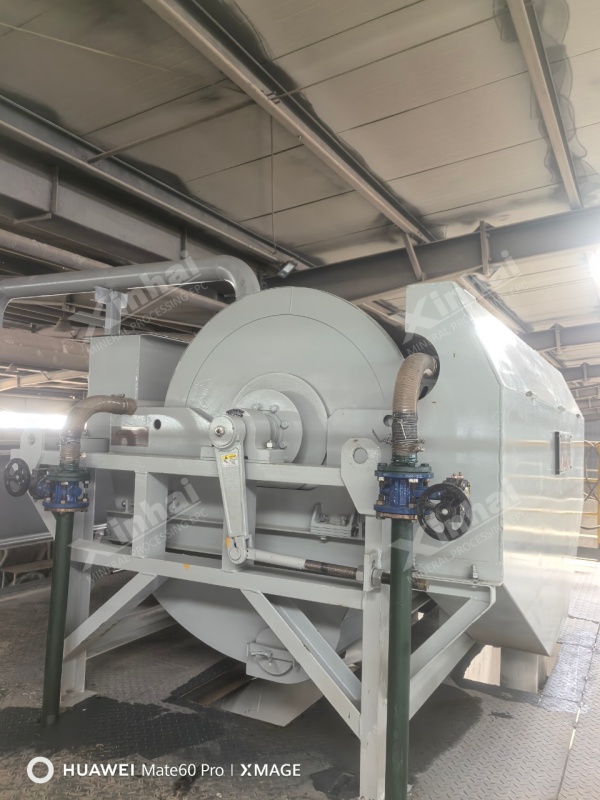
The core objective of dry discharge technology is to remove as much water as possible from the tailings, producing a dry cake with very low moisture content, enabling "dry stacking" or "dry backfilling."
Core Process: Typically employs a combined "thickening + dewatering" process. After initial densification by a high-efficiency thickener, the critical step involves deep dewatering using a high-pressure filter press or a belt filter press. Xinhai Mining has mature applications in this field, capable of matching the appropriate combination of dewatering equipment and process parameters based on material characteristics (like particle size distribution and viscosity).
Core Advantages:
Safety: Dry stacking significantly improves dam stability, fundamentally reducing the risk of failure.
Water Conservation: Recovers 80%-90% of process water, which is directly returned to the production circuit, drastically reducing fresh water consumption.
Land/Cost Savings: The volume of dry-stacked tailings is greatly reduced, decreasing reservoir capacity requirements, extending the TSF's service life, and lowering related operation and management costs.
Applicable Scenarios: Particularly suitable for water-scarce regions, areas with strict environmental requirements, and projects that can use dry tailings for underground backfilling or as raw material for construction products.
Wet discharge is not simply "releasing and forgetting." It involves technological upgrades to enhance water recovery and pre-concentration of valuable components within the traditional wet discharge framework.
Core Process: Before tailings enter the storage facility, solid-liquid separation is first achieved via a high-efficiency thickener or settling pond. The clarified water is recycled to the processing plant, creating a closed water circuit. Simultaneously, simple gravity separation equipment like spiral concentrators or shaking tables can be added to chutes or launders prior to discharge to preliminarily recover residual, heavier iron minerals from the tailings stream.
Core Advantages:
Relatively Flexible Investment: Can be implemented as an upgrade to existing wet discharge systems, offering a controllable initial investment.
Immediate Benefits: Generates immediate economic returns by recovering water and a portion of valuable minerals.
Foundation for Future Use: Preliminary concentration and "scavenging" of tailings create better conditions for potential future reprocessing or comprehensive utilization.
Applicable Scenarios: Suitable for existing mines with wet discharge systems seeking performance improvements to enhance profitability and environmental standards.
This is a deep processing path that directly "valorizes" tailings, aiming to recover remaining valuable minerals through more refined separation technologies.
Core Process:
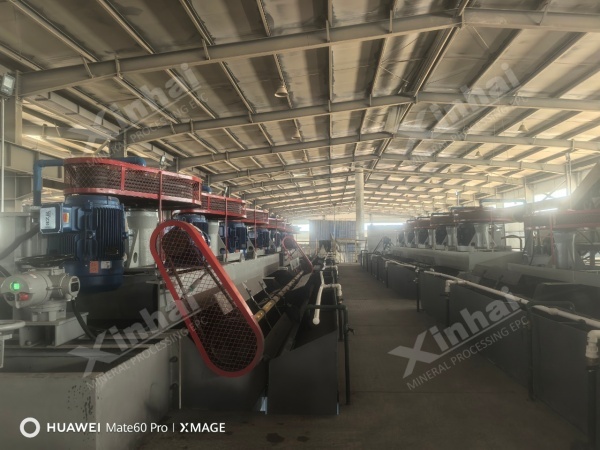
Magnetic Reprocessing: Targets residual magnetic particles like hematite or magnetite using high-gradient magnetic separators (HGMS) or pulsating high-gradient magnetic separators (PHGMS). These offer high magnetic field intensity and gradient, effectively capturing fine, weakly magnetic minerals for "powerful adsorption and more thorough recovery."
Flotation Reprocessing: For non-magnetic or highly oxidized iron minerals with complex mineralogy and extremely fine (micrometer-level) grain size, flotation technology shows unique advantages. By developing highly efficient, targeted flotation reagents (collectors, depressants, modifiers), selective separation of target minerals can be achieved, enabling "reagent-assisted, precise separation."
Core Advantages:
Value Addition: Directly creates economic returns, turning waste into treasure and extending the mine's operational life.
Tailings Volume Reduction: The amount of final tailings is reduced after reprocessing, and their properties may be more stable, facilitating subsequent disposal or use.
Applicable Scenarios: Suitable for mines where the original processing recovery rate has room for improvement, or where tailings still contain economically viable grades of valuable minerals.
Faced with complex technological choices, companies often struggle with decision-making. Xinhai Mining believes there is no "one-size-fits-all" technology, only the right solution. Our tailored systems offer the following advantages:
Accurate Diagnosis & Customized Design: We begin with a comprehensive analysis of the client's iron tailings' physical and chemical properties—material composition, particle size, magnetism, etc.—for precise "diagnosis." Based on the results, and considering the client's budget, site conditions, and long-term plans, we tailor a combined technological solution. This could be a standalone dry discharge system or an integrated process like "reprocessing + dry discharge" or "wet discharge upgrade + reprocessing."
Core Technology & Equipment Assurance: Xinhai possesses self-developed key equipment such as high-efficiency thickeners, various filter presses, high-gradient magnetic separators, and flotation columns, ensuring reliable performance and efficient operation at the core stages of the solution.
Full-Service & Turnkey Delivery: From process design, equipment manufacturing and procurement, installation, and commissioning to personnel training and operational support, Xinhai provides mineral processing EPC services. We ensure the final project delivery is not just a set of equipment, but a stable, operational production system that meets expected performance targets (resource recovery rate, water savings rate, volume reduction rate).
Comprehensive Evaluation of Economic & Environmental Benefits: We insist on calculating the "total cost" for the client, considering not only the initial investment but also, through detailed operational cost analysis and ROI projections, demonstrating the long-term combined economic and environmental benefits brought by advanced tailings processing technology.
Iron tailings no longer need to be a "burden" mines are forced to bear. Through scientific evaluation and the selection of advanced processing technologies, they have the full potential to become levers for cost savings and sources of additional revenue. In an era of increasingly strict environmental demands and growing resource value, proactively upgrading tailings management is an essential step for companies moving towards sustainable, high-quality development.
If you are seeking a breakthrough for your iron tailings disposal challenges, if you want to assess the hidden value within your tailings...
Xinhai Mining is ready to be your reliable technical partner. With extensive project experience in iron tailings processing and a professional team, we can provide you with:
✔ Tailings sample testing and preliminary solution assessment
✔ Targeted technical solution design and economic benefit analysis
✔ Visits to successfully operating reference project sites
Contact us today to begin your journey of iron tailings value transformation. Let's work together to turn environmental burdens into genuine hidden wealth!
 +86 13811510145