If you want to know more information (such as product/process price, etc.), please contact us 24-hour telephone
Africa stands out as one of the biggest gold-producing spots on the planet. Most gold mines here deal with lower-grade stuff, usually sitting around 1 to 3 g/t in lots of operations across the continent. When handling this kind of African gold ore, folks generally crush it first, then grind away before moving to CIL (carbon in leach) or CIP (carbon in pulp), sometimes throwing in gravity separation too.
The ball mills do the heavy lifting here – they take that crushed ore and shrink it down to a steady particle size, often aiming for P80 = 75–150 μm. That step really matters because it helps free up the gold bits properly, which then boosts how much you recover later on.
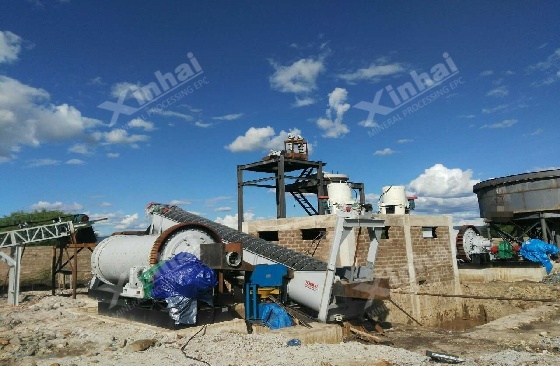
In the entire gold ore processing flow, the ball mill is located after crushing and before separation operations (flotation/gravity separation/CIL).
The core function of the ball mill is to further liberate the ore after crushing to achieve the appropriate grinding fineness. For example, a CIP plant can maintain a stable P80 of 75 microns, meaning that 80% of the ground material passes a 75 μm screen, which is a typical target size for CIL and CIP gold processing. Maintaining a stable grinding product size ensures sufficient liberation of gold particles for effective cyanide leaching.
Both CIL and CIP processes require well-liberated gold particles to ensure sufficient contact between gold and cyanide solution, making stable grinding size control critical.
Common Ore Types:
Gold ores in Africa are broadly classified into two main types: oxidized gold ores and primary sulfide gold ores. Oxidized ores, often found near the surface, are typically easier to process using conventional cyanidation. In contrast, primary sulfide ores require more complex treatment, such as flotation or pre-oxidation, to achieve satisfactory recovery rates.
Technical Challenges:
African gold ores often cause big engineering problems. The main reasons are two: the gold particles are very tiny (usually under 30 μm), and there's a lot of hard quartz mixed in.
To free those small gold bits for cyanide leaching, you need to grind super fine, aiming for P80 = 75 μm. This takes more time and power in the mill, so energy use and costs shoot up. Plus, the quartz is really abrasive – it wears out grinding balls and liners fast, meaning more power is needed and frequent repairs.
All this makes steady mill operation tough. Choosing the right liners is crucial, or gold recovery drops. It's challenging, but fixing these issues properly can make a big difference.
For the variable and abrasive ores common in
African gold mines, ball mills are preferred because their design allows
consistent fine grinding under varying ore hardness and particle size
distributions. Their operational simplicity and adaptable discharge mechanisms
reduce downtime and maintenance risks, ensuring stable gold liberation and
higher overall recovery compared with alternative mills such as rod or SAG
mills.
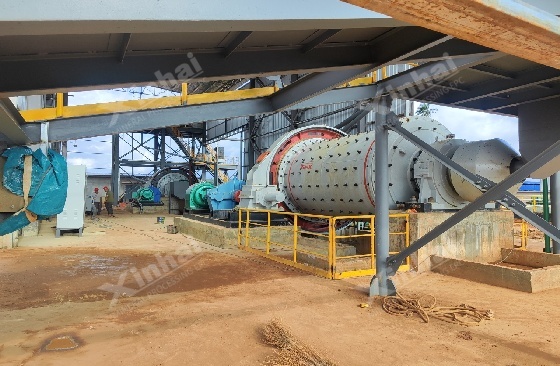
In Africa, different ball mill types are used for different needs. One common type is the Grid Type Ball Mill.
Where It Is Used:
The Grid Type Ball Mill is primarily used for coarse grinding, typically as the first stage after primary crushing. Its grid discharge design allows for controlled retention of large particles while discharging smaller ones, making it suitable for subsequent gravity separation circuits. This configuration ensures that coarse gold particles are efficiently liberated without overgrinding, improving downstream recovery efficiency.
Key Features:
It forces discharge through a grid plate. This gives high grinding efficiency. The final product size is relatively coarse.
Common Applications:
It is often used in small to medium gold mines. Many plants use it in a combined process. This combined process typically includes gravity separation followed by cyanidation to recover both coarse and fine gold. For example, a small gold processing plant in Zimbabwe uses this mill. It grinds ore before shaking tables and leaching. This setup offers simplicity and proven effectiveness.
Definition:
An overflow ball mill is a wet ball milling device without a forced discharge device. The material is discharged primarily through natural overflow from the slurry surface.
Applications:
Overflow Ball Mills are designed for fine grinding operations, typically achieving a product size of P80 between 75 μm and 150 μm (100–200 mesh), which is suitable for flotation or CIL/CIP processes. In closed-circuit operation, a classifier recirculates coarse particles back to the mill, maintaining a stable particle size distribution. This configuration minimizes overgrinding, optimizes energy use, and ensures consistent liberation of gold particles for efficient downstream recovery.
In Africa, the "overflow ball mill + hydrocyclone" configuration is the most typical and efficient closed-circuit grinding setup. This combination approach was used in the Tanzania gold mining project.
Closed-circuit grinding improves size control and prevents overgrinding, which is particularly important for energy-intensive African gold operations.
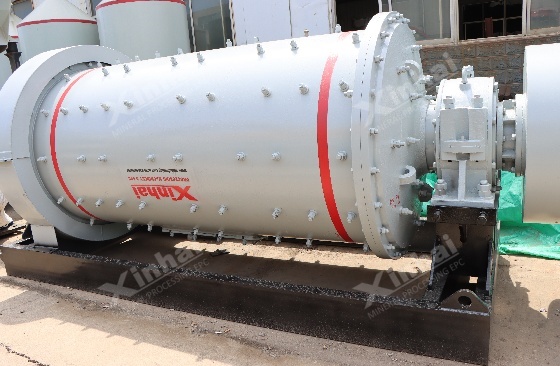
In Africa, wet ball mills are commonly used for gold ore grinding. This is because wet grinding is more suitable for subsequent beneficiation methods, such as flotation/cyanidation, produces less dust, and results in more stable gold recovery.
Typical configurations of wet ball mills mainly include: ball mill + spiral classifier, and ball mill + hydrocyclone.
Dry ball mills are less commonly used in Africa, primarily in areas with extreme water scarcity and for projects requiring dry pre-selection. Dry ball mills have limitations such as high energy consumption and difficulties in connecting to subsequent processes.
First, understand your ore.
Ore hardness, measured by the Bond Work Index (kWh/t), directly determines the energy required to achieve the target grinding fineness. Higher Work Index values indicate harder ore, which necessitates a higher mill power rating and more robust motor selection to maintain throughput. Accurately assessing ore hardness ensures that the selected ball mill can efficiently process the ore without excessive energy consumption or equipment stress.
Also, check the clay content. High clay can make the slurry thick and sticky. This affects grinding efficiency.
Finally, know your gold grain size. Fine gold needs finer grinding to liberate it.
Your plant size decides the mill size.
For a small mine (50–300 t/d), a smaller ball mill is enough.
A medium mine (300–1,000 t/d) needs a mid-sized mill.
For a large operation (1,000+ t/d), you will need a large, powerful ball mill.
Decide on your circuit flow.
An open grinding circuit is simpler in layout but offers limited control over product size compared with a closed circuit configuration. A closed circuit provides better control over product size and typically reduces overgrinding compared with open-circuit systems. It uses a classifier to send coarse material back for re-grinding. This improves efficiency and controls product size.
Liners protect the mill shell.
Manganese steel liners are good for impact. Rubber liners are quieter and good for corrosion.
Also, choose your grinding balls wisely. Use a mix of big and small balls. This improves grinding efficiency.
Power in Africa can be unstable.
Choose a motor that can handle voltage changes. Consider soft starters.
Also, think about a backup diesel generator. This keeps your mill running during outages.

Ball mill prices in Africa vary by size.
A small ball mill may cost between USD 20,000 and 50,000.
A medium mill often ranges from USD 50,000 to 150,000.
Large, high-capacity ball mills can cost USD 150,000 or more.
Many things change the price.
The mill's diameter and length are major factors. So is the motor power.
The type of liner (steel or rubber) also affects cost.
Remember to check what is included.
Does the price cover installation guidance? What about commissioning services or spare parts?
For African projects, never look at the machine price alone. Total cost and reliable support matter more.
Grinding uses the most power in a processing plant. It often takes 30% to 50% of all energy.
You can save energy.
First, control the feed size to your mill. Smaller feed rocks save grinding energy.
Second, use an optimal mix of ball sizes. This improves grinding action.
Third, install wear-resistant liners. They last longer and maintain a mill shape.
Finally, check the grinding fineness often. Do not over-grind the ore.
An efficient ball mill saves money long-term.
It means lower energy use per ton of ore.
It leads to higher gold recovery.
It also gives you a more stable, reliable operation.
A standard mill is rarely the best answer. You need a solution tailored to your specific ore, site conditions, and goals.
Xinhai Mining specializes in this. We start with thorough ore testing. We then match the optimal process and equipment for you. This includes selecting the right ball mill, liners, and designing the circuit.
Optimize your African gold processing plant with a ball mill circuit built for your specific ore. Contact Xinhai Mining today for a customized proposal and quote.
 +86 13811510145