If you want to know more information (such as product/process price, etc.), please contact us 24-hour telephone
Tin is a strategic rare metal indispensable for electronic component soldering, aerospace material alloying, and chemical catalyst production. As mining operations progress, high-grade and easily processed tin ores are becoming increasingly scarce. Most currently developed tin ores are low-grade, characterized by fine dissemination size and associated impurities such as iron, copper, and sulfur, making mining and ore dressing increasingly challenging.
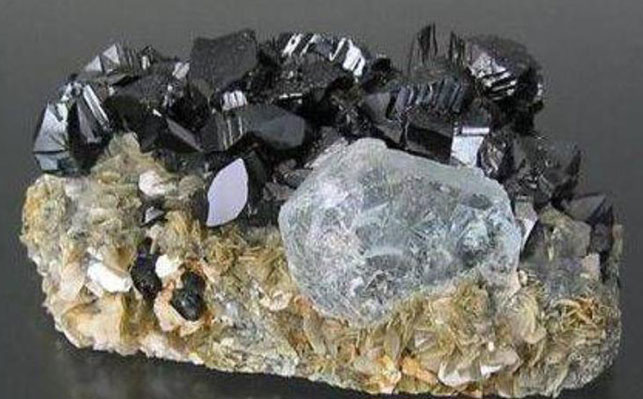
Under the traditional tin ore development model, mining and ore dressing operations are poorly integrated. Mining is conducted without considering dressing requirements, resulting in ore particles that are either excessively coarse or over-crushed, leading to low recovery rates. Random tailings storage not only occupies land resources and wastes valuable residual elements but also poses environmental pollution risks.
To address these issues, Xinhai Mining has established a full industrial chain service covering mining, dressing, and tailings management. We take full responsibility for the entire process from tin ore mining to tailings disposal, resolving core challenges in tin ore development.
Major countries with abundant tin ore resources include China, Myanmar, and Australia, each featuring distinct tin ore types. China’s tin resources are mostly medium-to-large polymetallic deposits associated with zinc, lead, indium, tungsten, etc. Myanmar’s tin deposits are primarily alluvial tin ores often associated with tungsten, tantalum, and niobium. Australia hosts large-scale open-pit tin mines with favorable mineralization conditions.
Xinhai provides customized mining services, developing tailored mining plans based on ore properties rather than a one-size-fits-all approach.
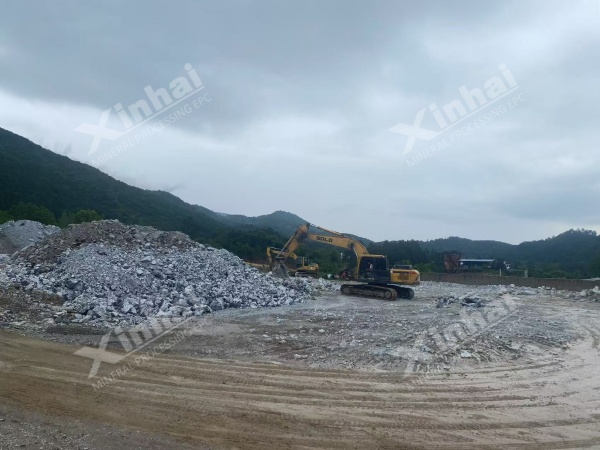
For stratified and stratoid deposits, we adopt sublevel mining combined with multi-face coordinated advancement. By controlling blasting intensity and mining rhythm, we stabilize ore particle size within an optimal range, preventing cassiterite over-crushing and slime formation, thereby reducing desliming pressure in subsequent processing.
For skarn-type polymetallic ores, on-site XRT ore sorters are deployed. Run-of-mine ore is sorted via X-ray technology to reject gangue minerals such as quartz and feldspar, increasing feed grade by 15%–20% and eliminating the need to process large volumes of barren ore in the plant.
Throughout tin mining, Xinhai Mining balances development efficiency and ecological protection. Roadway layouts avoid densely vegetated surface areas, and sublevel tunneling is employed to minimize bedrock disturbance, preserving surface landforms and reducing vegetation damage to the greatest extent.
Waste rock from mining is classified and stockpiled separately, with no random disposal. It is reused for goaf backfilling or processed into construction aggregates and highway base materials, ensuring no usable resources are wasted.
Tin ore dressing faces three core difficulties:
Cassiterite is brittle and easily slims during crushing and grinding.
Fine cassiterite particles are hard to recover using conventional flotation.
Abundant associated minerals (iron, copper, sulfur, etc.) make ideal performance unattainable with a single separation process.
Xinhai employs a combined gravity separation + flotation + magnetic separation flowsheet to target these dressing challenges:
1. Stage classification and desliming to remove slimes that interfere with separation.
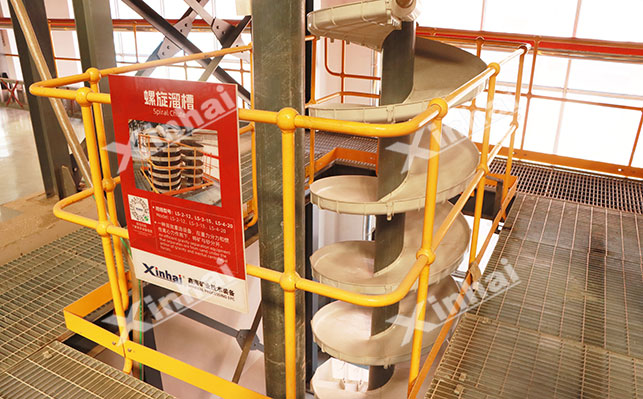
2. Coarse cassiterite particles (>0.075 mm) are processed via shaking tables and spiral chutes. Gravity separation leverages cassiterite’s high density (6.8–7.0 g/cm³) relative to gangue for preliminary concentration.
3. Fine cassiterite particles (<0.075 mm) are treated with flotation cells. Using combined collectors and neutral to weakly alkaline pulp pH, cassiterite is strongly adsorbed onto bubbles, improving recovery.
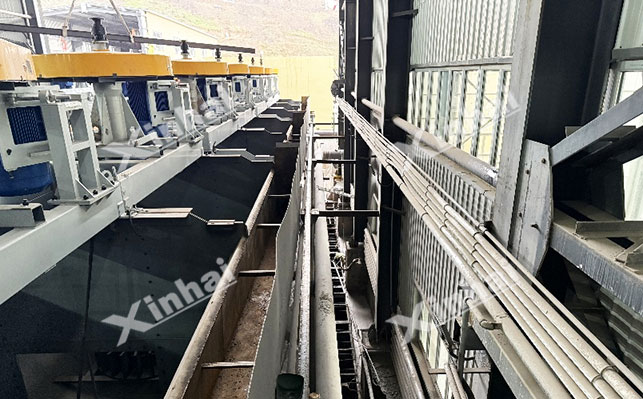
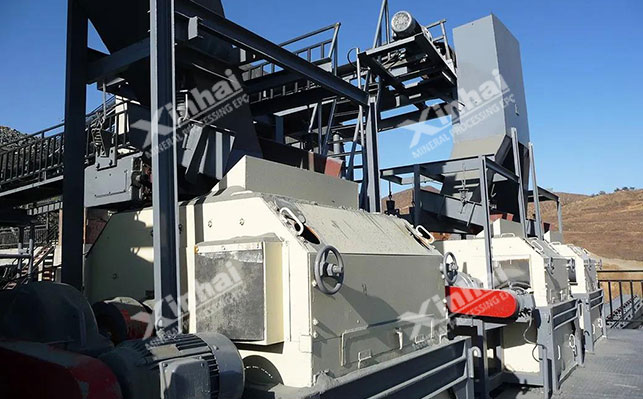
4. Magnetic separators remove magnetic impurities such as iron and manganese to further upgrade the tin concentrate grade.
For low-grade tin ores (tin content < 0.5%), we optimize the dressing process to multi-stage grinding and multi-stage separation. High-frequency vibrating screens control grinding fineness to prevent over-grinding, enabling economical upgrading of low-value ore into qualified concentrate.
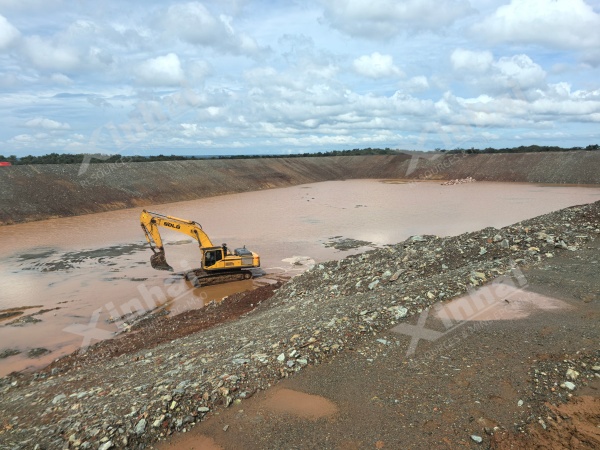
Tin tailings often contain over 0.1% residual tin plus valuable elements such as iron and copper. Uncontrolled storage wastes resources, occupies land, and causes severe soil and water pollution.
Xinhai Mining treats tin tailings as secondary resources for development and utilization. Common treatment methods include:
1. Tailings with >0.1% tin undergo reprocessing to recover valuable elements, equivalent to developing a new low-grade deposit.
2. Non-recoverable tailings are prioritized for goaf backfilling, reducing surface subsidence risk and cutting backfilling costs.
3. Remaining tailings are processed into building materials, including ceramic tiles, cement mortar aggregates, and subbase materials for Class II and below highways, achieving zero solid waste.
Xinhai’s tailings management fully adheres to green environmental standards:
Tailings wastewater is treated via flocculation-sedimentation and fully reused in mineral processing with zero discharge.
Dust generated during treatment is suppressed in real time using fog cannons and water trucks to meet environmental requirements.
Compared with traditional segmented services, Xinhai’s integrated solution features full-process coordination and seamless connection:
Mining parameters are optimized based on processing requirements.
Customized processing plans are formulated according to ore properties, ensuring a tailored approach for each deposit.
Tailings management plans are designed based on solid waste types from mining and processing.
Clients avoid multi-party coordination, eliminating efficiency losses and cost increases caused by poor integration between mining, dressing, and tailings links.
Resource utilization: Pre-concentration during mining, precise ore dressing, and tailings reclamation increase the overall resource utilization rate by more than 20%.
Cost control: Reduced multi-party coordination costs, optimized equipment and process matching, lower energy and reagent consumption, shortening project cycles by 15%–20%.
Sustainable development: Green mining and tailings resource utilization are implemented throughout the project. The entire mining, dressing, and disposal chain is environmentally friendly, supporting resource development while ensuring compliance with environmental regulations.
With its end-to-end integrated mining-dressing-tailings service, Xinhai Mining solves the top pain points of tin ore development: difficult mining, complex dressing, and troublesome tailings disposal, helping clients maximise the full value of tin resources. If you are facing low mining efficiency, poor ore dressing recovery, or tailings management challenges, contact Xinhai Mining for a customized, project-specific solution!
 +86 13811510145