If you want to know more information (such as product/process price, etc.), please contact us 24-hour telephone
Two silver ores, two recovery figures: 83.95% and 95%. The 11-point gap comes from how the silver sits in the rock.
In one ore the silver is native, coarse enough for gravity to pull it out before any flotation cell runs. In the other, silver sits inside galena and leaves with whatever the lead circuit produces.
The two cases give the decision rule. Free silver rewards gravity ahead of flotation. Silver locked in a sulfide rides with its carrier, capped by how well that carrier is recovered.
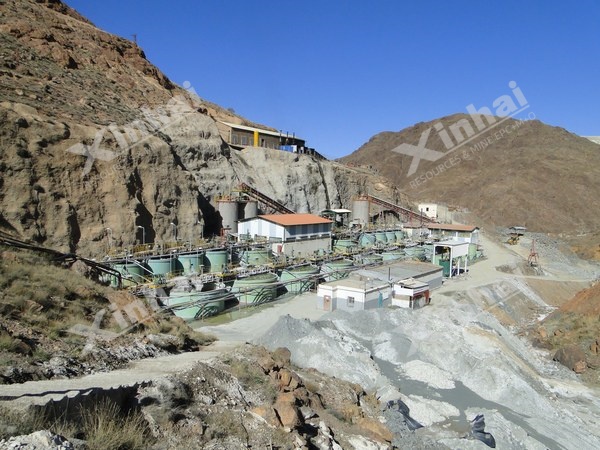
Silver concentrator in Morocco
The two operations below are both silver projects. Their ore is different, and that difference is what the comparison is about.
| Circuit A | Circuit B | |
|---|---|---|
| Silver in ore | 317 g/t, native silver | Carried in galena, paid through lead concentrate |
| Main metals | Silver only (Pb 0.14%, Zn 0.47%) | Lead and zinc, silver as by-product |
| Route | Gravity first, flotation on the gravity tailings | Selective flotation, silver follows lead |
| Silver recovery | 83.95% | 95% of silver, alongside 95.5% lead and 92% zinc |
The comparison covers two routes for two ore types, and does not rank the two operations. Circuit B reaches 95% because silver travels with lead and lead recovery runs at 95.5%. Circuit A reaches 83.95% because native silver includes a fine fraction flotation does not bring back.
What separates them is where the silver mineral sits, fixed by geology before anyone designs a circuit.
Circuit A treats an ore grading 317.22 g/t silver. The metallic minerals are native silver, pyrite and limonite; the gangue is quartz, feldspar and clays. Lead runs 0.14% and zinc 0.47%, so no sulfide carrier is present.
Testwork ran three routes on the same sample. Single flotation, at 86.5% passing 200 mesh through one roughing, two scavenging and two cleaning stages, produced a concentrate at 2,689 g/t and recovered 80.88%.
The combination did better. A gravity concentrator ran first and took a concentrate at 0.34% mass yield, grading 17,576 g/t silver, for 19.10% recovery. The gravity tailings then went to flotation at one roughing, two scavenging and three cleaning stages, producing a concentrate at 3,962 g/t for a further 64.85%. Total recovery: 83.95%.
A 0.34% mass pull carrying 19% of the silver is the argument for gravity first. A stream that small leaves the flotation circuit behind it undisturbed, and it removes silver at a grade no flotation cell reaches.
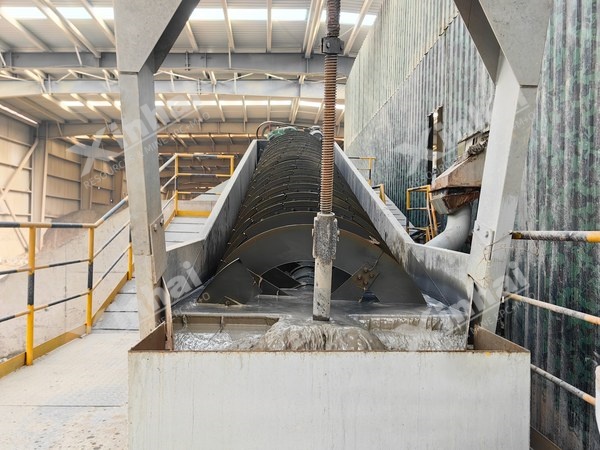
Spiral classifier at a lead-zinc-silver plant
Circuit B treats a lead-zinc-silver ore. Silver sits in galena and, to a lesser degree, in sphalerite and the iron sulfides. The design here covers a lead circuit and a zinc circuit; silver is read out of the lead concentrate afterwards.
That arrangement produces a higher silver figure, and for a straightforward reason. Silver recovery tracks lead recovery. When lead reports at 95.5%, the silver carried inside it largely goes along. The plant's published figures are 95.5% lead, 95% silver and 92% zinc.
A separate operation reported the same pattern from the other direction. At a lead-zinc-silver mine in Peru, silver and lead both came in at 84% during the first three months of commissioning, while zinc lagged at 81%. Two metals landing on the same number points to one being carried by the other.
Zinc trailing by three points is the normal shape of these circuits. Sphalerite is depressed while galena floats, then activated for its own circuit, and some silver goes with the zinc stream whichever way the lead-zinc separation is set.
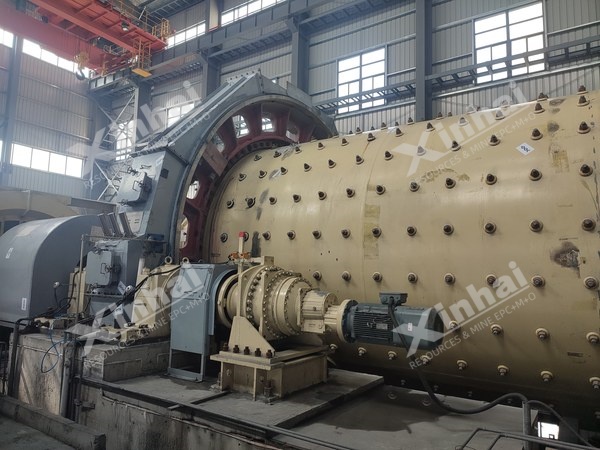
Ball mill on the grinding circuit
The two circuits lose silver in different places, which is why a single fix does not apply to both.
In Circuit A, the loss is in the fines. A size analysis of the tailings, which averaged 52.21 g/t silver, showed where the unrecovered metal sat.
| Size fraction | Mass | Silver grade | Share of silver loss |
|---|---|---|---|
| +0.074 mm | 16.45% | 48.14 g/t | 14.25% |
| -0.074 to +0.045 mm | 21.45% | 44.86 g/t | 18.43% |
| -0.045 to +0.038 mm | 10.30% | 41.83 g/t | 8.25% |
| -0.038 to +0.030 mm | 9.62% | 50.26 g/t | 9.26% |
| -0.030 mm | 43.18% | 60.23 g/t | 49.81% |
The finest fraction is 43% of the tailings mass and holds half the lost silver, at the highest grade in the table. That points downstream of the reagent scheme: fine native silver floats poorly and settles slowly, leaving with the slimes.
In Circuit B, the loss sits at the lead-zinc separation. Every adjustment to the galena-sphalerite split moves silver too. Grinding finer to open more galena also creates slimes, and slimes take silver out in the way Circuit A demonstrates.
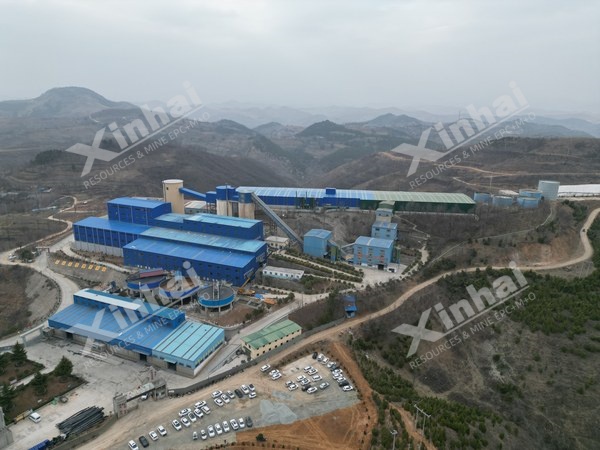
Flotation plant and thickeners from above
Recovery becomes revenue only if the silver lands in a concentrate someone pays for. Two mechanisms decide that.
Smelters pay on contained silver above a threshold, commonly 30 g/t, and settle at around 95% of the content; anything below the threshold pays nothing. Published silver concentrate grades run from 800 g/t to 1 kg/t, so a concentrate that misses the threshold wastes the silver stream whatever the recovery figure says.
Trade practice then applies a payable coefficient, commonly 70% to 85%, tied to the smelter's own recovery. A circuit that pushes recovery from 83% to 87% but ships to a smelter paying 70% keeps less than one that holds 83% and ships at 85%.
Both figures above are trade convention. They belong in a contract, and they should be checked before a recovery target is set.
The route follows the ore, and three tests settle which route it is.
Size analysis with assays by fraction. A head assay alone hides the picture. The Circuit A tailings table shows why: the loss concentrated in one fraction. The same analysis on the feed shows whether free silver is coarse enough for gravity.
Mineralogy on where the silver sits. Native silver, silver sulfides, silver in solid solution in galena, and silver locked in pyrite or arsenopyrite are four different problems. Published work on Chinese polymetallic silver ores lists galena and oxidized lead minerals first among carriers, then sphalerite, arsenopyrite and pyrite. That order sets which concentrate gets paid.
Closed-circuit testwork comparing routes. Open-circuit results overstate what a plant will do: single flotation came to 80.88% open, the combined route 83.95% closed. The gap appears only when both run to completion on the same sample.
Skip the second test and the circuit gets designed for the wrong carrier. Skip the third and equipment is sized on numbers the plant will not reproduce.
Where native silver is coarse enough to liberate, yes. Gravity removed 19.10% of the silver at 17,576 g/t from a 0.34% mass pull, and total recovery rose from 80.88% on flotation alone to 83.95%.
Because the silver travels with lead. High lead recovery takes the silver inside the galena with it. Free silver has to be captured on its own properties, and its fine fraction resists both routes.
Recovery came to 80.88% in open-circuit testwork at 86.5% passing 200 mesh. Adding gravity ahead of the flotation stages lifted the total to 83.95% in closed circuit on the same sample.
Smelters settle around 95% of contained silver above a threshold, commonly 30 g/t, and trade practice applies a payable coefficient of roughly 70% to 85% tied to smelter recovery. Both are contract terms.
Silver recovery is set by where the silver sits, before any equipment is chosen.
At Xinhai, we believe a silver circuit starts with a mineralogy report.
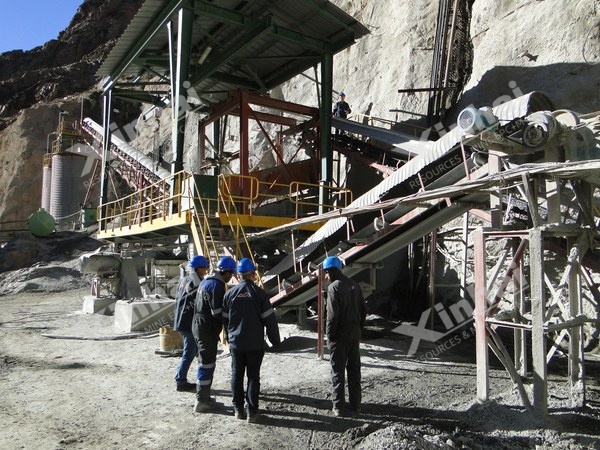
Silver plant under construction in Morocco
Sources
Circuit A ore, testwork and tailings analysis (317.22 g/t Ag head, native silver with pyrite and limonite; single flotation 2,689 g/t at 80.88%; gravity-plus-flotation closed circuit 83.95%; tailings size analysis averaging 52.21 g/t) — Xinhai silver ore test report, April 2016, for a 500 t/d Moroccan silver project.
Circuit B plant figures (95.5% lead, 95% silver, 92% zinc) — Xinhai project records for a lead-zinc-silver flotation plant in Henan, China.
Peru lead-zinc-silver commissioning figures (silver and lead 84%, zinc 81%, first three months) — quarterly disclosure by the operator, as reported in October 2026.
Silver carrier mineral sequence (galena and oxidized lead minerals, then sphalerite, arsenopyrite and pyrite) — Chinese Academy of Geological Sciences, Institute of Multipurpose Utilization of Mineral Resources, published study on a polymetallic silver ore.
Silver concentrate grade range (800 g/t to 1 kg/t) — Geoscience Australia, Australian Mineral Facts: Silver; USGS Circular 1196-N, Silver Recycling in the United States.
Smelter payment practice (95% of contained silver above a threshold, payable coefficient 70–85%) — published lead concentrate procurement specifications and historical smelter purchase terms. These are trade convention, not fixed terms.
Both operations are Xinhai projects; the comparison addresses ore types and routes, not relative project performance.
 +86 13811510145
