If you want to know more information (such as product/process price, etc.), please contact us 24-hour telephone
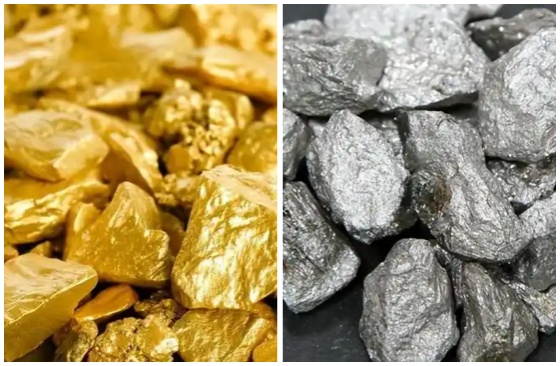
Gold and silver never seem to lose their shine, whether it’s sitting in a vault, powering a phone, or hanging around someone’s neck. Gold stays rare, tough, and conducts electricity like almost nothing else; silver tags along as the slightly more everyday precious metal that still gets the job done.
Getting either one out of the ground and into bars is rarely simple. The whole chain usually runs: exploration → mining → ore dressing (beneficiation) → smelting → refining. For gold, the trick is pulling those tiny specks away from tons of rock without wasting too much or trashing the surroundings. Silver pretty much follows the same path – dig it up, crush it, concentrate it through ore dressing, smelt the concentrate, then refine until it’s nice and pure.
Truth is, anyone putting money into mines these days keeps running into the same headaches: every deposit behaves a little differently, costs keep climbing (both the big upfront CAPEX and the day-to-day OPEX), and the environmental rules get tighter every year. That’s why picking the right processing route and working with people who actually know what they’re doing has become such a big deal.
These deposits typically consist of gold or silver disseminated in hard rocks such as quartz veins. They require intensive crushing and grinding for liberation.
These are formed through weathering of primary ores and often contain free-milling gold or silver that can be more easily extracted via gravity or leaching.
These deposits include a combination of gold, silver, lead, and zinc. Their processing often involves complex flowsheets such as bulk flotation followed by selective flotation.
The type of deposit significantly influences the mining method and processing route selected. For instance, oxidized ores are often suitable for heap leaching, while polymetallic ores generally require flotation for effective recovery.
When the good stuff sits close to the surface, companies just dig a massive hole – that’s open-pit mining. If the ore lies hundreds of meters underground or occurs in skinny veins, they go underground instead. It all boils down to the shape of the deposit, where the higher grades are, and whether the numbers actually add up on a spreadsheet.
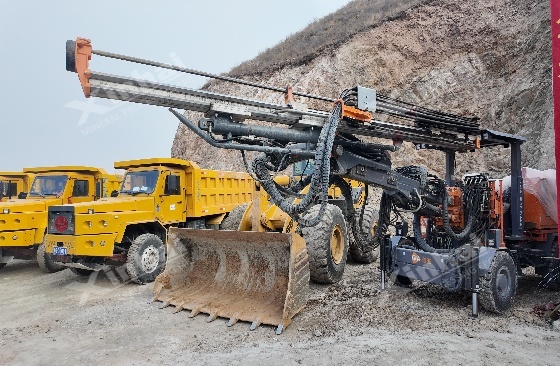
First, you drill holes, stuff them with explosives, and blow the rock to bits. Big shovels or front-end loaders scoop it up, dump it into giant haul trucks, and drive the broken rock to the crusher. There it gets smashed smaller – usually starts with a jaw crusher that acts like a nutcracker, then cone crushers finish the job before everything heads off to processing.
In open-pit mines, the stripping ratio can make or break you – that’s how many tons of dirt and waste rock you have to shift to reach one ton of ore. Too much dilution (mixing waste into the ore) and your average grade drops fast. Rock that’s hard as nails also chews through power and grinding media like crazy. The only way to avoid nasty surprises later is proper testwork right from the start. That’s where solid lab testing saves a fortune down the line – and yeah, Xinhai Mining runs those full mineral testing packages for anyone who doesn’t want to gamble.
The first step is always breaking the rock into manageable pieces. Big jaw crushers and cone crushers do the heavy lifting at the start, then the real work happens inside giant tumbling ball mills or those huge SAG mills that grind everything down to powder. The finer you grind, the more gold and silver you can actually free up later – simple as that.
A. Gravity Separation (for coarse gold & native silver)
When the gold shows up as visible flakes or the silver comes in chunky native form, gravity is your cheap-and-cheerful friend. Jigs, shaking tables, or centrifugal concentrators just let the heavy stuff sink while the junk floats away. Works beautifully when particles are big enough, but forget it if everything is super fine.
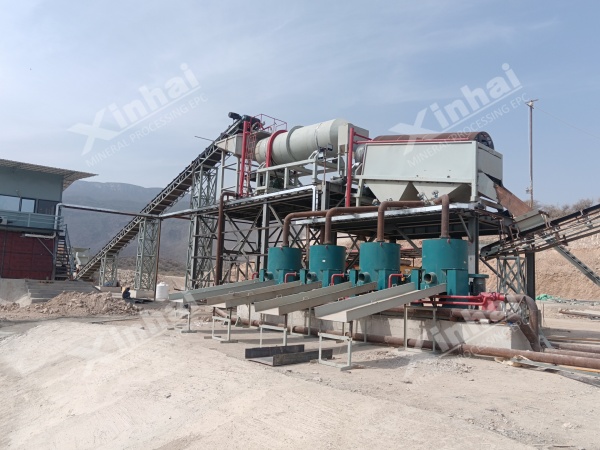
case : 200 TPH Gravity-Amalgamation Combined Process
B. Flotation (for silver-rich & polymetallic ores)
Most silver ores come mixed with lead, zinc, or copper, and the particles are tiny. That’s when you bubble air through the slurry, add collectors and frothers, and watch the valuable minerals stick to the foam. Usually, you do a rougher bulk float first, then clean it up in separate steps. Gets tricky, but recoveries can be really solid.
C. Cyanide Leaching (for gold and silver extraction)
Still the king for most deposits. You’ve got three main flavors:
CIL (Carbon-in-Leach)
CIP (Carbon-in-Pulp)
CIC (Carbon-in-Column)
Most plants these days use CIL because you throw the carbon straight into the slurry, and it grabs both gold and silver at the same time – fewer tanks, less hassle, better numbers.
How well it works depends on the ore type, how fine you grind it, the cyanide strength, pH, and how long you give it.
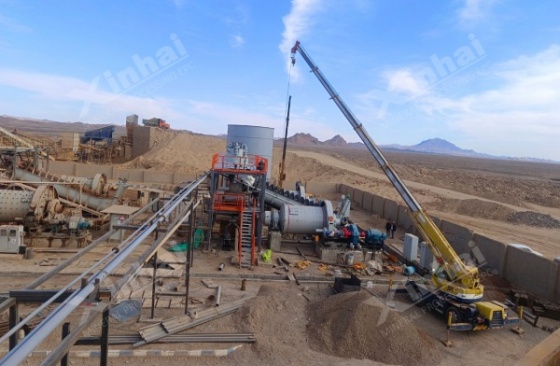
case : Iran Oxidized Gold Plant
D. Heap Leaching (for low-grade gold-silver ore)
Got mountains of low-grade stuff? Just crush it, pile it on a plastic-lined pad, and drip weak cyanide solution over the top for months. The pregnant solution trickles out the bottom, you run it through carbon columns, and boom – you’re making money off rock that used to be considered waste. Slow, but ridiculously cheap.
After concentration or leaching, further steps are required to produce market-grade metals.
This involves zinc dust precipitation of dissolved metals from cyanide solution, especially effective for silver-rich solutions.
In CIL systems, activated carbon adsorbs dissolved gold/silver, which are later stripped via desorption with a hot caustic solution.

Gold and silver ions are plated onto cathodes in electrowinning cells. The collected metal is then melted in furnaces to produce doré bars.
The final stage transforms concentrated gold into pure, market-ready metal: This includes chemical refining or electrorefining to achieve purity levels above 99.9%, meeting global bullion standards.
Choosing the optimal flowsheet hinges on ore mineralogy, grade distribution, and metallurgy.
Trade-offs must be considered:
Flotation provides high recovery but requires more infrastructure.
CIL achieves high recovery for free-milling ores but has higher reagent costs.
Heap leaching offers lower CAPEX but longer recovery times.
Recovery rate has a direct impact on project economics; even a small percentage improvement can significantly affect revenue streams. Therefore, pilot testing—laboratory-scale followed by pilot-plant trials—is crucial to validate processing assumptions.
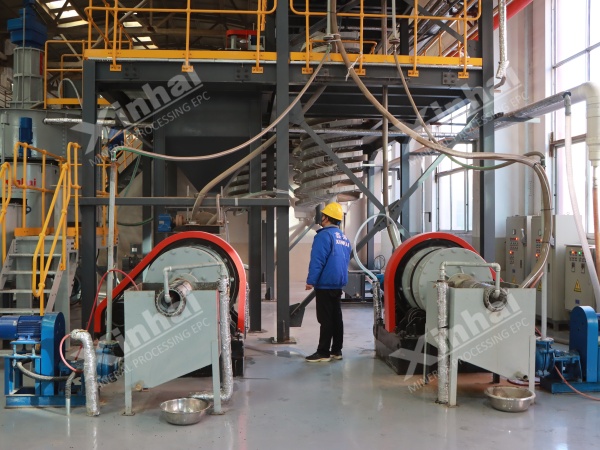
Xinhai Mining offers integrated services starting from testwork through feasibility studies to design engineering—ensuring a well-matched flowsheet from the start. The EPC model contrasts with traditional multi-supplier approaches by offering a unified solution that reduces interface risk.
Xinhai strategically combines international core brands like Siemens and ABB with reliable Chinese manufacturing for non-critical components—achieving balanced performance at reduced CAPEX.
Comprehensive EPC services shorten the project timeline with parallel procurement, modular construction strategies, and onsite installation with operational training—reducing ramp-up time to production.
Xinhai has delivered successful gold-silver CIL plants and polymetallic flotation projects worldwide—demonstrating consistent client ROI improvements through optimized design and execution.
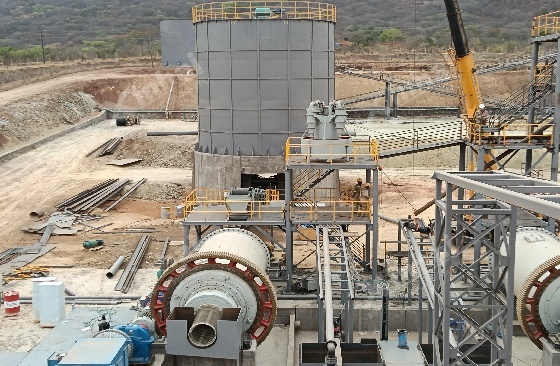
case : Zimbabwe Gold Mine EPC Case
From exploration to refining, the entire silver mining process involves multiple complex steps, including exploration, mining, crushing, beneficiation, smelting, and refining. Similarly structured workflows apply to gold production: Let's dive into the three stages that make this possible.
Choosing the right flowsheet based on mineral characteristics is essential for maximizing recovery while managing costs and environmental impact.
With Xinhai Mining’s EPC services—including testwork, process design, equipment manufacturing, construction, and training—clients gain a reliable partner committed to reducing project risk and optimizing returns.
Contact us via WhatsApp(+8613811510145), Chat online, or Form submission to discuss testwork services, flowsheet design consultation, or request a complete EPC proposal tailored to your project needs.
 +86 13811510145