If you want to know more information (such as product/process price, etc.), please contact us 24-hour telephone
Copper ore is the stuff we dig up to make the red metal everyone needs. Depending on how much it has rusted away over millions of years and how rich it actually is, miners basically split everything into two big groups: sulfide copper ores and oxide copper ores. Figuring out what makes these two so different really saves you a ton of headaches (and money) when you have to pick the smartest way to turn rock into cash. So here’s a laid-back comparison of the two main kinds—nothing too fancy, just the definitions, economic considerations, and processing medthods.
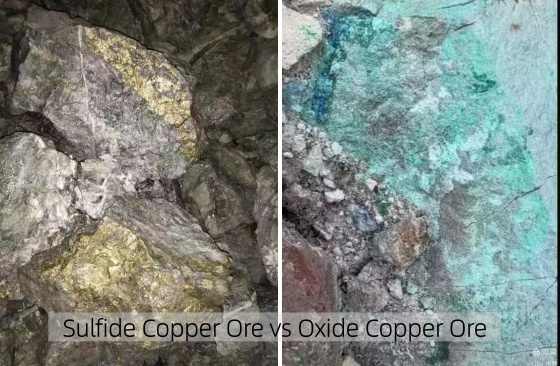
Sulfide copper ores are those where copper is chemically bound to sulfur. The star of the show is chalcopyrite – that yellow, shiny mineral that looks a bit like fool’s gold. You usually find these ores deep underground in huge “massive sulfide” lumps that hot water from way down below once dropped there, or in flat layers mixed with old seabed sediments. In most cases, sulfide copper ores carry more copper inside them than oxide ores do. That’s why big mining companies love chasing them first.
Oxide copper ores appear when the original sulfide minerals sit close to the surface and get attacked by rain, air, and time. The sulfur gets washed away, and copper hooks up with oxygen or carbonate instead. Suddenly you see bright green malachite bands, red cuprite, or even blue azurite crystals – they’re beautiful, honestly. These ores are often messier, with lots of clay and junk mixed in, and the copper percentage is usually lower. Still, clever engineers figured out cheap ways to make money from them, so nothing goes to waste.
The economic viability of mining a copper deposit depends heavily on the ore type, its grade, and the associated processing costs.
Sulfide ores are often considered the most profitable source of copper. Take the huge Escondida mine in Chile – it pulls out sulfide ore that averages around 0.8–1% copper, yet it’s still the biggest copper producer on the planet. Why? Because froth flotation works like magic on them. You add a few drops of collector chemicals, blow air bubbles, and boom – you end up with a concentrate that can hit 25–30% copper. That concentrate then goes to giant smelters.
Yes, building a smelter costs hundreds of millions, and you burn tons of coal or gas while catching nasty SO₂ gas so you don’t poison the air. But once the smelter is there, every extra ton of concentrate gives you fat profit margins.
Oxide copper ores usually look poorer on paper – grades can drop to 0.4% or even lower. But here’s the trick: you don’t need a smelter at all. Many mines simply crush the rock, pile it on a huge plastic-lined pad, and drip weak sulfuric acid over it for months. The acid grabs the copper and runs out the bottom as blue pregnant solution. After that, solvent extraction and electrowinning (SX-EW) turn that solution straight into 99.99% pure copper cathodes. The whole setup is way cheaper to build.
The fundamental difference in mineralogy dictates the processing route. Sulfide ores are predominantly treated via pyrometallurgy, while oxide ores are processed via hydrometallurgy.
The standard processing route for sulfide ores involves physical concentration followed by thermal treatment.
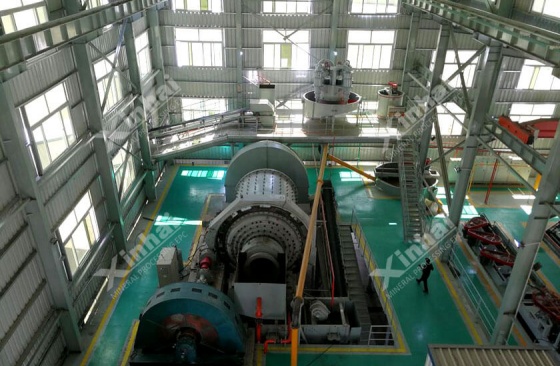
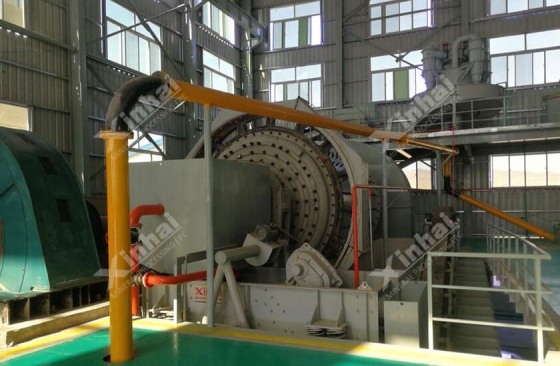
Crushing and Grinding: big jaw crushers and cone crushers chew the run-of-mine ore into fist-sized pieces. Then giant grinding mills – some as big as a house – turn everything into fine sand with the help of steel balls. This step is loud and hungry for electricity, but it has to be done so the copper particles can escape the rock.
Flotation: Workers pump the slurry into long rows of green tanks. They add xanthate and a bit of frother. Air gets blown in, tiny bubbles grab the shiny chalcopyrite grains, and a brown froth overflows carrying 25–30% copper while the waste sinks.
Smelting and Refining: After drying the concentrate, trucks or trains take it to the smelter. There, furnaces hotter than lava melt it into matte – a mix of copper and iron sulfides. Converters blow air through the molten matte and turn it into blister copper (about 99% pure). Finally, electrolytic refineries hang those rough plates in acid baths and grow perfect shiny cathodes.
Oxide ores are processed using chemical leaching methods to dissolve the copper.
Leaching: The ore is leached with a chemical solution. For acidic ores (e.g., malachite), dilute sulfuric acid is used (acid leaching). Pipes sprinkle dilute sulfuric acid – usually 5–10 grams per liter – day and night. For malachite and chrysocolla, the reaction is fast; you see blue solution flowing out in days.
Solution Purification and Concentration (SX): There, it meets an organic liquid full of extractant molecules. Copper jumps happily into the organic phase, leaving iron and junk behind. After a few mixer-settler stages, you get a clean, strong electrolyte with 45–50 g/L copper.
Electrowinning (EW): That electrolyte goes to the electrowinning tankhouse – rows and rows of stainless-steel cathodes and lead anodes. Electric current makes copper grow like red snow on the plates. Two weeks later, robots pull out 100–150 kg cathodes ready for the market. The purity is amazing; sometimes even better than smelter copper.
Alternatively, flotation can sometimes be used for oxide ores using specialized methods like sulfidization with xanthate, fatty acid flotation, or special collectors, though this is less common than leaching for pure oxide ores.
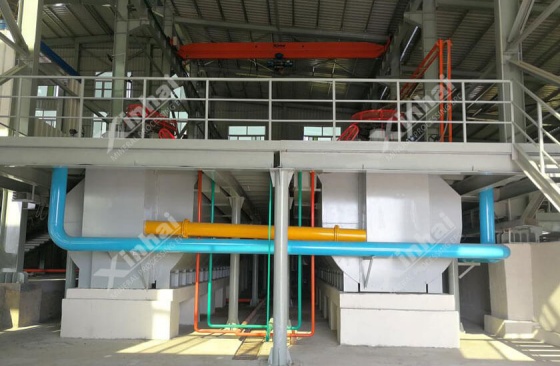
When evaluating oxide copper ores vs sulfide copper ores, it becomes clear that each type presents unique advantages depending on project scale, geography, ore grade, and economic conditions.
Sulfide ores offer high returns due to richer grades and established pyrometallurgical routes but demand higher capital investment. Oxide ores, while lower in grade, present more flexible and cost-effective hydrometallurgical options that are especially suited for remote or small-scale operations.
To determine which approach fits your mining project best, professional assessment is crucial. We encourage you to contact us or learn more about Xinhai Mining EPC+M+O services—your trusted partner in comprehensive mineral processing solutions from design and equipment manufacturing to installation and operation management.
Q1: What is the main difference between oxide and sulfide copper ores?
A: Oxide ores contain oxidized forms of copper minerals and are processed through hydrometallurgy; sulfide ores contain sulfur-bound minerals like chalcopyrite and are typically processed via smelting or flotation.
Q2: Which type of ore is more commonly used for producing copper?
A: The most common source of copper ore is the sulfide ore mineral chalcopyrite, which accounts for about 50 percent of copper production.
Q3: Is one type of ore more economical than the other?
A: Sulfide copper ores are the most profitable ores because they have high copper content, while oxide ores are cheaper to process but generally have lower grades.
Q4: What purity can be achieved from each processing method?
A: The product purity achieved by both the sulfide copper ore extraction method and the oxide copper ore extraction method can reach 99.99%.
Q5: Can low-grade oxide or sulfide ores still be processed effectively?
A: Yes, low-grade copper oxide deposits can be economically extracted because they can be processed at lower cost, and certain low-grade sulfides can be processed using advanced hydrometallurgical techniques like bioleaching.
 +86 13811510145