If you want to know more information (such as product/process price, etc.), please contact us 24-hour telephone
Many copper tailings operations still struggle: moisture content stubbornly stays above 20% after equipment installation, throughput lags behind the concentrator, and operating costs spiral far beyond estimates.
There is only one root cause: improper equipment selection for copper tailings dry stacking. Copper tailings are characterized by fine particle size, high clay content, and wide slurry variability—off‑the‑shelf machinery isn’t a plug‑and‑play fit.
This guide delivers a complete, field‑proven methodology for selecting copper tailings dry stacking equipment—help you make the right choice the first time and reap the benefits for years.
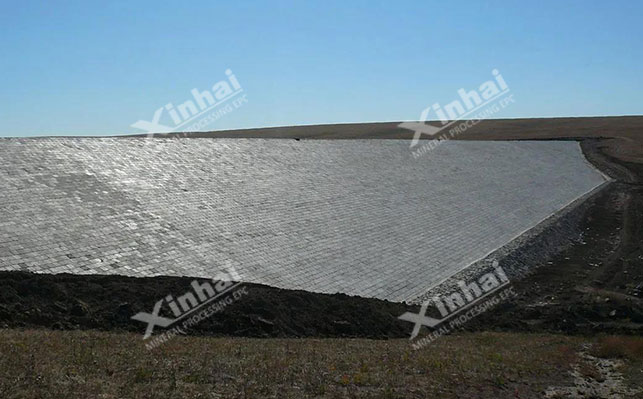
Dry‑stacked tailings with a moisture content ≤20% can be stacked safely, eliminating dam‑failure risks, meeting non‑ferrous metal solid waste discharge standards, and avoiding heavy environmental penalties.
Tailings ponds cost tens of millions to build, and maintenance expenses climb every year. Dry stacking increases pond capacity utilization by 30%, boosts water recovery to over 85%, and cuts water treatment costs by millions annually.
Dry tailings can be repurposed as cement corrective material, brick aggregate, or underground backfill. One copper mine recovered associated iron from its dry‑stacked tailings, gaining an extra 36,000 tpa of iron concentrate—truly turning waste into wealth.
Intelligent dry stacking systems continuously monitor moisture content and dam displacement, shifting safety management from post‑accident rescue to pre‑failure (early warning).
Copper tailings are notoriously difficult to dewater; a single machine rarely suffices. The current state‑of‑the‑art is a classification + thickening + dewatering train.
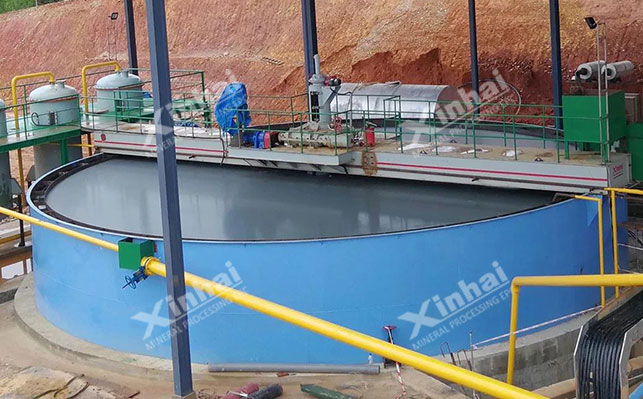
Application: Pre‑treatment of fine copper tailings (–400 mesh >50%) or slurry with concentration <15%.
Advantage: Raises solids concentration from 10% to 45‑55%, drastically reducing downstream dewatering load.
Role: Must be paired with a filter press or dewatering screen—never used alone.
Application: Coarse/medium copper tailings (–325 mesh ≤80%), or as the final dewatering stage for cyclone underflow.
Advantage: High throughput (≤250 t/h per unit), low operating cost (≈50% that of a filter press), continuous discharge.
Moisture content: 15‑18%—ready for direct dry stacking.
Xinhai Solution: Polyurethane elastic screen panels + rail‑mounted installation. Screen deck life tripled, and filter cake density increased by 20%.
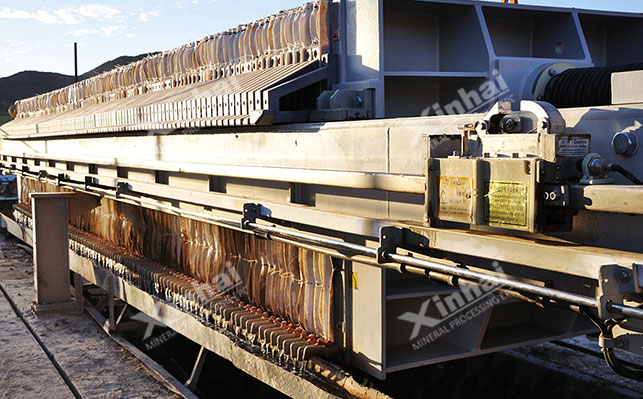
Application: Fine, difficult‑to‑dewater copper tailings, or when the moisture content must be ≤15%.
Advantage: Achieves the lowest possible moisture, consistently 15‑18%.
Limitations: High capital cost, filter cloth life of only 1‑3 months, batch‑type discharge.
Selection tip: Filter area must be determined through pilot‑scale testing—never guess.
The most mature copper tailings dry stacking flowsheet:
Hydrocyclone → High‑frequency dewatering screen → Thickener → Filter press
Coarse underflow goes directly to the dewatering screen for immediate dry stacking.
Fine overflow reports to the thickener; underflow is filtered.
Result: Total operating cost is 40%+ lower than “whole‑tailings pressure filtration.”
If –200 mesh <70% and coarse fraction is high: Cyclone + dewatering screen is sufficient.
If –400 mesh >50% and natural slimes are abundant: Thickener + filter press is mandatory.
Do not blindly copy iron tailings solutions—copper tailings are more sticky and one grade harder to dewater.
Target moisture ≤16%:A filter press is non‑negotiable.
Target moisture ≤20%:A high‑quality dewatering screen can do the job.
Decide the specification first, select the equipment second.
One mine bought a cheap filter press, saving 600,000 RMB upfront. But annual filter cloth consumption hit 400,000 RMB, power cost was three times that of a dewatering screen, and within two years, the total cost exceeded that of a premium brand by 1.2 million RMB.
Always calculate: equipment price + 5‑year electricity + 5‑year labor + 5‑year spares + downtime losses.
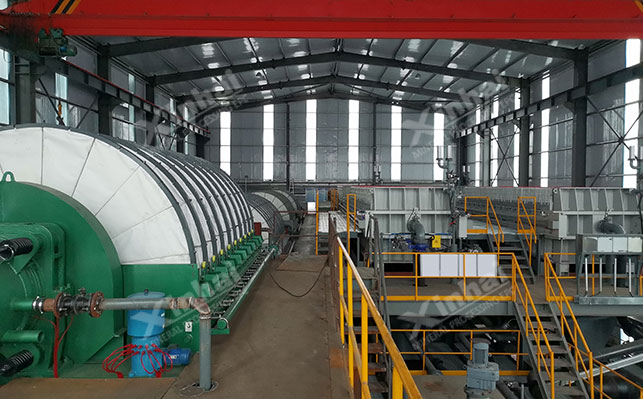
For vibrating screens, examine the side‑plate joint technology: welded structures are prone to cracking; torsional‑shear high‑strength bolting extends service life threefold.
For filter presses, choose cast‑iron filter plates—they remain crack‑free for a decade.
When selecting equipment, reserve 20% extra capacity to avoid a complete system overhaul when production expands in just three years.
A copper mine imported premium filter presses but installed no thickening pre‑treatment. Feed concentration was only 12%, filling time doubled, and effective capacity dropped 60%. The equipment wasn’t the problem—the selection logic was.
A vendor promised “≤15% moisture”—but that was a lab figure at 5 t/h. In continuous industrial operation, capacity often degrades by 30%. Always back‑calculate the required filtration area or screen area from “daily dry tonnage,” not just the final moisture target.
One mine saved 800,000 RMB by buying an old‑style circular vibrating screen. Screening efficiency was only 65%; fines escaped into the return water, forcing overflow turbidity, doubling fresh‑water makeup, and adding 500,000 RMB yearly in water + power costs. In three years, the “savings” were completely eaten up.
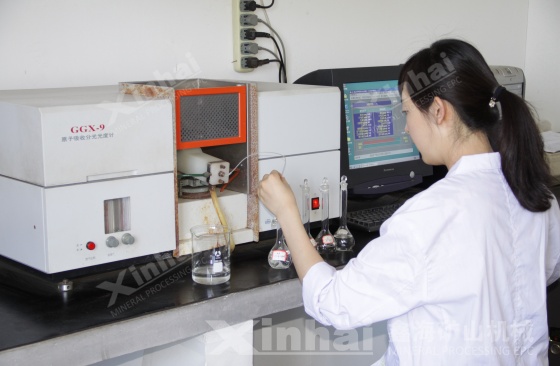
Every copper tailings deposit is unique. Selecting equipment without test data is pure gambling. Xinhai always performs lab‑scale + pilot‑scale tests: particle size distribution, settling characteristics, specific resistance, and cake formation time. Only then do we size the equipment.
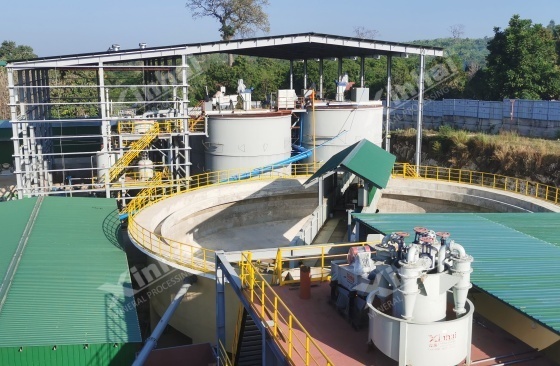
Tailings: –400 mesh 65%, feed density 18%, high clay content.
Solution: Deep‑cone thickener + high‑frequency dewatering screen + recessed chamber filter press.
Result: Final combined moisture 16.8%.
Client Benefit: Saved 6 million RMB/year in tailings pond expansion cost; water recovery 91%. Certified “Green Mine” at the provincial level.
Original pain: Whole‑tailings filter pressing, filter cloth replaced 3×/month, annual spares cost 800,000 RMB.
Solution: Cyclone + high‑frequency dewatering screen for classification/dewatering; thickener treats only cyclone overflow.
Result: Dewatering screen discharge moisture 15.2%, filter presses reduced from 6 to 2 units.
Client Benefit: Annual operating cost cut by 2.1 million RMB; filter cloth expenditure down 72%; concentrator bottleneck eliminated.
Tailings: High natural slimes, –500 mesh 30%.
Solution: High‑efficiency deep‑cone thickener (underflow density 55%) + fast‑opening filter press.
Result: Filter cake moisture 14.5%.
Client Benefit: Achieved “zero‑tailings” mine; 100% tailings used for brick making, adding 4 million RMB/year revenue.
Technical Service Backbone
Xinhai holds Class‑A General Contracting Qualification for Mine Construction. We deliver end‑to‑end dry stacking solutions:
Tailings dewatering testing → Equipment selection → Process design → Equipment fabrication → Installation & commissioning → Smart operation & maintenance.
“One ore, one recipe”—every solution is tailor‑made.
Selecting copper tailings dry stacking equipment is not a multiple‑choice question—it is a proof question: proof of equipment‑tailors compatibility, proof of economic viability, proof of the supplier’s delivery capability.
If you are planning a copper tailings dry stacking project, or if your current system suffers from excessive moisture, insufficient capacity, or runaway operating costs—talk to Xinhai.
We can:
·Perform bench‑scale and pilot‑scale dewatering tests on your tailings sample, and deliver a full mineralogical report.
·Provide 2–3 alternative equipment configurations with transparent capex/opex comparisons.
·Dispatch engineers for on‑site survey and process layout optimization.
WhatsApp: +86 13811510145
Online consultation: Click the floating window on our website—send “Copper tailings + your ore type” and connect with our mineral processing engineers immediately.
Xinhai Mining – Giving Every Ton of Copper Tailings Its Best Economic Destination.
 +86 13811510145