If you want to know more information (such as product/process price, etc.), please contact us 24-hour telephone
When many people think about mine cost control, the first thing that comes to mind is tightening spending and strict management at the construction site. But in reality, 70–80% of a mine project’s total costs are essentially locked in during the design and planning stage—long before the first blast occurs. Truly smart cost savings are “calculated” in the office before any explosives are ever set off.
The 4,000-ton-per-day molybdenum mine project we are currently constructing in Hebei is a perfect example. Let’s look at how, through integrated design and holistic management, we laid a smoother and more cost-effective path for the entire project.
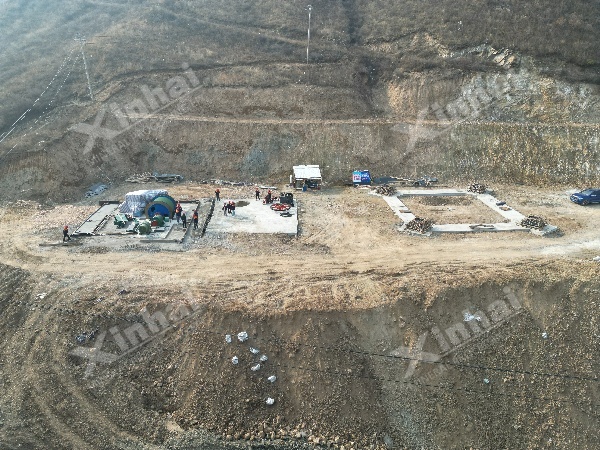
Mine design is far more than just drawing tunnels and marking stopes on paper. It is a technical exercise that requires balancing safety, efficiency, and economic benefit—and economics are often hidden within seemingly purely technical decisions.
The choice of development method—ramp, shaft, or adit—largely determines the mine’s upfront investment, construction timeline, and operational efficiency for decades to come.
At the Hebei project, we ultimately adopted a combined approach: “ramp + auxiliary shaft + ventilation shaft.”
Why a ramp? Because it acts like an express lane, allowing large equipment, trucks, and personnel to enter the underground early. This enables internal works, such as the main ramp and ventilation shaft, to be excavated simultaneously, significantly shortening the entire development period.
The auxiliary shaft and ventilation shaft serve long-term operations. The auxiliary shaft will be dedicated to personnel transport, material delivery, and serving as the main intake for fresh air; the ventilation shaft will exhaust contaminated air. This “inflow and outflow” forms an efficient and safe “respiratory system” for the mine.
While this approach may involve slightly higher upfront investment, its lifecycle cost is actually lower. This mindset of treating the mine as an integrated, organic system lies at the core of our work—mine design must be considered alongside subsequent mineral processing and long-term operations.
How high should the stopes be? How large should the rooms be? Should open-stope or backfill methods be used? Every parameter involves careful consideration. Our principle is clear: while ensuring safety and recovery, we aim for maximum efficiency and minimal cost.
Today, we start by building a 3D model of the orebody and then simulate various mining schemes on the computer. The goal is singular: find the “sweet spot” that minimizes development work while reducing ore dilution and loss.
A simple example: cleverly designing drift spacing and cross-sections can reduce waste rock excavation; precise blasting parameters result in more uniform fragmentation, saving energy and costs in secondary crushing. Individually, these details may seem minor, but cumulatively they add up to substantial savings.
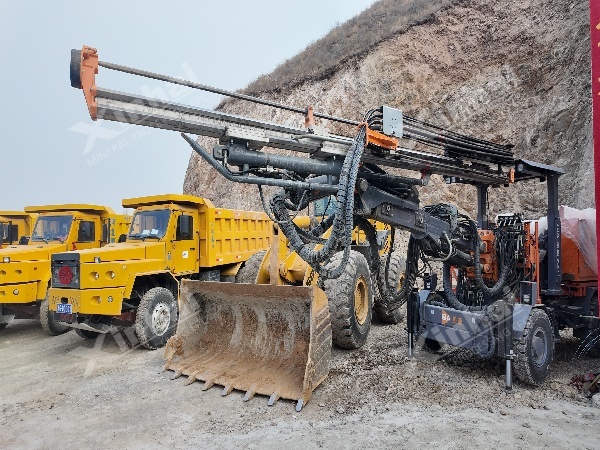
Advanced equipment is key to working faster and more economically. But what many don’t realize is that equipment selection must be decided during the design phase. If drifts are designed too narrow, large, efficient machinery simply cannot enter, and subsequent efficiency is compromised.
At the Hebei molybdenum mine, you’ll see hydraulic drill rigs, scaling jumbos, concrete sprayers, mining trucks, and more—over twenty sets of large equipment forming a mechanized assembly line from excavation to mucking and ground support.
The design creates the space for these high-efficiency machines, and the equipment in turn ensures project quality and speed, directly boosting labor productivity and reducing unit costs. It’s a mutually reinforcing dynamic.
A good plan is only half the battle. The real test lies in maintaining strict cost control throughout execution. Cost management must be continuous and consistent.
The construction phase is all investment and zero output, so time literally equals money. How do we shorten the schedule? Through scientific planning and efficient coordination.
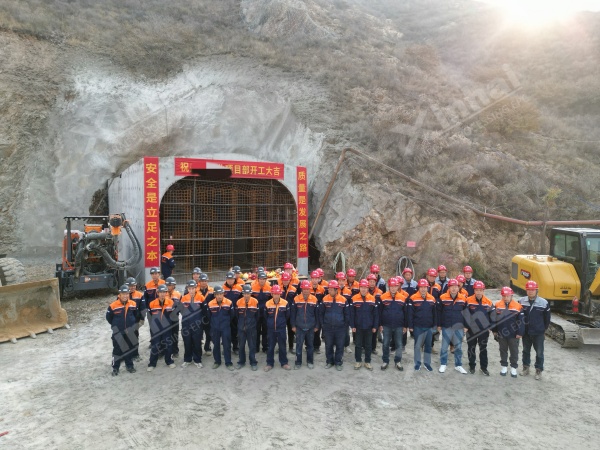
Parallel Progress and Interleaved Tasks: At the Hebei project, multiple workfaces—ramp, ventilation shaft, auxiliary shaft—advanced simultaneously, with earthworks, foundation construction, and drifting carefully sequenced. Behind this is a core team of 22, including project managers, chief engineers, and specialists, responsible for precise construction planning and dynamic scheduling.
Resource Assurance, Zero Delays: Equipment, materials, and manpower are planned well in advance to ensure work starts at full speed. The project’s key milestones were achieved ahead of or on schedule—a direct result of such meticulous management.
Foresighted design considers not only how to build the mine but also how to operate it cost-effectively and efficiently for decades.
Maintenance-Friendly Design: Drift cross-sections account for the passage of large equipment and future maintenance space; chamber locations are designed for easier equipment servicing—reducing future maintenance difficulty and downtime from the outset.
Future-Proofing for Smart Upgrades: In wiring and control node design, we reserve interfaces for future technologies like autonomous haulage, remote control, and intelligent ventilation. This allows the mine to adopt upgrades at a lower cost and remain competitive.
Built-In Sustainability and Safety: A well-designed ventilation network inherently reduces long-term energy consumption; an underground wastewater collection and reuse system cuts drainage costs and environmental risks. And a safe, efficient working environment is itself the most significant “cost-saving” measure.
Once ore is extracted, it needs a well-designed processing plant that integrates seamlessly with the mining cycle. We will discuss processing plant design and construction in a separate article.
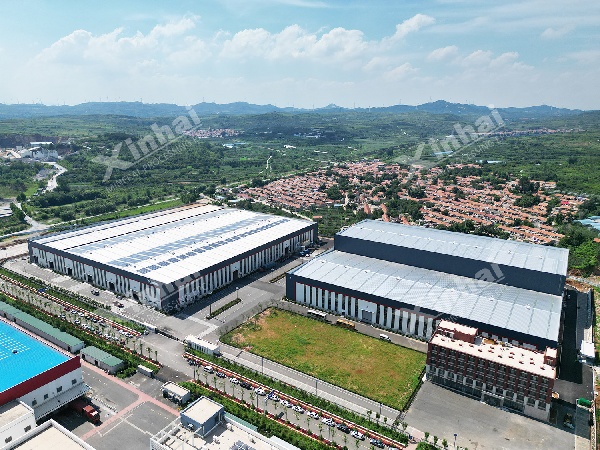
At the Hebei molybdenum project, we adopted the “Engineering, Procurement, Construction, and Operation” (EPCO) turnkey model. This model is precisely what enables us to fully implement the design philosophy and cost-control approach described above.
Unified Responsibility, Aligned Objectives: From design and construction to long-term operation, we take full responsibility. This eliminates the common pitfalls of disjointed efforts, finger-pointing, and misaligned incentives among designers, contractors, and operators. When we design the mine, we must already consider constructability and long-term operational savings—objectives and interests are fully aligned.
Closed Loop of Experience and Data: Our team brings nearly three decades of industry experience—lessons learned from challenges and extensive success data. How to handle a tricky rock formation encountered in a previous project, which equipment performs best in specific conditions—such practical insights directly inform the design of the next project. This optimization capability, born from real-world execution, cannot be matched by office-based design alone.
Integrated Resources, Flexible Deployment: We maintain our own equipment pool and a stable team of specialists, allowing flexible deployment across major projects. This ensures that critical projects like the Hebei mine have immediate access to equipment and personnel—no delays, no idle time burning money.
Ultimately, cost control in molybdenum mining isn’t mainly achieved through post-blast savings, but through meticulous planning and calculation during the design and planning stage—before the first blast.
An excellent mine design is a “crystallization of wisdom” that integrates geological understanding, economic analysis, equipment selection, and long-term vision. It is not just a construction manual, but more like a commitment to and safeguard of the mine’s lifecycle costs.
Choosing a cooperation and management model that fully translates design advantages into cost advantages is the crucial step to maximizing return on investment.
If you would like to learn more about Xinhai’s turnkey mining model, please reach out to us via WhatsApp: +86 13811510145.
 +86 13811510145