If you want to know more information (such as product/process price, etc.), please contact us 24-hour telephone
If you’re considering investing in a molybdenum mine, or if there’s a geological report filled with tempting numbers sitting on your desk, I’d like to have a straightforward conversation with you.
We all know molybdenum is a hot commodity—prices are strong, and the future looks promising. That feeling is like discovering an unopened vault; it makes your heart race. But those who have been in this industry for a while will tell you: between a promising report and a consistently profitable mine lies a vast gap. Many people don’t just fail to cross it—they don’t even see it.
What’s in that gap? The difference between theoretical grades and actual recovery rates, the huge variance between budget estimates and final bills, unforeseen environmental costs, and sudden market fluctuations.
So today, let’s set aside the complex jargon and formulas. I want to speak plainly about how to avoid falling into that gap and how to turn that excitement into steady returns over ten or twenty years. This isn’t about advanced theories but a practical framework for “thinking clearly.”
In investment meetings, everyone focuses on the final profit numbers. But the first critical question should actually be: “Can we efficiently extract what’s underground?”
It’s like knowing there’s oil under a field but being unsure whether you can drill it profitably. For molybdenum, the key lies in the “mineral processing recovery rate.” A recovery rate of 55% versus 75% can make the difference between a project’s success and failure.
So how do you determine the actual recovery rate?
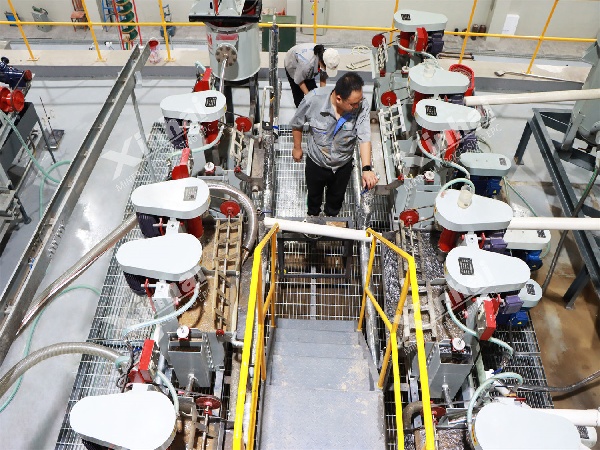
The answer isn’t guessing based on experience—it’s “testing.” Specifically, testing ore from your target mine in a professional laboratory, simulating the actual future plant process from start to finish. This step, known as “mineral processing testing” in the industry, is the cornerstone of all project calculations. Without it, every financial model that follows is like building a skyscraper on sand.

During this testing, you need to clarify several practical details:
How should this ore be ground, and to what fineness is most economical?
What reagent formula can capture molybdenum while minimizing impurities?
What grade of molybdenum concentrate can be consistently achieved?
These are tangible data points. With them, you’ll understand how the future plant should be designed and the true cost per ton of ore. Skipping this step and jumping straight to investment discussions carries significant risks.
Now, let’s say we know how much molybdenum we can extract. Next comes the financials. The key here is to account for “everything.”
First, investment costs. Many people only consider equipment expenses but overlook design fees, plant construction, piping, cabling, environmental facilities, and management and interest costs during construction. These “invisible” expenses often add up to more than expected. A mature approach is to consider an “EPC Turnkey Contract” model—partnering with an experienced company like us at Xinhai to handle everything from design and procurement to construction for a fixed price and timeline. This locks in and transfers one of your biggest investment risks: “budget overruns.”
Then, operating costs. A mine operates 24/7, consuming electricity, reagents, spare parts, and labor daily. Based on test data, you must calculate these daily expenses line by line. What if electricity prices rise? What if reagent costs fluctuate? In your financial model, conduct “stress tests” to see how much price drops or cost increases the project can withstand. This helps you understand the thickness of your safety cushion in advance.
Mining is a marathon, and there will inevitably be challenges along the way. Smart investors don’t predict every storm—they prepare for it in advance.
Technical Risks: What if equipment fails or recovery rates fall short of test results? This requires a partner who not only builds the plant but also offers robust operational support and technical optimization capabilities.
Market Risks: What if Molybdenum Prices Drop? Beyond building a financial safety margin, explore modern financial tools to hedge some of this risk.
Policy and Environmental Risks: This is an absolute priority today. From the start, your design must be green. Plans for tailings, wastewater, and land reclamation aren’t paperwork for inspections—they’re real budget and engineering components. Neglecting this can lead to a financial black hole.
A practical strategy to mitigate risk is “phased implementation.” If launching a full-scale project at once is too daunting, start with a “pilot plant” or modular facility. It requires less investment, quickly validates technical and economic indicators, and once proven profitable, reinvests the earnings into expansion. This way, every step is grounded in reality.
All this methodology might sound abstract. Let me share two real stories from our experience.
Last year, an investment firm approached us. They were interested in a mine, and the seller’s data looked impressive. They paid us to do one thing: independently re-evaluate everything, disregarding all existing reports. We collected fresh ore samples and ran the entire process in our labs. The result? Due to subtle differences in ore characteristics, the achievable recovery rate was nearly 20% lower than the optimistic figures in the original report. This independent “technical due diligence” report helped our client avoid a potential blind investment of hundreds of millions. Sometimes, paying for the “truth” is the best investment.
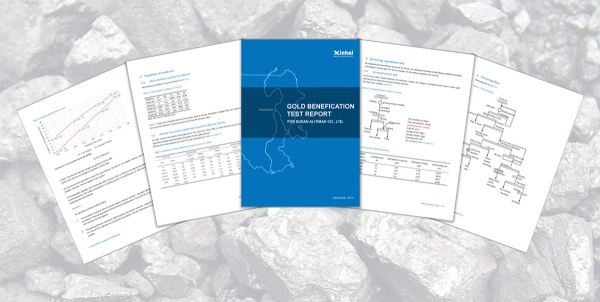
Another story involves a local state-owned enterprise. They had resources but were unsure whether to develop them independently or partner with others. We spent months compiling a nearly 300-page “Feasibility Study Report” for them. This report wasn’t biased—it objectively laid out the investments, outputs, and risks of various paths, including independent development and partnerships. Ultimately, it became a “common language” for their internal decision-making and a “trust foundation” for external negotiations. It turned vague debates into clear, data-driven choices.
Ultimately, mining investment is a rational decision based on expertise, experience, and data. It requires seeing both the resources underground and the challenges above, calculating immediate returns while assessing long-term risks.
On the other hand, it’s also a leap of faith—choosing who to journey with. A good partner should act like a reliable “navigator,” helping you chart hidden obstacles and standing with you through the storms.
At Xinhai, we strive to be that partner. If you’re evaluating a molybdenum project, contact us. Let us help you make the right decision.
WhatsApp: +8613811510145
 +86 13811510145