If you want to know more information (such as product/process price, etc.), please contact us 24-hour telephone
A polymetallic ore does not surrender to a single process. One carrying free gold and silver alongside lead and zinc minerals asks a harder question: where does gravity work, where does flotation, and when does leaching pay?
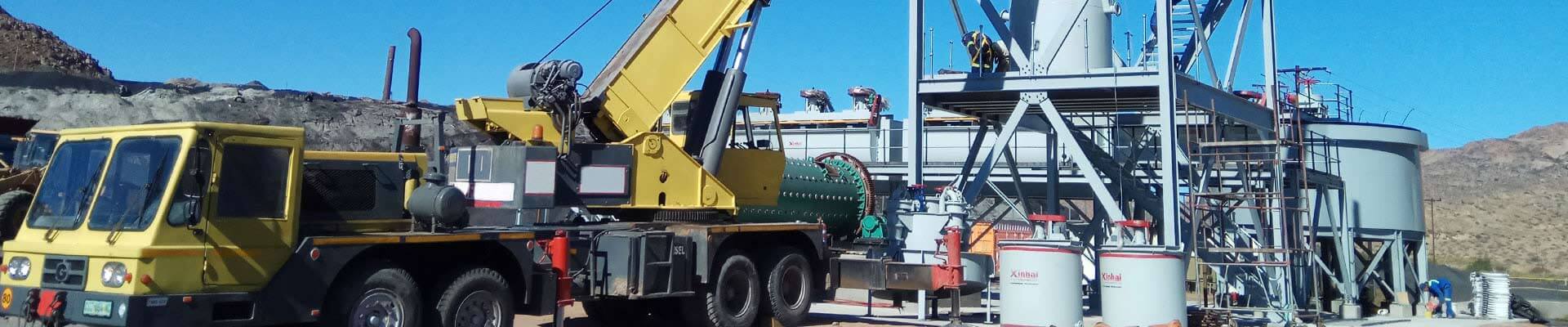
Kazakhstan's Gagarinskoye project, a 1 Mtpa polymetallic complex in Zhambyl Region, faces that question. Its proposed route pairs gravity pre-concentration of free gold and silver with selective lead-zinc flotation and hydrometallurgical treatment of the gold-silver products. An environmental impact assessment hearing was held on 22 September 2026.
Such ores are common across Central Asia, where one deposit often carries several payable metals. Which combination of gravity, flotation and leaching actually recovers them?
The problem is geometric before it is chemical. Liberated gold and silver respond to gravity and can be caught early, at coarse sizes, before expensive grinding. Lead and zinc sulfides need flotation. Gold locked in sulfides or carbonaceous matter needs a leach.
No single unit operation covers that spread. A plant that sends everything to flotation loses the easy coarse gold; one that grinds fine enough for flotation may over-grind what gravity could have caught. Carbonaceous minerals make it worse by adsorbing dissolved gold and silver, a "preg-robbing" effect.
A flowsheet is not chosen from a catalogue. Testwork fixes it.
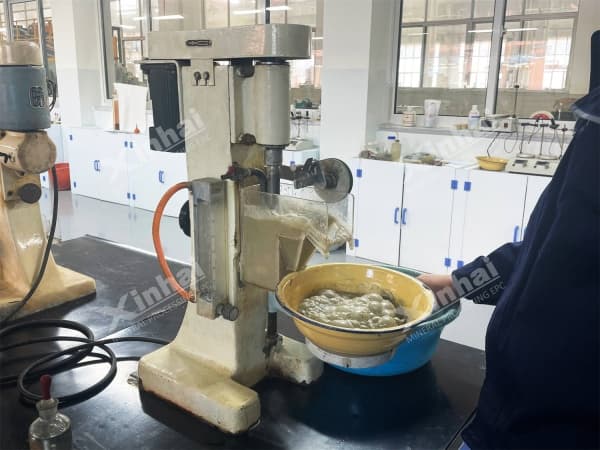
Characterisation comes first. Multi-element analysis establishes which metals are payable and in what proportion. Copper phase analysis separates oxide from sulfide copper, which respond to different collectors. Mineralogy shows how the minerals are locked.
Route comparison follows. Several candidate flowsheets are run on the same sample and compared on concentrate grade, recovery and reagent cost. Xinhai's mineral processing testwork is the start of its EPC+M+O delivery model for this reason.
A silver-bearing polymetallic ore from Tajikistan shows how wide that comparison can be. The sample ran Ag 256.36 g/t, Pb 0.65%, Zn 0.81% and Cu 0.20%, with silver as the primary value.
| Route | Ag grade | Ag recovery |
| Bulk flotation, 75% passing 200 mesh | 3,294.25 g/t | 72.80% |
| Bulk flotation, regrind to 85% passing 200 mesh | 3,935.56 g/t | 73.09% |
| Gravity or magnetic separation (pre-concentration or on tailings); sulfide-then-oxide sequence; staged grinding | — | at or below bulk flotation |
| Bulk flotation plus tailings leach | 3,294.25 g/t | 72.80% floated, 78.02% leached |
Regrinding from 75% to 85% passing 200 mesh raised silver in the concentrate from 3,294.25 g/t to 3,935.56 g/t, but recovery moved only from 72.80% to 73.09%. Gravity and magnetic routes lifted grade, not payable silver.
Leaching the tailings after bulk flotation won. A carbon pre-float removed the carbonaceous material behind preg-robbing; a 48-hour leach then recovered 78.02% of the tailings silver, cutting residue silver to 13.50 g/t. With the 72.80% recovered by flotation, total silver recovery reached 88.16%.
A second sample, a copper-lead-zinc ore from Inner Mongolia, sharpens the flotation decision: Cu 0.96%, Pb 0.43%, Zn 6.47%, Au 0.36 g/t, Ag 20.21 g/t.
Three routes were compared. A copper-lead bulk float with zinc from the tailings produced a mixed concentrate unsellable without further treatment. A bulk float followed by copper-lead separation hit the same wall: the two minerals were too finely intergrown to separate cleanly.
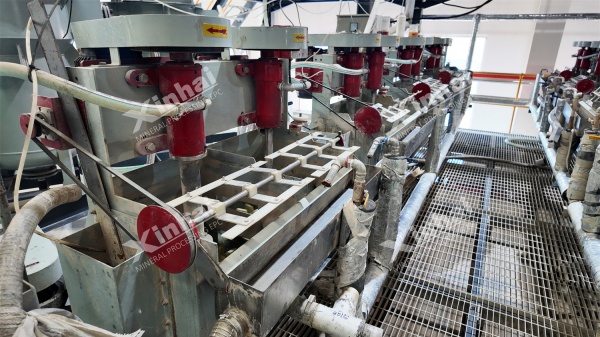
Preferential flotation won, floating each metal in sequence with its own reagent regime at 73% passing 200 mesh.
| Metal | Concentrate grade | Recovery |
| Copper | 25.49% Cu | 90.48% |
| Lead | 46.43% Pb | 60.00% |
| Zinc | 47.49% Zn | 89.07% |
Copper ran one roughing, two scavenging and two cleaning stages; lead two roughing and two cleaning; zinc one roughing, two scavenging and three cleaning. Copper and zinc recovered strongly; lead was harder, fine-grained and locked with the zinc.
The wrong flotation architecture yields a concentrate nobody will buy; the right one yields three saleable products.
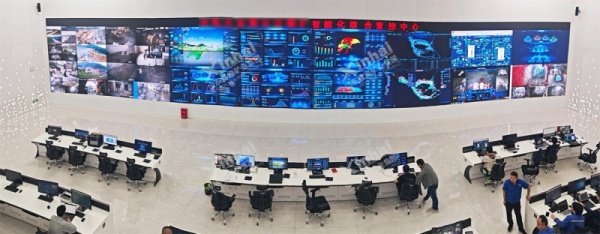
Testwork results feed everything downstream: locked-cycle indices set the design recovery, the reagent regime defines the dosing system, and the grind size sets mill selection. Design, equipment manufacture, installation and commissioning all descend from it.
That chain is what an integrated delivery model covers. Xinhai's non-ferrous metal processing capability sits inside an EPC+M+O model covering engineering, procurement and construction plus mine management and operation.
Delivery experience backs the method. At a 3,000 t/d lead-zinc-silver-gold flotation plant in Henan, China, Xinhai delivered an EPC-managed expansion series that entered production in November 2024, and the same client returned for a dewatering and wash-water package.
Its minerals differ in density, surface chemistry and degree of locking with the gangue. Liberated gold and silver respond to gravity, lead and zinc sulfides need flotation, and metal locked in sulfides or carbon needs a leach. Gravity raises grade but not total recovery, so it is one stage, not the whole flowsheet.
Carbonaceous minerals adsorb dissolved gold and silver out of solution, breaking any downstream leach. It is handled by removing the carbon first: a pre-float before a 48-hour leach let 78.02% of tailings silver be recovered.
Intergrowth size decides it. Where copper and lead are too finely intergrown, a bulk float yields a mixed concentrate nobody will buy. Preferential flotation produced three saleable concentrates in testing.
Yes. Xinhai ran several copper-lead-zinc-gold-silver testwork programs in 2025, covering sulfide, oxide and mixed ores, and combining flotation, cyanide leaching, gravity and magnetic separation as needed. Results apply only to the samples submitted.
The right flowsheet for a polymetallic ore is not a template. It is a conclusion, reached by testing the ore against several candidate routes and comparing returns.
If you are weighing a polymetallic project, the first useful step is characterisation and route comparison on your ore, not a flowsheet borrowed from a similar deposit.
 +86 13811510145