If you want to know more information (such as product/process price, etc.), please contact us 24-hour telephone
On 16 September 2026, the first Korea–Central Asia Summit, gathering the five Central Asian states (C5), closed with the Seoul Declaration. The document sets a biennial head-of-state mechanism, adds a C5+1 ministerial track, and frames a "mine-to-product" value chain that links Central Asian lithium, uranium and rare earths to Korean processing capacity. Over three days of talks, the two sides signed more than 70 agreements.
The shift sits alongside two parallel moves: Uzbekistan's $4.2 billion critical-minerals plan covering 120 projects from 2026 to 2030, and Kazakhstan's decision to delay solid-minerals royalty increases to 2029. For contractors, the signal is clear—Central Asia is steering from raw-ore export toward in-region beneficiation, and that reshapes what gets built.
The Seoul Declaration is less a trade memo than an institutional reset. By locking in a regular summit cadence and a dedicated ministerial channel, it turns ad-hoc mineral diplomacy into a standing structure. The "mine-to-product" language matters: for years Central Asia has exported raw ore and imported refined material. The Declaration points the region the other way—keeping value addition, and the jobs and tax base that come with it, inside national borders, with Korean downstream industry as the off-take partner.
| Signal | Country / Region | Commitment | Implication for beneficiation & EPC |
| Seoul Declaration | C5 + Korea | Biennial summit, C5+1 ministerial, mine-to-product chain (Li, U, REE to Korean processing); 70+ agreements | Standing structure for in-region processing investment |
| Critical-minerals plan | Uzbekistan | $4.2B, 120 projects, 2026–2030 | New concentrators and processing plants |
| Royalty delay | Kazakhstan | Solid-minerals royalty increase deferred to 2029 | ~2-year window to advance projects |
Moving down the value chain is not a rhetorical flourish; it changes what gets built. A country that ships run-of-mine ore needs pits, haul roads and little else. A country that processes its own minerals needs concentrators, leaching and flotation circuits, thickening and filtration, power and water, and the engineering to tie it together. That is precisely where engineering, procurement and construction (EPC) and beneficiation demand grow—faster than extraction alone would ever require. For contractors, the addressable market is not the mine; it is the plant.
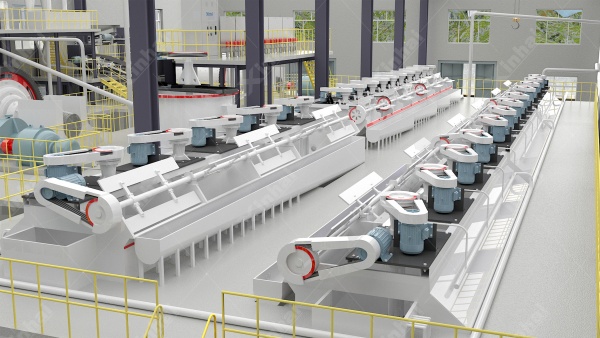
Developing a processing plant in a new jurisdiction is a long chain of interdependent steps, and owners increasingly want one accountable partner rather than a stack of subcontractors. An EPC+M+O scope typically runs through five stages:
Testwork and feasibility — ore characterisation, bench and pilot testing, flowsheet definition.
Engineering design — process, civil, structural and infrastructure design matched to site conditions; see mineral processing plant design.
Equipment manufacturing — building or sourcing mills, flotation cells, thickeners and package units.
Construction and installation — civil works, equipment erection, piping, electrical and commissioning.
Operation and optimisation — ramp-up support, training, and ongoing process improvement.
Bundling these under one delivery model reduces interface risk and shortens the path from resource to product—the exact outcome the Seoul Declaration is pushing for.
| Stage | What it covers |
| Testwork & feasibility | Ore characterisation, bench and pilot testing, flowsheet definition |
| Engineering design | Process, civil, structural and infrastructure design |
| Equipment manufacturing | Mills, flotation cells, thickeners, package units |
| Construction & installation | Civil works, erection, piping, electrical, commissioning |
| Operation & optimisation | Ramp-up, training, ongoing process improvement |
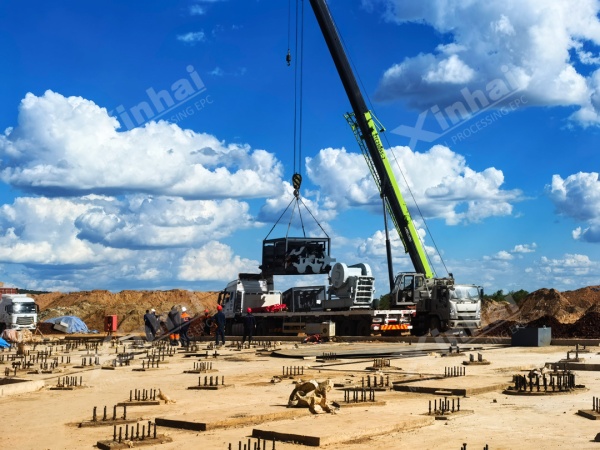
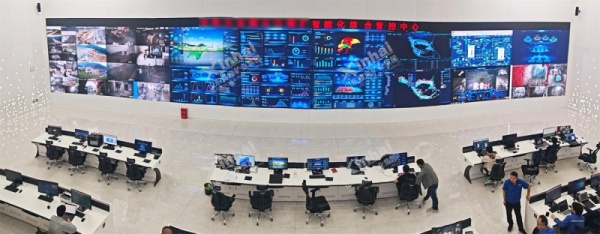
The region is not a blank slate for integrated mineral-processing delivery. In Kazakhstan, a 1.5 Mtpa copper-flotation EPC project lifts a 0.86% copper feed to a 22% copper concentrate at roughly 90% recovery—a textbook example of in-region beneficiation. In Uzbekistan, a tungsten project with installation underway in 2026 extends the same model to a different commodity. These are referenced here as evidence of delivered capability, not as participants in the summit or its agreements. More delivered work is listed in Xinhai project cases.
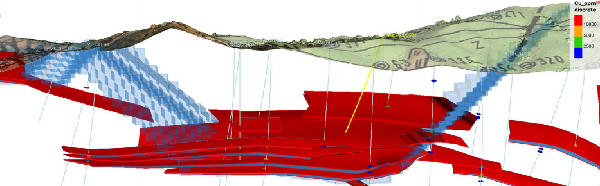
A processing plant inevitably produces tailings, and a tailings storage facility (TSF) is part of any complete plant package. It is engineering that matters, but it is one module—design, construction, monitoring—within the broader EPC+M+O scope, not the story the Seoul Declaration is telling.
A standing Korea–Central Asia (C5) summit every two years, a new C5+1 ministerial track, and a "mine-to-product" value chain linking Central Asian lithium, uranium and rare earths to Korean processing. More than 70 agreements were signed during the inaugural summit.
Because processing ore locally requires concentrators, flotation and leaching circuits, and supporting infrastructure—capital projects that extraction-only export does not. That expands the plant-engineering market well beyond the mine itself.
Five stages: testwork and feasibility, engineering design, equipment manufacturing, construction and installation, and operation and optimisation. Combining them under one partner reduces interface risk and shortens time to first product.
Yes, as a capability reference: a 1.5 Mtpa copper-flotation EPC in Kazakhstan (0.86% Cu feed to 22% Cu concentrate, ~90% recovery) and a tungsten project in Uzbekistan with 2026 installation. These are existing deliveries, not involvement in the Seoul Declaration.
The window for in-region beneficiation in Central Asia is open through 2029, and the policy tailwind is unusual. For a specific ore and site, a metallurgical test and feasibility study remain the first concrete step.
At Xinhai, we believe the best processing solution is tailored to your ore and project conditions, not a standard flowsheet imposed from outside.
If you are weighing a plant in the region, share your ore type and site constraints with us. Let's design the path from resource to product together.
 +86 13811510145