If you want to know more information (such as product/process price, etc.), please contact us 24-hour telephone
China holds a vast, mostly idle iron waste stockpile — nearly 30 billion tonnes of refractory iron ore and around 10 billion tonnes of iron-bearing tailings. For decades these stayed in storage because recovery was neither technical nor economic. That is changing. On 1 September 2026, the world's largest fluidized magnetization-roasting plant — a 5.56 Mtpa facility at Anshan — passed acceptance, showing 11% iron tailings can be upgraded to 65%+ concentrate. Legacy tailings are shifting from liability to asset.
Use the table of contents below to navigate through the guide:
Rising steel demand and falling ore grades make every recoverable point of iron matter more. A tailings storage facility (TSF) — an engineered impoundment for storing mine tailings — holding low-grade material is, in effect, a deferred orebody. Reactivating it avoids new land, cuts upstream energy, and lowers dam-management cost and risk. The question is no longer whether the material exists, but whether the right process can unlock it at a viable cost.
Iron in tailings is usually present as hematite or goethite — minerals that are only weakly magnetic — and is often finely disseminated through gangue. Legacy plants could not separate it economically. Three factors kept it in the ground:
Weak magnetism: hematite resists ordinary magnetic separation.
Fine grain size: valuable particles are micrometre-scale, hard to liberate and recover.
Legacy technology: older flowsheets were built for virgin ore, not for re-treating complex tailings.
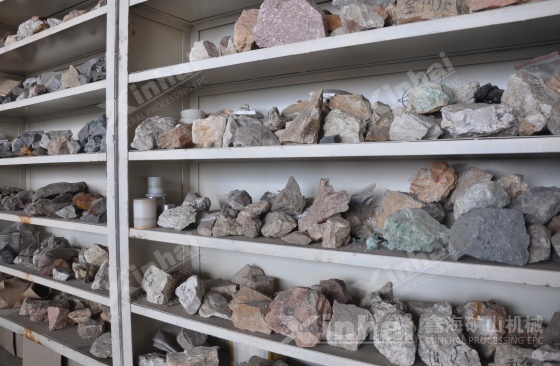
This is precisely why any reactivation project must start with metallurgical testwork — laboratory and pilot testing that defines the flowsheet and design parameters for a specific ore — rather than assuming a standard circuit will work.
Magnetization roasting solves the weak-magnetism problem directly. The Anshan plant uses a fluidized-bed process with fine control of particle residence time, developed by the Chinese Academy of Sciences over more than 20 years. It converts hematite and goethite into magnetite, which is strongly magnetic and easy to recover. The Anshan facility was delivered by others and is cited here as an industry benchmark, not a Xinhai project.
| Parameter | Value |
| Feed grade | ~11% Fe (tailings) |
| Roasting temperature | 550°C |
| Energy use | 0.82 GJ/t ore (−35% vs comparable technology) |
| Iron-phase conversion | 98% |
| Product grade | 65%+ Fe concentrate |
| Plant scale | 5.56 Mtpa |
| Recognition | NDRC first-batch green low-carbon advanced-tech demonstration list |
The economics are compelling: feed is the owner's own tailings (zero cost), the 5.56 Mtpa scale spreads fixed cost, and the 35% energy saving compounds — together pulling cost into the "hundreds of yuan per tonne" range. These results apply only to the submitted sample and should not be presented as guaranteed plant performance.
Roasting is only the first step. The treated material still has to be ground and separated. A typical reactivation flowsheet runs:
Crushing and regrinding to liberate the newly magnetic particles.
Magnetic separation, commonly with high-gradient magnetic separators (HGMS) or pulsating HGMS that capture fine, weakly magnetic iron.
Flotation for remaining oxidized or fine iron where magnetic separation alone is insufficient.
Dewatering and dry stacking to cut water use and TSF risk.
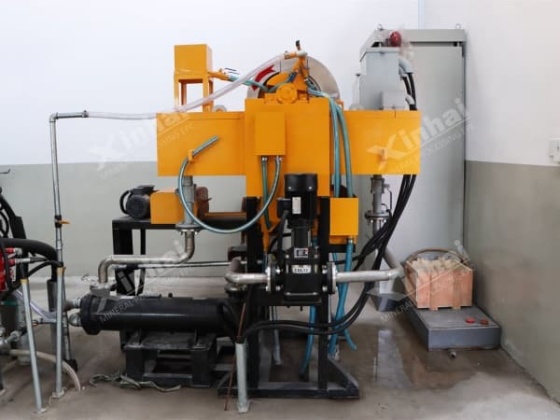
Because ore behaviour varies, the circuit is set by testwork, not by template. Xinhai's role spans iron-ore beneficiation and tailings reprocessing — from magnetic separation and flotation equipment to integrated EPC+M+O delivery (engineering, procurement, construction, plus mine management and operation). Operators can review Xinhai's ferrous-metal solutions and its iron tailings processing technology for the underlying process routes.
Xinhai has delivered iron projects that show the same logic at scale:
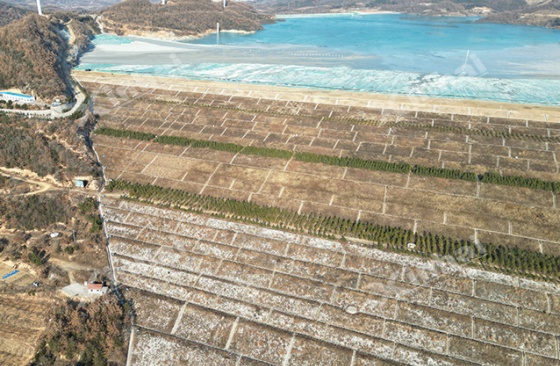
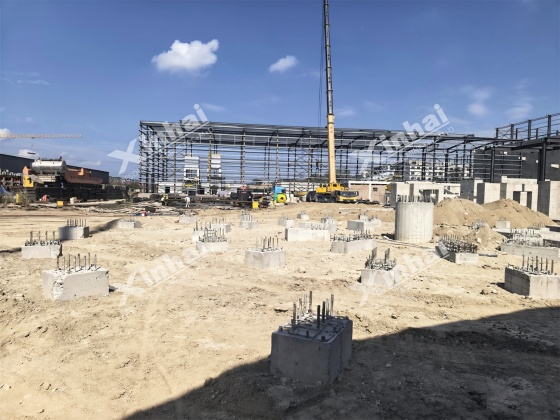
Engineered tailings storage facility for iron tailings.
| Project | Scale | Scope |
|---|---|---|
| Hebei Caofeidian iron-ore project | 3 Mtpa | Iron-ore beneficiation |
| Hainan iron-tailings project | 600 ktpa | Grinding-magnetic separation, total package + operation |
The Hainan case is especially relevant: it reprocesses iron tailings through grinding and magnetic separation under a total-package-plus-operation contract — the exact type of work a reactivation project requires. Xinhai's equipment base includes high-gradient magnetic separators and flotation columns suited to fine, low-grade iron recovery.
It is a heat treatment that converts weakly magnetic iron minerals (hematite, goethite) into magnetite for recovery by magnetic separation. It is needed when iron in the ore or tailings is too weakly magnetic for direct separation and the grade is high enough to justify the extra step.
Yes, in many cases. The Anshan project upgrades 11% Fe tailings to 65%+ concentrate at viable cost, helped by zero feed cost, scale, and lower energy use. Economic viability still depends on grade, mineralogy, and site conditions, so testwork is the first step.
Timelines depend on testwork, permitting, and site conditions rather than a fixed calendar. Integrated EPC, where design, equipment supply, and construction overlap, shortens the path from sample to commissioning — but each project sets its own schedule.
Xinhai delivers iron-ore beneficiation and tailings reprocessing through magnetic separation and flotation, with EPC+M+O scope. The Hainan 600 ktpa iron-tailings grinding-magnetic project under total package plus operation is a direct example. Whether roasting is required is settled by metallurgical testwork.
If you hold iron tailings or low-grade iron ore, the first move is metallurgical testwork to define the flowsheet — not a standard template. Share your sample and project context, and we can discuss feasibility, recovery targets, and an EPC path shaped to your ore.
At Xinhai, the right flowsheet is built around your ore — not a one-size-fits-all design.
Send us your iron tailings or low-grade ore, and let's work through the technical questions together.
 +86 13811510145