If you want to know more information (such as product/process price, etc.), please contact us 24-hour telephone
Governments can redraw export rules overnight. Building the plants that turn tungsten ore into concentrate takes years, and that gap is where supply really breaks.
On 27 August 2026, the United States banned exports of tungsten scrap and battery black-mass unless a company proves "undue hardship." The UK committed up to £71 million to restart the Hemerdon tungsten-tin mine via Tungsten West, targeting 2027 output. Zimbabwe suspended all tungsten and antimony exports. Vietnam proposed removing tungsten from its export-permitted list. China supplies roughly 79% of the world's tungsten, and Rotterdam APT prices have risen ninefold in 18 months, per the 15 September briefing.
But permitting a mine and restarting a shutdown are not the same as putting tungsten on the market. The bottleneck is not the rock. It is the processing capacity — the concentrators that upgrade low-grade ore and legacy tailings into saleable concentrate. Under today's resource nationalism, that capacity is becoming a strategic asset.
The headlines read like a supply story. Most are really a processing story. A restarted mine still needs a flowsheet, a plant and a commissioning curve before it ships concentrate. For a project idle for years, that clock starts at zero. The gap that worries buyers is a capacity gap, not just a resource gap — which is why beneficiation and tailings-reprocessing capacity deserve the same attention as the orebody. Xinhai's EPC+M+O model compresses that timeline.
Tungsten occurs mainly as two minerals that behave differently in the plant. The right route starts with knowing which one you have.
Scheelite (calcium tungstate) floats well, so flotation leads. The work is splitting it from look-alike gangue — hot sodium silicate pulp depresses calcite and fluorite; an alkyl sulphate collector floats barite at pH 1.5–3; xanthate removes sulphides; oleic acid lifts scheelite while quartz and silicate stay down. See Xinhai's scheelite flotation production line.
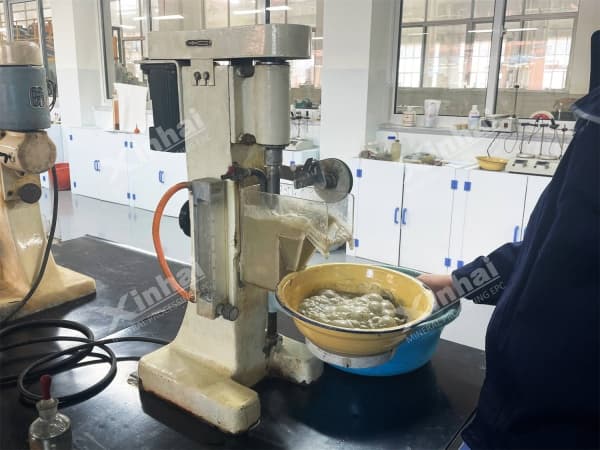
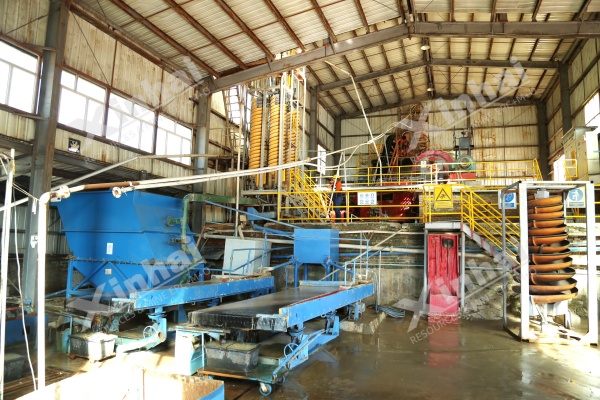
Wolframite (iron-manganese tungstate) is dense — about 7.1–7.5 specific gravity — so gravity leads. Xinhai's flowsheet runs four stages: roughing, gravity separation, cleaning and slime treatment. Multistage jigs and shaking tables concentrate the coarse fraction; middlings are reground. A Mongolia 150 t/d plant Xinhai delivered treated ore at ~7% WO₃, crushed to −200 mm and ground to −1 mm because tungsten did not liberate above that size.
No two tungsten ores are alike. Metallurgical testwork — bench and pilot — defines the grind, reagents and circuit before steel is ordered. Skipping it is the fastest way to miss recovery targets.
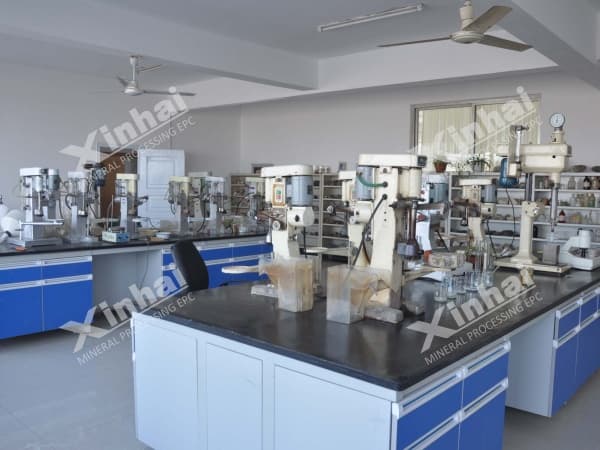
These results apply only to the submitted sample and should not be presented as guaranteed plant performance.
| Mineral | Main method | Key equipment | Xinhai note |
|---|---|---|---|
| Scheelite | Flotation-led | Flotation cells, reagent scheme | Set by testwork; separate from calcite/fluorite/barite |
| Wolframite | Gravity-led | Jig, shaking table, regrind mill | 4-stage: roughing → gravity → cleaning → slime |
Legacy tailings are no longer just waste. They are metal that earlier plants left behind when the economics or technology were not ready.
Take Uzbekistan: about 8 million tonnes of historical tungsten tailings sit there from old mines — low grade and hard to separate. Xinhai is delivering a 1,000,000 t/a reprocessing project on a gravity-primary flowsheet with regrind-flotation support. Feeding slurry directly avoids grinding the whole stream; small ball mills and flotation units recover tungsten that would stay buried. See the tungsten tailings recycling case and Xinhai's tailings treatment solutions.
It cuts import reliance on a metal one country dominates.
It reduces land and water risk from idle dumps.
It recovers by-products still locked in old tails.
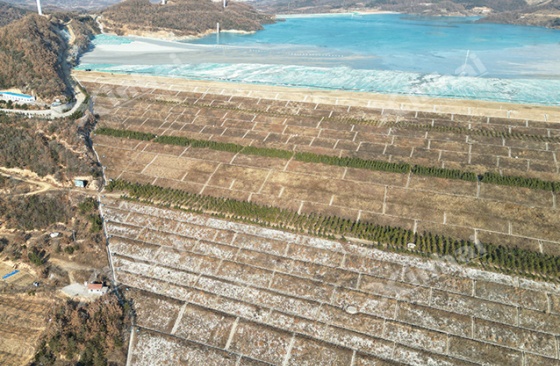
Scale: 1,000,000 t/a. Feed: 8 million tonnes of legacy tungsten tailings. Process: gravity-primary with regrind-flotation support. Scope: full EPC — testwork, design, equipment, installation and automation. Status: in installation since July 2026.
Scale: 150 t/d. Ore: wolframite at about 7% WO₃, medium hardness, −200 mm feed. Process: gravity (jig + shaking table) with flotation-magnetic cleaning. Outcome: a delivered concentrator in Mongolia, across both tungsten minerals.
| Project | Scale | Feed | Process | Status |
| Uzbekistan tungsten tailings | 1,000,000 t/a | 8 Mt legacy tailings | Gravity-primary + regrind flotation | Installation since Jul 2026 |
| Mongolia wolframite plant | 150 t/d | ~7% WO₃ wolframite | Gravity + flotation-magnetic | Delivered |
Tungsten's hardness and heat resistance make it the backbone of cutting tools, hard alloys and semiconductors. When supply tightens, those industries feel it first — so governments treat it as strategic.
Yes. Modern combined flowsheets — gravity plus flotation, matched to grade and particle size — recover tungsten from low-grade legacy tailings. The Uzbekistan project applies this to 8 million tonnes of historical tails.
Timelines depend on ore testwork and site conditions, not a fixed calendar. Integrated EPC, where design, equipment and construction overlap, shortens the path from sample to commissioning.
Yes. Xinhai is delivering a 1 Mtpa tungsten tailings reprocessing project in Uzbekistan and has delivered a 150 t/d wolframite concentrator in Mongolia — both full EPC scope.
Under resource nationalism, the mine is no longer the only lever. The plant that turns ore and tailings into concentrate is what decides whether a supply strategy actually works. If you are evaluating a tungsten project, we would be glad to discuss ore characterisation, metallurgical testwork and process design.
At Xinhai, the best flowsheet is shaped around your ore — not a standard template.
Share your tungsten project with us, and let's work through the technical questions together.
 +86 13811510145