If you want to know more information (such as product/process price, etc.), please contact us 24-hour telephone
Refractory molybdenum ore often contains oxidation products, fine disseminated minerals, and associated metals that make conventional flotation difficult. Without proper beneficiation testing, processing plants may suffer from low molybdenum recovery, unstable concentrate grade, and excessive reagent consumption. This article explains the main challenges of refractory molybdenum ore beneficiation, the key testing procedures, and how process optimization can improve recovery and plant performance.
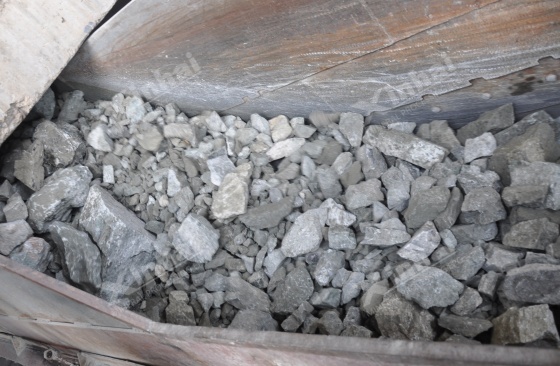
Refractory molybdenum ore is hard to process for five main reasons.
1. Heavily oxidized ore often responds poorly to conventional flotation processes. Oxidized molybdenum minerals cannot be fully captured by standard reagents, making it tough to achieve ideal separation results.
2. Accompanying substances like talc and carbon interfere with processing and lower the quality of finished products. These impurities float together with target minerals, directly dragging down the grade of final molybdenum concentrate.
3. The useful minerals exist in tiny particles. They easily turn into fine sludge during crushing and grinding, causing large losses of valuable materials. Fine sludge is hard to recycle and leads to obvious drops in overall molybdenum recovery.
4. The ore often contains copper, tungsten, and other metals. It takes complex chemical agents to separate different minerals. Precise control of reagent types and dosages is required to separate valuable metals effectively.
5. The raw ore has low metal content, while finished products need to meet strict standards. The multi-step purification process is hard to control, and minor operational changes will affect product quality.
These problems combined will result in low output efficiency, high cost of chemical agents, and unqualified final products.
Beneficiation testing is essential for molybdenum ore. It helps identify the ore’s properties first and works out the most suitable processing methods and proper chemical dosages. With reliable test data, we can avoid unnecessary risks, cut production costs, ensure stable mineral recovery, and produce qualified final products.
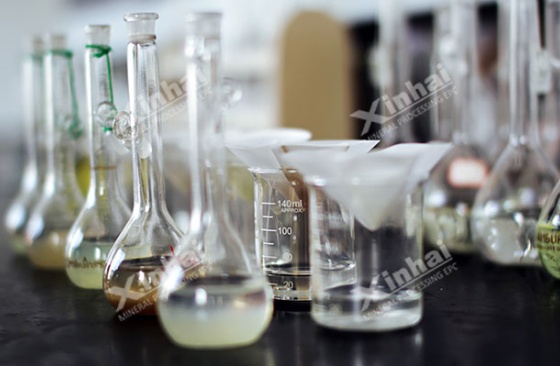
1. Improve molybdenum recovery: Professional beneficiation testing helps maximize the recovery of valuable molybdenum from complex ores by optimizing flotation conditions and process parameters.
2. Reduce reagent consumption: Scientific test data matches the optimal reagent formula for molybdenum beneficiation, avoiding unnecessary reagent waste and cutting production consumption for the processing plant.
3. Optimize grinding fineness: Targeted beneficiation testing determines the most suitable grinding granularity, preventing mineral over-grinding and sludge generation to create stable conditions for subsequent flotation.
4. Lower operating costs: Mature molybdenum beneficiation schemes verified by tests simplify production procedures, reduce equipment wear and human input, and effectively lower the long-term operating cost of the plant.
5. Improve concentrate grade: By eliminating impurity interference through optimized flotation process parameters, testing steadily improves the purity and quality of final molybdenum concentrate products.
6. Reduce investment risks: Full-process beneficiation testing verifies the feasibility of mining schemes in advance, helping processing plant projects avoid technical failures and economic losses in actual operation.
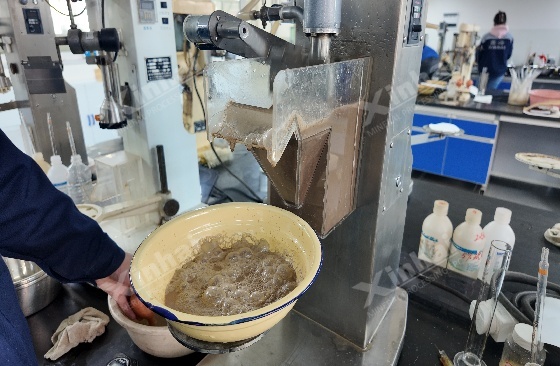
For refractory molybdenum ore, professional beneficiation testing is an indispensable part of designing and building a molybdenum processing plant, which lays the foundation for stable molybdenum recovery via the optimized flotation process. The core testing procedures are simplified as follows:
1. Process Mineralogy Analysis
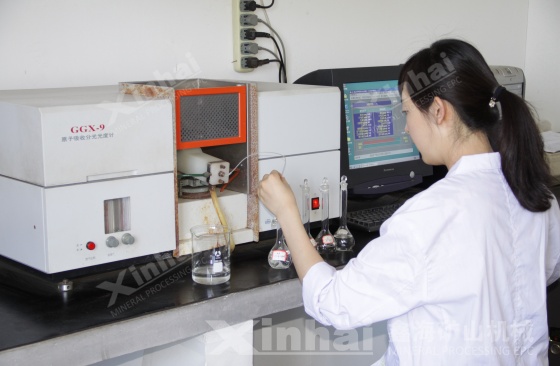
We analyze ore properties by microscopic detection to identify the occurrence, grain size, and associated minerals of molybdenum-bearing materials. This step defines the optimal liberation size, predicts slime formation during grinding, and pinpoints harmful impurities, delivering basic data for subsequent molybdenum beneficiation.
2. Beneficiation Process & Condition Tests
We mainly verify the optimal flotation process and reagent scheme. Systematic tests are carried out to confirm proper crushing and grinding fineness, and screen suitable flotation collectors, frothers, and depressants with matched dosages. Pulp pH adjustment is also tested to maximize molybdenum recovery.
3. Flowsheet & Closed-Circuit Simulation
We optimize the flowsheet including roughing, cleaning, and scavenging stages, and conduct closed-circuit tests to simulate real operation in a processing plant. The stable concentrate grade and molybdenum recovery obtained can directly support project assessment and design.
The following two projects from Xinhai Mining illustrate how professional beneficiation testing solves practical production problems for different types of molybdenum ores.
1. Low-Grade Molybdenum Ore with Variable Grade
A mining company in Fujian faced significant uncertainty due to fluctuating ore grades and concerns about long-term recovery performance. The original ore had a molybdenum content of 0.50%. After full process and closed-circuit tests, the optimized flotation process produced a concentrate grade of 52.36%, with molybdenum recovery reaching 96.34%.
To adapt to possible grade changes during long-term mining, we also tested ore with a lower molybdenum grade of 0.26%. With slight process adjustments, we still obtained qualified concentrate at 50.36% grade and 95.11% recovery. Complete molybdenum beneficiation testing ensures stable performance even when raw ore conditions change, delivering reliable technical support for the whole service life of the processing plant.
2. Separation of Complex Polymetallic Associated Ore
This project targets tungsten-molybdenum associated ore in Kazakhstan, a typical refractory molybdenum ore. Fluorite with similar floatability severely interfered with tungsten and molybdenum separation.
We first conducted detailed mineral analysis, then adopted a tailored combined flowsheet. By optimizing types and dosages of regulators and depressants via repeated tests, we effectively suppressed fluorite. The final closed-circuit test realized efficient separation and full recovery of valuable metals. This case proves our strength in developing complex flowsheets and precise reagent schemes for difficult associated ores.
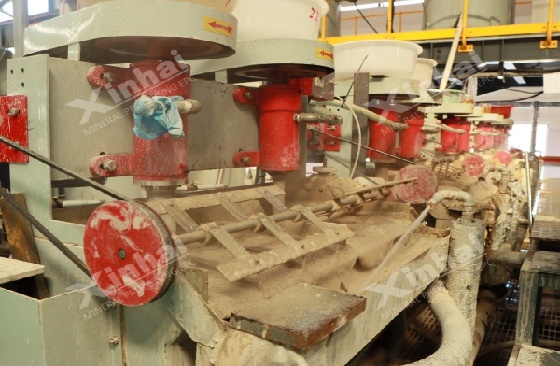
Standardized laboratory testing and pilot-scale verification bridge the gap between theoretical design and actual production. Rich practical experience in mineral processing ensures all process schemes fully adapt to on-site ore conditions, avoiding impractical theoretical designs and reducing production and scale-up risks in ore beneficiation.
Practical and Reliable Test Data
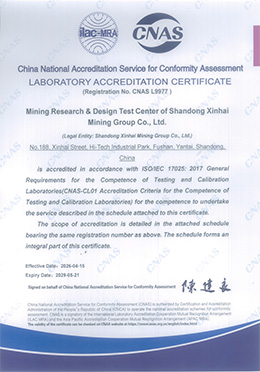
We run a CNAS-certified lab and carry out pilot tests, which connect lab results with real production. Drawing on rich experience from global projects, we design plans based on actual on-site conditions. This avoids impractical solutions and greatly lowers operational risks for refractory molybdenum ore and regular ore processing.
Full-cycle Cost & Efficiency Control
As your one-stop partner for plant design, construction and operation, we focus on long-term benefits rather than ideal lab results. All testing and flotation process design aim for stable performance, low overall costs, and easy implementation, ensuring consistent value from testing to formal production.
Experienced Professional Team
Our senior technical team has long worked on all kinds of difficult ore projects. With solid expertise, we quickly analyze ore features, select proper technical solutions, and solve problems efficiently throughout the whole beneficiation testing process.
Refractory molybdenum ore beneficiation requires more than conventional processing experience. Professional beneficiation testing helps identify ore characteristics, optimize flotation processes, improve molybdenum recovery, and reduce operational risks. By combining laboratory analysis, pilot testing, and engineering experience, mining companies can develop reliable and cost-effective processing solutions for long-term project success.
If you are developing a refractory molybdenum ore project, professional beneficiation testing can help reduce technical uncertainty and improve project profitability. Contact Xinhai to discuss customized testing, process design, and EPC solutions for your ore characteristics and production goals.
 +86 13811510145