If you want to know more information (such as product/process price, etc.), please contact us 24-hour telephone
The gold flotation plant is built, the equipment is running, but the gold recovery rate remains below expectations, concentrate grade fluctuates, reagent consumption is out of control, and the projected profits are being swallowed by low-efficiency production—this is the harsh reality many gold flotation plants face after start-up. The root cause is the absence of one critical professional step: Gold Flotation Plant Commissioning. This is not only the final chapter of an EPC project, but the “golden armor of efficiency” that protects your entire investment.
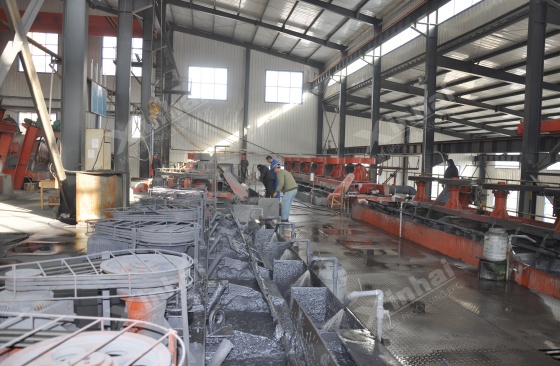
Gold Flotation Plant Commissioning is a precision engineering process tailored for gold ores—especially those containing sulfides or with complex dissemination characteristics—within the flotation recovery system. It goes far beyond simply getting flotation cells to spin. Its core objective is to systematically optimize parameters and balance the entire flowsheet to solve gold-specific challenges such as reagent regime sensitivity, complex mineral surface properties, and locked particles. Ultimately, it ensures “meeting design targets and reaching nameplate capacity”—that is, steadily achieving the contracted gold recovery rate, concentrate grade, throughput, and controllable operating costs.
It is fundamentally different from conventional equipment commissioning, as shown in the table below:
| Comparison Items | Equipment Commissioning | Gold Flotation Process Commissioning |
|---|---|---|
| Core Objective | “Make the equipment run” | “Optimize the flowsheet and achieve target indicators” |
| Focus of Work | Mechanical and electrical performance of individual units (e.g., flotation cells, mills). | System-wide coordination and optimization of grinding–classification–flotation–thickening, with emphasis on the reagent–mineral–bubble interface efficiency. |
| Key Tasks | Installation checks, no-load testing, motor rotation, and instrumentation signals. | 1. Precise Reagent Regime Design: Optimizing collector, frother, and modifier dosage, addition points, and methods. 2. Flotation Kinetics Optimization: Adjusting air flow, pulp level, and impeller speed to match gold flotation rates. 3. Flowsheet Balancing & Strengthened Scavenging: Ensuring proper cleaning stages and scavenging intensity to minimize gold loss to tailings. 4. Grinding Fineness Matching: Ensuring sufficient liberation of target minerals to enable efficient flotation. |
| Required Expertise | Mechanical, electrical, automation. | Mineral processing, surface chemistry, flotation theory, gold metallurgy. |
| Final Outcome | Equipment that can operate. | A profitable flotation system with maximized gold recovery and controlled operating costs. |
Results speak louder than words. Below is a snapshot of our global expertise in gold flotation commissioning—showing how we turn engineering into real economic value.
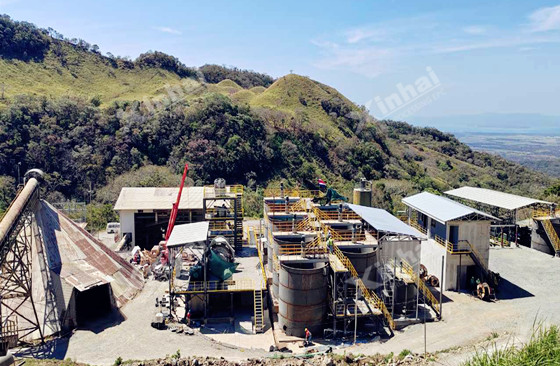
Challenges: Gold was mainly encapsulated in pyrite and arsenopyrite with very fine dissemination. Conventional flowsheets yielded less than 80% recovery, and high arsenic content affected concentrate sales.
Commissioning Strategy: We adopted a combined approach of “fine grinding–stage flotation–selective depression.” Key optimizations included grinding fineness and classification efficiency, restructuring the reagent regime with new eco-friendly depressants and selective collectors, and precise control of pulp pH and Eh.
Results: Gold flotation recovery was steadily increased to above 92%, while arsenic content in the concentrate was reduced to meet environmental and smelting standards. The once borderline economic orebody became a high-profit resource, increasing the project’s expected annual revenue by tens of millions of USD.
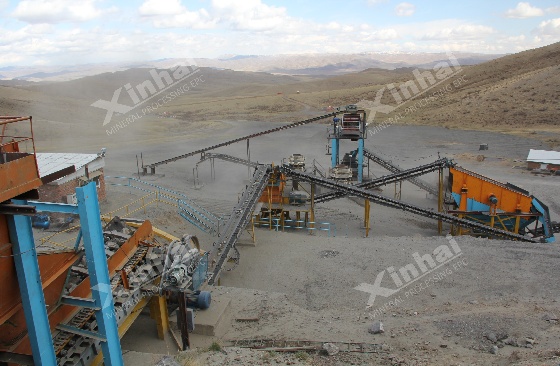
Challenges: Active carbonaceous matter “robbed gold” by adsorbing gold-bearing particles, preventing flotation, and causing extremely low and unstable recovery.
Commissioning Actions: Acting as “flotation detectives,” our team conducted systematic diagnostics to identify the mechanisms of interference. We introduced targeted carbon pre-treatment and blocking technologies, and reconfigured the plant’s reagent regime and flotation kinetics parameters.
Results: The “gold-robbing” effect was effectively suppressed, and the flotation system became stable. Gold recovery jumped from 65% pre-upgrade to 88% and has remained stable, reviving a plant on the brink of shutdown and turning it into a profitable operation.
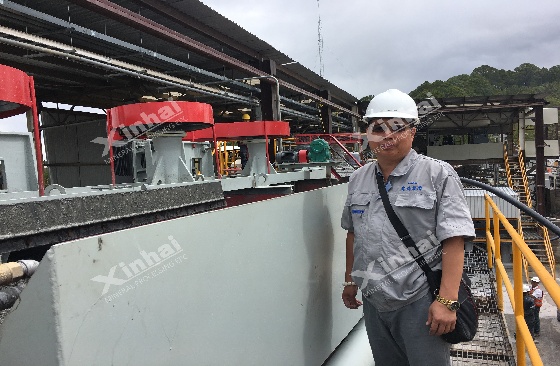
Challenges: The ore exhibited highly variable proportions of oxide and sulfide minerals. A single flotation process could not handle both efficiently, leading to severe recovery fluctuations and failure to meet design targets.
Commissioning Strategy: We created a rapid ore classification and split-flow system. Two independent reagent regimes and flotation parameter sets were developed—one for oxide ore, one for sulfide ore—forming a flexible “one plant, two systems” mode of operation.
Results: Regardless of fluctuations in ore characteristics, the system automatically selected the best flotation route. Final plant gold recovery consistently exceeded the contractual target of 90%, achieving 365 days of stable nameplate production and eliminating the client’s operational concerns.
Our core commissioning engineers come from our research institute. They are not only metallurgical engineers but also seasoned specialists in gold mineral processing—well-versed in the flotation behavior and solutions for quartz-vein, altered-rock, sulfide, and carbonaceous gold ores.
With Xinhai Laboratory Support: We guarantee that industrial flotation indices will match those obtained from closed-circuit laboratory tests—your strongest technical assurance.
Without Xinhai Laboratory Support: Leveraging deep expertise in gold flotation, we can rapidly diagnose flowsheet issues and optimize the system to ensure smooth operation and target-level recovery and capacity.
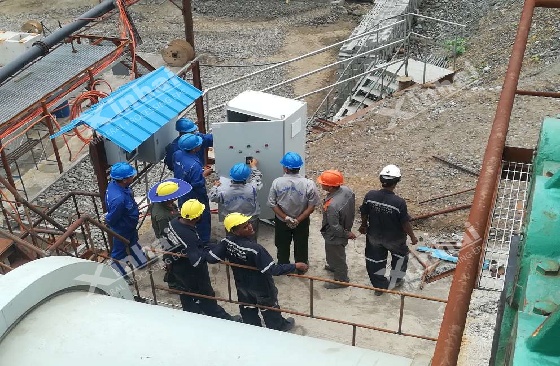
As part of the EPC contractor team, we seamlessly coordinate with mineral processing design, reagent supply, automation control, and other departments. This ensures that commissioning plans are executed thoroughly and efficiently, solving cross-disciplinary issues rapidly.
Client Feedback:
“Our gold recovery was stuck at 85% for half a year. After Xinhai’s flotation commissioning experts arrived, they fine-tuned everything—from reagents to air flow—like performing surgery. In less than a month, recovery exceeded 91%, and reagent consumption dropped. This is what real professional commissioning looks like!” — Plant Manager, Leading Gold Group.
Choosing Xinhai’s Gold Processing EPC+M+O solution means you receive not just equipment and drawings, but a complete ‘Gold Production Line Activation Package’ that ensures maximum flotation recovery and immediate, visible production benefits.
If you are facing:
A new gold flotation plant is about to start up, and the operators are worried about missing targets.
A stagnant recovery rate that limits profitability.
Deteriorating flotation indicators caused by changing ore properties.
Contact Xinhai’s Gold Flotation Plant Commissioning experts today for targeted diagnostics and solutions. Let our professional commissioning expertise safeguard every gram of your gold recovery.
 +86 13811510145