If you want to know more information (such as product/process price, etc.), please contact us 24-hour telephone
Tanzania hosts high-quality crystalline flake graphite deposits featuring intact natural graphite flakes with high industrial value, which serve as core raw materials for lithium battery anodes, refractory materials and high-end sealing products, driving surging overseas investment demand in this sector. For a local 3,000 t/d graphite mine, Xinhai has completed comprehensive mineral characterization and full-process mineral processing tests, alongside integrated general layout design of a standardized concentrator and compliant tailings pond engineering design, delivering a one-stop integrated solution covering mining, mineral processing and tailings disposal.
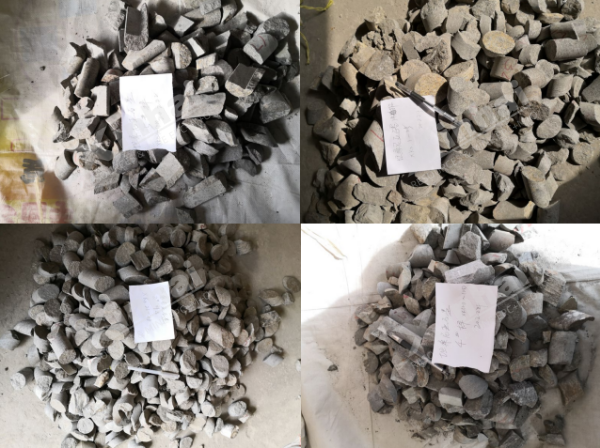
Flaky graphite is the valuable mineral in the ore, with a fixed carbon content of 5.67% in run-of-mine ore. Gangue minerals mainly include silicate and carbonate minerals such as quartz, biotite, hornblende, plagioclase and dolomite.
The ore body consists of hard rock. Under identical grinding fineness, ball mills achieve far superior mineral liberation compared to rod mills, so ball milling is adopted for the whole production line as verified by test results.
A series of conditional tests including crushing, classification, rough flotation and multi-stage regrinding-cleaning flake protection were carried out to improve concentrate grade and recovery while preserving large graphite flakes:
Crushing Section: Run-of-mine ore undergoes primary jaw crushing followed by secondary roll crushing to achieve targeted feed particle size for grinding.
Rough Grinding & Rough Flotation: Ball milling is operated at 50% solid concentration, with a particle size of 100 mesh passing 47% and all material passing 24 mesh. A basic flotation circuit of one roughing, one cleaning and one scavenging is deployed to produce rough concentrate.
Regrinding & Multi-Stage Cleaning for Purification: The rough concentrate is subject to 6 stages of flake peeling regrinding and 7 stages of cleaning flotation; middlings are returned in batches to avoid excessive comminution of graphite flakes.
Flotation Reagent Regime: Kerosene at 150 g/t, No.2 frother at 110 g/t and sodium silicate at 900 g/t, enabling efficient and low-cost removal of silicate gangue minerals.
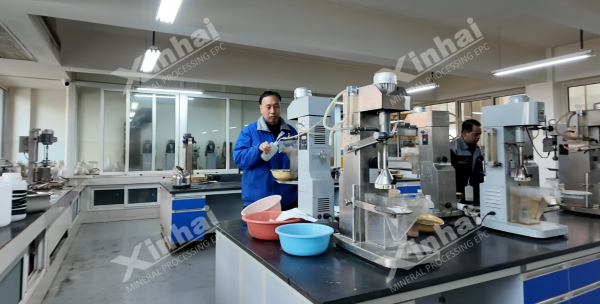
Key Excellent Indicators of Closed-Circuit Tests
Fixed carbon grade of flotation concentrate: 95.06%
Comprehensive fixed carbon recovery rate: 90.16%
Flake size distribution in concentrate: Coarse flakes larger than 80 mesh account for 61.26% of total concentrate. The process delivers outstanding preservation of large graphite flakes, granting strong product premium in the market.
Supplementary Process Optimization Notes
A small portion of graphite is closely intergrown with quartz, pyrite and biotite in ore samples, leading to slightly lower grade of fine graphite fraction (-150 mesh). This fine fraction only accounts for 0.75% of run-of-mine ore, and separate fine grinding would severely destroy large flakes. After the plant is commissioned, representative -150 mesh products can be sampled for targeted purification tests to boost its grade. Comparative tests on peeling regrinding confirm that 6 stages of regrinding matched with 7 cleaning stages form the optimal balance between intact flake retention and concentrate grade. All test data can be used as authoritative technical references for the development design of the mine’s initial mining zone.
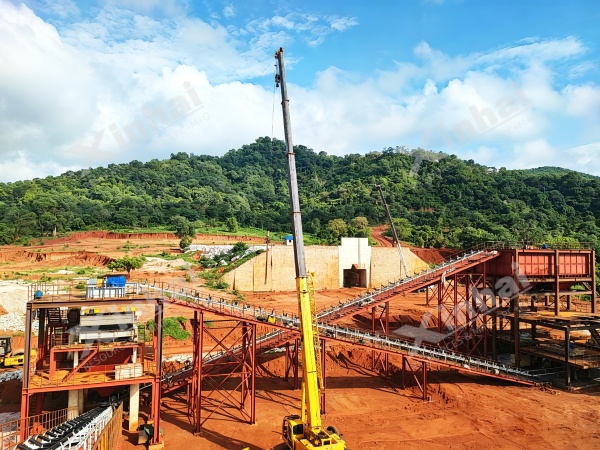
Based on the mature process validated by lab tests, a full-site general layout and integrated utility engineering plan are tailored to the 3,000 t/d processing capacity, fully adapting to Tanzania’s local climate, power supply and transportation conditions:
Zoned Layout of Production Workshops: Independent zones are designated for crushing plant, grinding-flotation main workshop, thickening & dewatering workshop, reagent storage warehouse and finished concentrate stockyard. Compact process connections shorten material conveying distance and cut production energy consumption.
Auxiliary Utility Systems: Circulating water supply, dust suppression & noise reduction, self-contained power generation and centralized control monitoring systems are equipped to cope with unstable African power grids and local environmental compliance requirements.
Modular Construction Concept: Steel-structured workshops and standardized complete mineral processing equipment are adopted. All machinery can be manufactured in China in batches before sea freight to Tanzania, greatly shortening civil construction periods overseas.
Full-scope Integrated EPC Delivery: Turnkey services cover process drawing design, complete equipment fabrication, cross-border logistics, on-site civil installation, no-load linkage commissioning and feed-run startup debugging. Clients do not need to coordinate separately with design institutes, equipment manufacturers and construction teams.
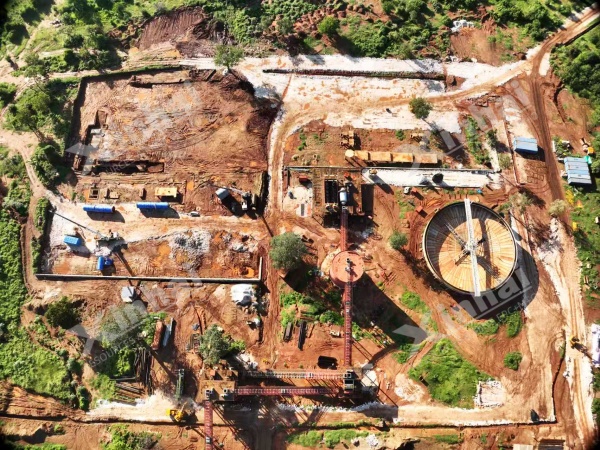
4.1 Site Selection Criteria
After multiple rounds of field surveys and comparative screening of valleys, the tailings pond is located 1.5 km northwest of the concentrator and within a 5 km radius of the plant. This location shortens transportation routes, lowers infrastructure costs and features natural valley topography ideal for tailings storage.
4.2 Tailings Storage & Dam Construction Technology
Tailings Transportation: Flotation tailings are thickened in thickeners, then conveyed via sealed pipelines to the dam crest for uniform wet deposition.
Dam Construction Method: The proven upstream embankment construction method is applied, combining a rigid starter dam with a raised tailings embankment. The dam structure meets local Tanzanian mine safety standards in terms of stability and seismic resistance.
4.3 Storage Capacity, Dam Parameters & Pond Classification
Total storage capacity: 7.786 million m³; Maximum dam height: 56 m
Service life: Sufficient to sustain continuous operation of the 3,000 t/d concentrator for 8.7 years
Pond classification: In accordance with Chinese national standard Safety Code for Tailings Ponds (GB 39496-2020), the pond with a 56 m maximum dam height and 7.786 million m³ total capacity is classified as Grade IV tailings pond. It is equipped with full anti-seepage, flood drainage and real-time online monitoring systems to satisfy overseas environmental and safety acceptance standards.
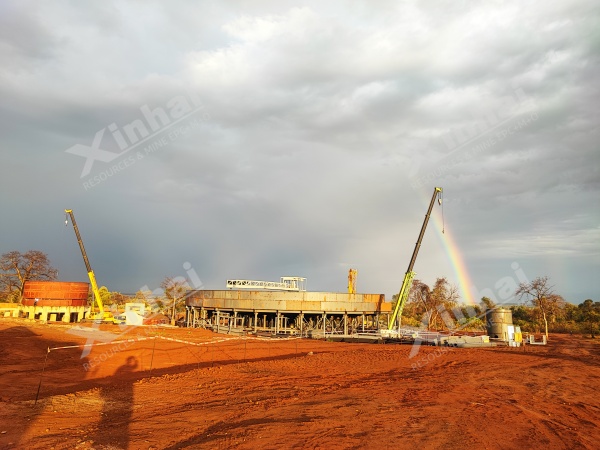
Xinhai delivers all-in-one full-chain solutions to address core pain points of graphite mine investment in Tanzania:
Mineral assaying, closed-circuit bench-scale mineral processing tests, and customized flotation processes dedicated to protecting coarse graphite flakes;
General layout design, workshop planning, and supply of complete crushing, grinding, flotation and dewatering equipment for the 3,000 t/d concentrator;
Full specialized design covering tailings pond site selection, capacity calculation, dam construction technology and safety compliance;
Overseas EPC general contracting, on-site installation & commissioning, and on-site technical operation guidance. The solution balances concentrate quality improvement, efficient plant operation and eco-friendly compliant tailings disposal, catering to all procedures of overseas mine approval and commissioning in Africa.
Xinhai provides complete mineral processing test data, standardized construction schemes for the 3,000 t/d concentrator and compliant tailings pond design for the Tanzanian coarse flake graphite mine project, enabling rapid implementation of an integrated graphite mineral processing facility. While efficiently recovering intact large graphite flakes and securing high metal recovery rates, the design guarantees efficient plant operation and long-term safe, compliant tailings storage. Xinhai delivers mature, actionable full-set technical solutions for Chinese enterprises investing in graphite mines overseas.
 +86 13811510145