If you want to know more information (such as product/process price, etc.), please contact us 24-hour telephone
Scheelite is an important raw material for producing cemented carbides, aerospace materials, and electronic components, and has significant strategic value in the global mineral resource system. With the gradual depletion of high-grade, easy-to-process mineral resources, mining development has increasingly shifted to low-grade, fine-grained disseminated and polymetallic associated complex orebodies. Such ores not only pose great difficulties in mineral processing, but also make it more challenging to balance resource recovery rate, production costs, and environmental protection pressure.
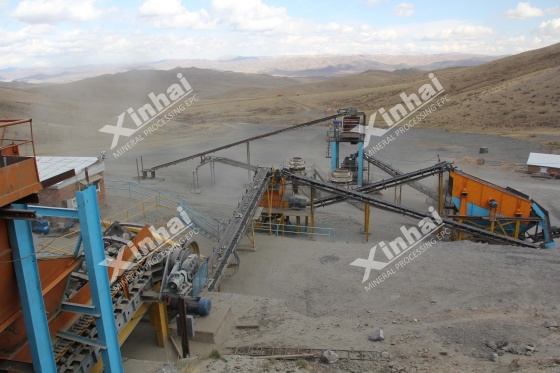
Through long-term service to mining enterprises, Xinhai Mining has found that most scheelite projects face similar problems: low raw ore grade, complex mineral paragenesis, fine and uneven particle size, coupled with associated sulfides or other metal minerals, making it difficult for traditional mineral processing technologies to achieve ideal indicators. Therefore, a single piece of equipment or a single technology is often difficult to solve the problem; enterprises need an integrated solution from ore analysis and process design to equipment matching.
Most scheelite resources currently have low grades, with WO₃ content of many ores less than 0.5%. Direct flotation not only consumes a large amount of reagents, but also easily causes resource waste. In addition, in skarn deposits, scheelite is often associated with calcium-bearing gangue minerals such as garnet and diopside, which have similar floatability and are difficult to separate.
Another common problem is the fine dissemination size of ores, with some mineral particle sizes only between 0.01 and 0.3 mm. Poor control during the grinding process can easily lead to overgrinding or insufficient dissociation, thereby affecting subsequent separation results. At the same time, associated components in sulfide minerals or molybdenum tailings can also interfere with flotation indicators, and the large-scale stockpiling of tailings brings environmental and safety pressures.
Therefore, customized process design for different types of ores has become the key to improving the recovery rate and reducing costs.
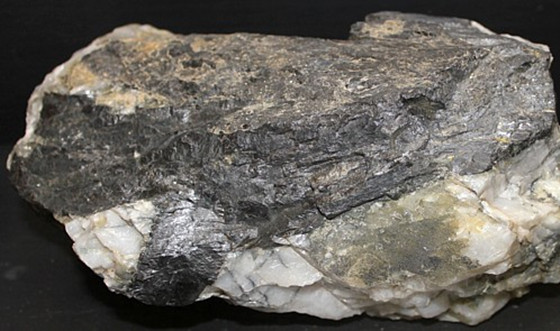
In practical engineering, the treatment method of scheelite often needs to be adjusted according to ore properties.
When processing skarn-type scheelite, high magnetic gangue content and low raw ore grade are two tricky problems. Direct flotation of skarn-type scheelite will lead to large processing capacity and high reagent consumption, thereby increasing costs.
For this type of scheelite, the process route we often adopt is: magnetic separation pre-tailing rejection + normal temperature roughing + heated cleaning. Magnetic separation pre-tailing rejection can remove more than 40% of magnetic tailings in advance, improving the feed grade and reducing the reagent cost in the flotation process.
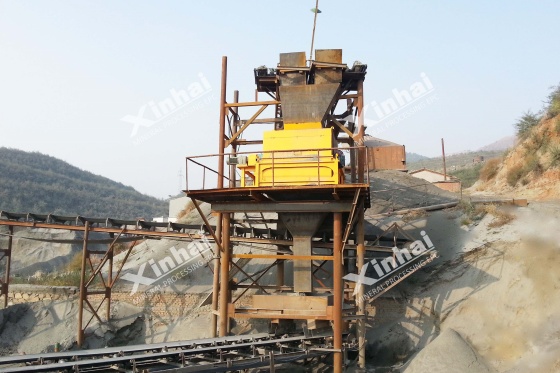
For polymetallic-associated scheelite, our core principle is to recover both the main ore and associated ores without waste. Xinhai adopts a combined magnetic-flotation process to separate useful minerals in the ore, thereby realizing comprehensive recovery of multiple resources.
The following are two project cases:
(1) High-Sulfur Copper-Bearing Scheelite
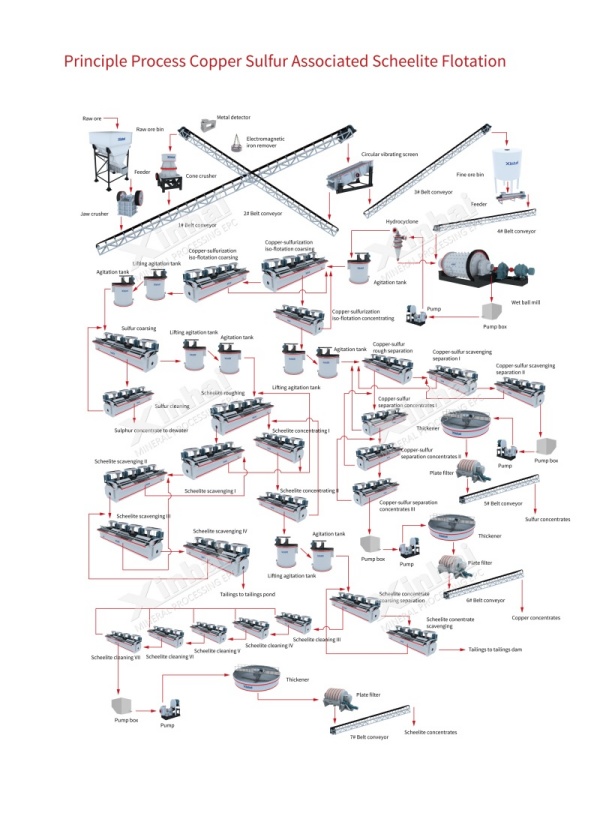
Through experimental analysis, we found that the element content in the ore is: WO₃-1.71%, Cu-0.78%, S2-0.65%. During the mineral processing test, Xinhai Mining conducted repeated process comparisons and finally determined the process route: weak magnetic separation to remove pyrrhotite + copper-sulfur bulk flotation separation + scheelite normal temperature flotation. High-quality scheelite concentrate was obtained, and copper and sulfur resources were recovered simultaneously. The project results are as follows:
| Product Type | Grade | Recovery rate | Core Values |
|---|---|---|---|
| Scheelite concentrate | WO₃=63.93% | 89.60% | High-efficiency recovery of the main ore, meeting metallurgical standards |
| copper concentrate | Cu=20.06% | 73.12% | Full utilization of associated copper resources |
| Sulfur concentrate | S=38.33% | 51.14% | Sulfide recycling reduces environmental pressure. |
Process flow diagram:
(2) Scheelite Associated with Molybdenum Tailings
In this project, Xinhai used the "normal temperature roughing + heated cleaning + flotation" process to treat molybdenum tailings with only 0.067% WO₃, and the final concentrate WO₃ grade exceeded 30%.
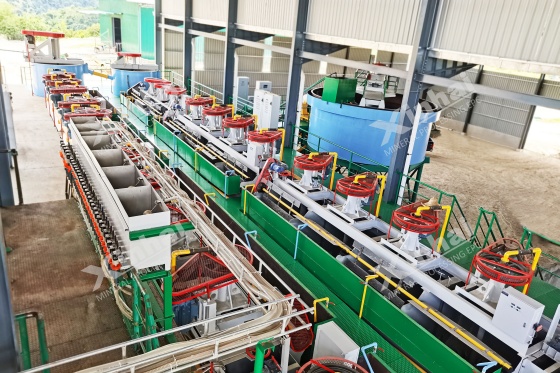
We define scheelite with a particle size of 0.02~0.16mm as fine-grained disseminated scheelite. Due to its extremely fine particle size, it is easy to lose during the separation process. To address this, Xinhai adopts the "stage grinding + classified flotation" process, achieving good separation results.
Case: In a polymetallic sulfide ore project, the dissemination size of scheelite was uneven. After treatment with a customized process, the concentrate WO₃ grade reached 71.66%, the recovery rate was 75.95%, and the fine-grained ore loss rate was controlled within 5%.
Scheelite tailings treatment is related to environmental compliance and secondary resource utilization, which can help enterprises build green mines.
The core task of tailings reprocessing is to recover various valuable components from scheelite tailings. In a project in Southwest China, the tailings were treated by weak magnetic separation + flotation, successfully recovering iron concentrate (Fe66.47%), copper concentrate (Cu21.59%), and zinc concentrate (Zn41.43%), endowing the originally stockpiled tailings with new economic value.
To address the problems of land occupation and leakage risks caused by tailings stockpiling, Xinhai adopts dry tailings discharge technology, realizing tailings dehydration through filter press equipment. The dried tailings can be directly used as construction crushed stone and machine-made ultra-fine sand. In the dry tailings discharge projects we undertook, more than 80% of the tailings were used for building materials after treatment, saving 16 hectares of land.
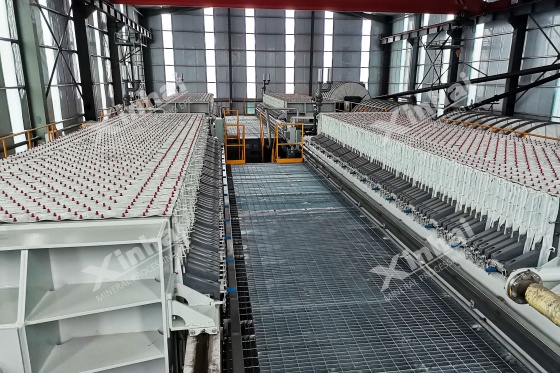
Xinhai can provide ecological tailings storage design and construction services, avoiding tailings leakage risks from the source and helping enterprises easily meet green mine standards.
Against the background of the "dual carbon" goal, the mining industry is constantly exploring technical paths for energy conservation and consumption reduction. In terms of scheelite mineral processing, the green and low-carbon technologies attempted by Xinhai include:
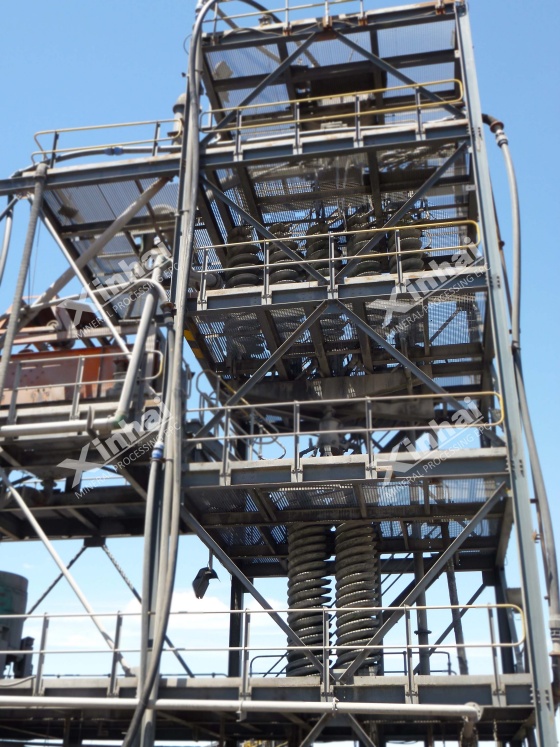
1. "Early Roughing and Early Rejection" process combining XRT intelligent separation + spiral chute gravity separation: It can reduce the energy consumption of mineral processing operations by more than 30%, including a 67% reduction in grinding energy consumption, greatly reducing power consumption.
2. Combined magnetic-flotation process: Compared with the traditional full flotation process, the reagent cost is reduced by nearly 50%, and pollutant emissions are also reduced.
These green mineral processing schemes not only help enterprises reduce production costs, but also assist them in meeting environmental policy requirements, achieving a win-win situation of economic and social benefits.
Easy-to-process scheelite resources are almost exhausted. At present, the difficulty in developing and utilizing scheelite resources is constantly increasing, and the traditional single mineral processing mode can no longer meet actual needs. Only by forming a systematic solution can we ensure a recovery rate, control costs, and meet environmental protection requirements.
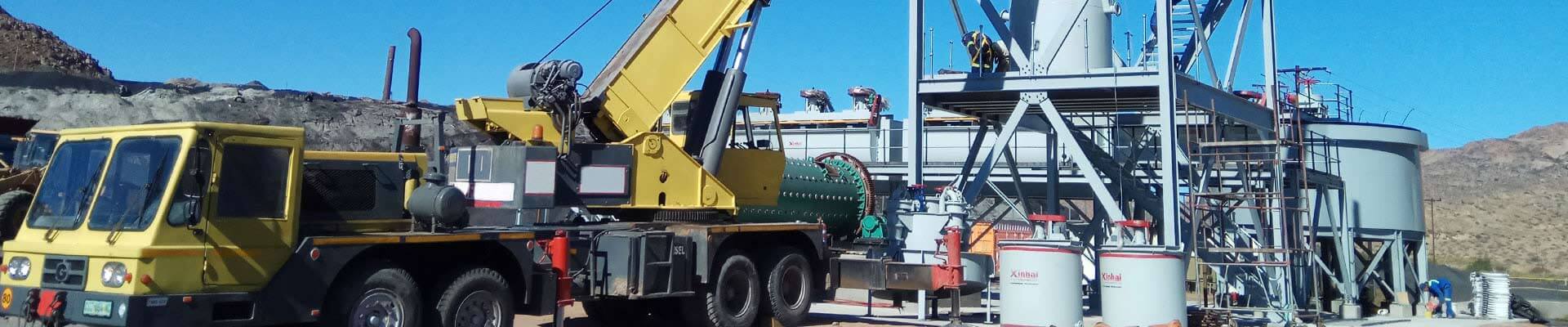
With more than 30 years of experience in the mining industry, Xinhai Mining provides customers with a full industrial chain service model of "process customization + equipment production + EPC general contracting + tailings utilization". In the field of scheelite processing, we can provide worry-free one-stop EPC services according to raw ore properties, production capacity needs, and environmental protection standards, including pre-project technical consultation, mineral processing tests, mid-term engineering construction, equipment installation, and post-project operation and maintenance, and technical upgrading. ( 1,000,000 tpa Tungsten Mine EPC Project in Uzbekistan )
 +86 13811510145