If you want to know more information (such as product/process price, etc.), please contact us 24-hour telephone
After conventional mineral processing tests, most mines face a key question: Is a pilot test necessary? Skipping it risks unstable processes and substandard indicators after commissioning; conducting it adds extra costs.
Xinhai understands your concerns. This article clarifies the differences between the two tests, their applicable scenarios, and which projects require a pilot test or can skip it. We help you plan rationally and reduce project risks based on on-site experience and laboratory capabilities.
1.1 Laboratory Mineral Processing Test
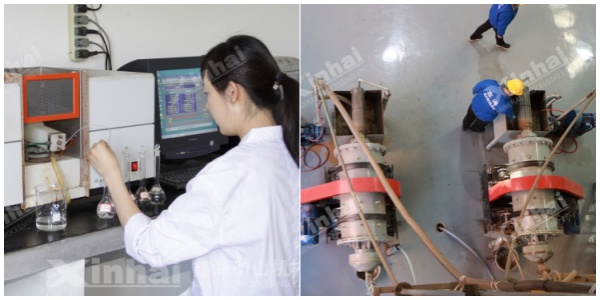
The mineral processing test is the most fundamental laboratory research work in the early stage of mine development.
Under standard laboratory environments, it covers ore analysis, conditional tests, and mineral processing flowsheet optimization. It evaluates ore washability and selects the most suitable processing technology, providing basic data for feasibility studies and preliminary engineering design.
It features a short test cycle and reasonable costs, with a focus on theoretical research and bench-scale verification.
Xinhai runs a standardized mineral processing laboratory accredited by CNAS (China National Accreditation Service for Conformity Assessment), a signatory to ILAC-MRA. Our test reports, bearing the CNAS + ILAC-MRA mark, are internationally recognized and accepted in over 130 economies for mineral processing and design purposes.
1.2 Pilot Test (Semi-industrial Scale-up Test)
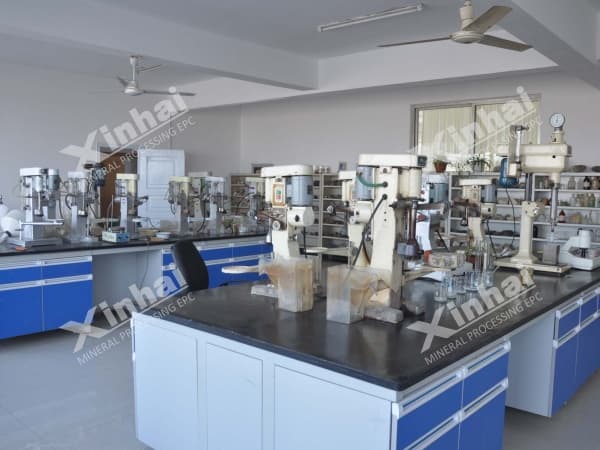
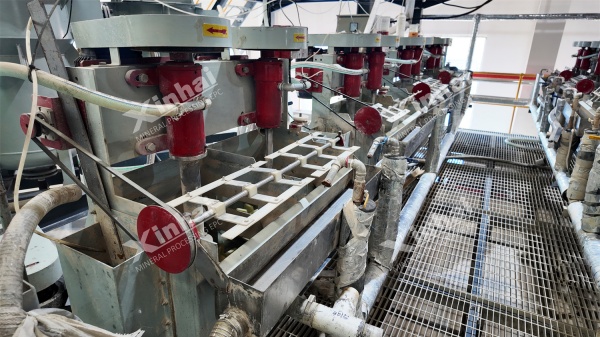
The pilot test serves as a critical transition link between laboratory bench tests and formal plant construction.
Adopting continuous production equipment, it simulates real mine operating conditions for long-term stable operation. It verifies the stability and feasibility of mineral processing flowsheets under formal industrial conditions.
Unlike ideal laboratory environments, pilot tests more closely reflect on-site factors such as temperature fluctuations, pulp density, and continuous equipment operation. It corrects theoretical process parameters and prevents disconnection between laboratory data and actual on-site production.
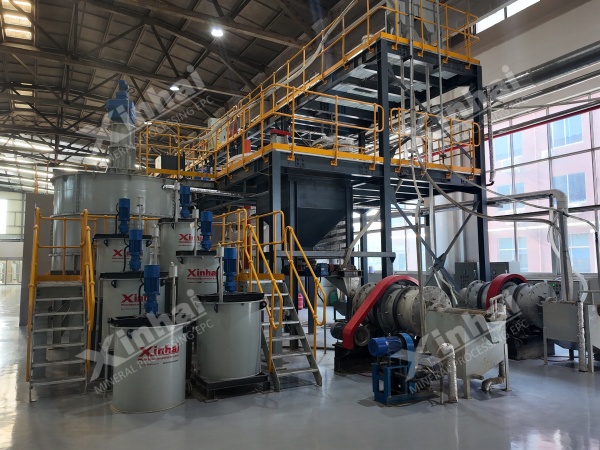
Xinhai owns a 2,000 ㎡ professional pilot test center, capable of conducting continuous scale-up tests for more than 70 types of ores. We have delivered multiple overseas pilot projects, such as the collophanite pilot test in Pakistan, with rich practical experience in complex ore treatment.
| Comparison Items | Mineral Processing Test | Pilot Test |
|---|---|---|
| Test Orientation | Bench-scale lab test to verify basic ore processability | Semi-industrial continuous test for stable production verification |
| Operating Environment | Ideal laboratory conditions with minimal interference | Simulated on-site working conditions close to actual production |
| Test Scale | Small-batch intermittent test with low throughput | Continuous operation with a larger processing capacity |
| Test Cycle | 20–35 days | 30–60 days |
| Cost Investment | Moderate cost, ideal for early-stage screening | Higher investment, essential verification before plant construction |
| Data Reference Value | Basic data for preliminary project planning | Production-grade, accurate data for concentrator design |
| Applicable Projects | Mineral right assessment, small mines, simple ores | New concentrator, plant renovation, complex refractory ores |
| Xinhai Advantages | CNAS accredited testing with standardized reports | In-house pilot base and rich overseas project experience |
Q1: Is a pilot test required after finishing the mineral processing lab tests?
Not all projects need it. For simple ore properties and small-scale, lab tests suffice. For complex polymetallic ores, refractory minerals, or large new concentrators, a pilot test is mandatory to avoid operational risks.
Q2: Can I skip the pilot test to cut costs?
Not recommended. Lab tests under ideal conditions cannot reflect on-site challenges; skipping them often leads to higher later renovation costs than upfront pilot investment.
Q3: What practical problems can a pilot test solve?
It identifies risks in advance, such as low-temperature flotation, grinding fineness control, and reagent adaptation—issues that labs cannot fully simulate.
Only Laboratory Mineral Processing Test: Small-scale mines, single-component ores, and simple processing flowsheets. Suitable for mineral right evaluation and preliminary scheme design.
Mandatory Pilot Test: New large concentrators, upgrading of old production lines, complex polymetallic ores, and overseas mining investment projects. A pilot test locks in stable processes to guarantee smooth commissioning.
Combined Custom Solution: According to ore complexity and project budget, Xinhai provides integrated mineral processing test + pilot test packages, realizing seamless process connection, avoiding repeated sampling and testing, and saving time and costs.
CNAS certified inspection system with authoritative detection of six mainstream elements; lithium element testing will be newly added in 2026 for wider coverage.
Independent large-scale pilot test center equipped with complete continuous test equipment and patented in-house technologies to tackle various complex ore challenges.
Proven overseas delivery experience, including the Pakistan collophanite pilot project, overcoming low temperature and fineness control difficulties with stable long-term operation and high client recognition.
Full-chain EPCM service covering ore testing, experimental research, process design, and complete equipment supply, achieving one-stop seamless project connection.
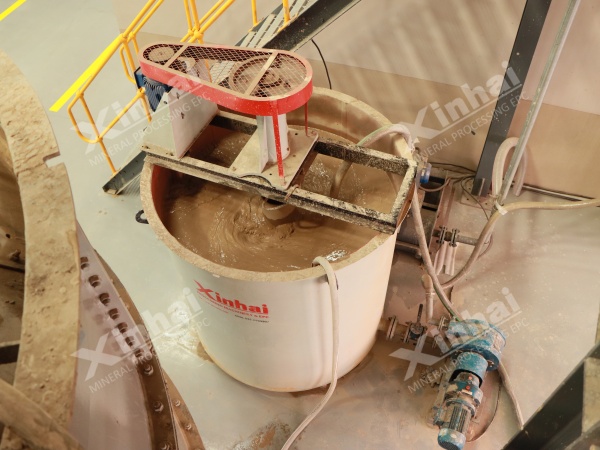
In short, laboratory mineral processing tests confirm whether ore can be processed, while pilot tests verify stable mass production capacity.
By rationally distinguishing the two testing forms and selecting solutions based on ore characteristics and project scale, mines can reduce detours and control investment risks. Exploratory testing is also a cost-effective option before formal laboratory research.
If you are unsure whether your project requires a pilot test or need information on test cycles and budget estimates, feel free to contact Xinhai’s professional technical team. We will provide customized, practical solutions based on ore samples and overall project planning.
 +86 13811510145