If you want to know more information (such as product/process price, etc.), please contact us 24-hour telephone
Ilmenite is a key raw material for producing titanium dioxide (TiO₂) and titanium alloys, and is widely used in the chemical, aerospace, and other industrial sectors. In mineral processing engineering, ilmenite is typically separated and purified through a combination of gravity separation, magnetic separation, flotation, and refining processes.
This article takes a large‑scale ilmenite project as an example to introduce the complete beneficiation process, key equipment, and process design strategy.
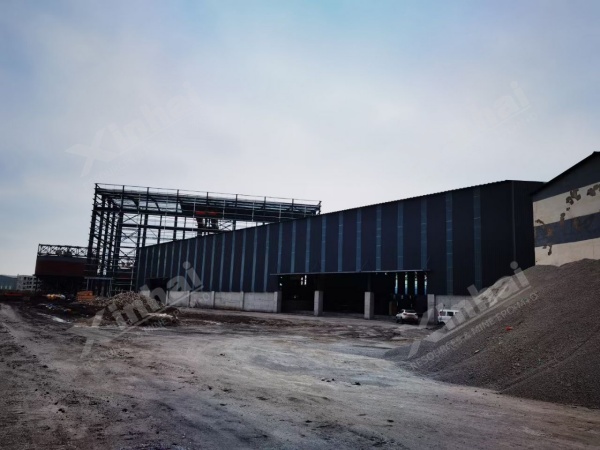
Ilmenite beneficiation refers to the process of separating ilmenite from gangue minerals using physical or chemical methods.
The main objectives include:
Increasing TiO₂ grade
Removing impurity minerals
Improving resource utilization
Based on the beneficiation test reports and site conditions, and after repeated comparisons, the Xinhai Mining Design Institute determined the final process flow as:
Crushing & Grinding → Dry Magnetic Separation (Pre‑concentration) → Gravity Separation + Magnetic Separation + Flotation Purification
Detailed Process Flow:
Function:
Reduce the material size to below -1 mm.
Equipment:
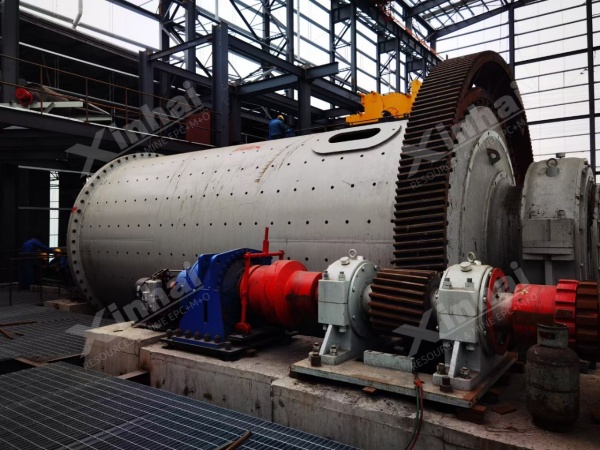
Crusher
High Pressure Grinding Rolls (HPGR)
Ball mill
Advantages:
Lower energy consumption per unit
Higher throughput capacity
Improved equipment operating efficiency
Function:
Recover rough ilmenite concentrate and reject gangue early.
Process:
First stage: weak magnetic separation (1800 Oe) to recover iron rough concentrate
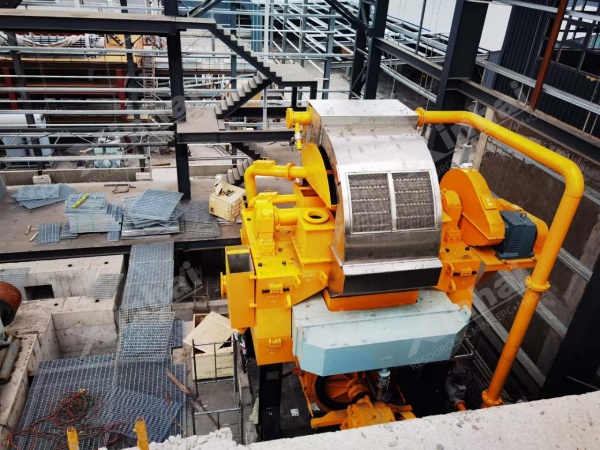
Second & third stages: strong magnetic separation (1.0 T) to recover ilmenite rough concentrate
Overall, the tailings rejection rate can reach up to 51%
Advantages:
Early removal of a large amount of waste rock
Reduced grinding load and energy consumption
Lower tailings storage pressure, more environmentally friendly
Function:
Pre‑enrich heavy minerals such as ilmenite based on density differences.
Equipment:
Spiral Chute
Shaking Table
Advantages:
Effective for coarse and medium‑grained ilmenite
No chemicals required, clean and low‑cost
High enrichment ratio, stable performance
Reduces the load for subsequent magnetic and flotation stages
Function:
Further purify iron and ilmenite concentrates.
Process:
Dry concentrate is combined and ground to 85% passing -200 mesh
Weak magnetic separation (1000 Oe) produces an iron concentrate with TFe ≥ 59.09%
Magnetic tailings are processed by strong magnetic separation (8500 Oe)
Followed by 50% ultra‑high concentration flotation, producing a qualified ilmenite concentrate with TiO₂ ≥ 47.19%
Advantages:
Lower reagent consumption
Higher separation efficiency
Stable and reliable indexes
Function:
Fine grinding to fully liberate ilmenite minerals.
Equipment:
Vertical grinding mill
Advantages:
Efficient fine grinding with minimal overgrinding
Small footprint, low noise, low vibration
Easy installation and improved working environment
Enhances the final concentrate grade
Choosing the appropriate beneficiation process depends on:
Ore type
Particle size characteristics
Project scale
Cost budge
Q1: What are the main methods for ilmenite beneficiation?
A: A combination of gravity separation, magnetic separation, and flotation is commonly used.
Q2: Why is gravity separation important for ilmenite?
A: Ilmenite has a high density, so gravity separation can pre‑enrich heavy minerals efficiently and cost‑effectively.
Q3: Why is magnetic separation necessary?
A: Because ilmenite has weak magnetic properties, it can be used to separate it from non‑magnetic gangue.
In summary, ilmenite beneficiation typically adopts a combined process of gravity separation + magnetic separation + flotation + fine grinding & regrinding.
The specific process must be customized according to ore characteristics to achieve optimal recovery, grade, and economic efficiency.
If you require a customized ilmenite beneficiation solution, please contact us for professional EPC services.
 +86 13811510145