If you want to know more information (such as product/process price, etc.), please contact us 24-hour telephone
A chromite concentrate has no single specification. What a smelter accepts, what a refractory maker accepts and what a chemical plant accepts are three different products with different limits.
The gap is wider than most deposit owners expect. A metallurgical concentrate is bought on Cr:Fe ratio as much as on Cr2O3 content, and silica has to stay near 1%. A refractory-grade product can carry a lower Cr2O3 content and a looser silica limit and still sell, because the buyer is judging grain shape and refractoriness rather than chemistry alone. A chemical plant sits between the two.
Run the same ore through the same flowsheet and you get one grade. Design the circuit around the buyer and you can hit the spec that pays.
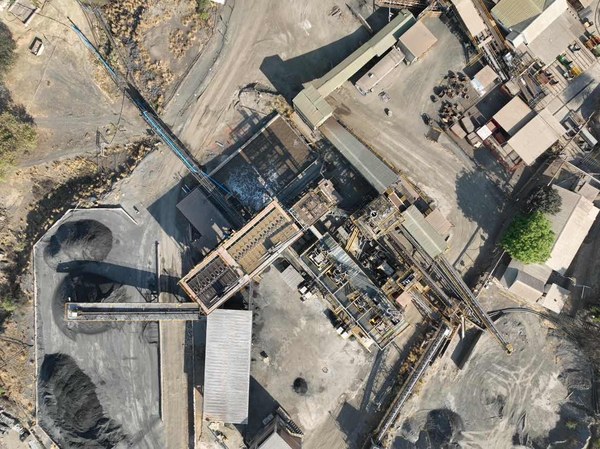
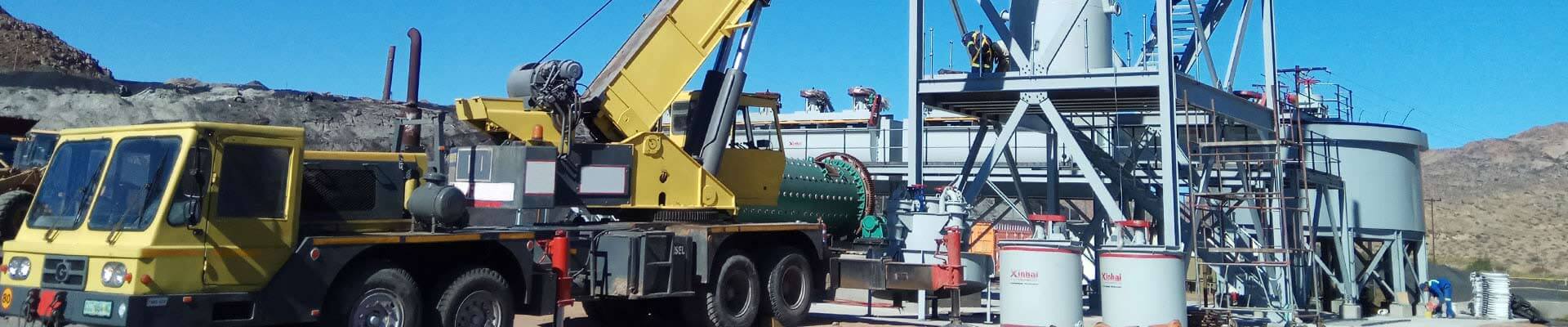
South African chrome concentrator after upgrade
Published trade specifications put the three main grades roughly like this.
| Grade | Cr2O3 | Cr:Fe | SiO2 max | Main use |
|---|---|---|---|---|
| Metallurgical | 52% and above | 3.0 and above | 1.0% | Ferrochrome, stainless steel |
| Chemical | 45% and above | 2.8 and above | 5–8% | Sodium dichromate, tanning, pigments |
| Refractory | 30–35% | Varies | 5–8% | Furnace linings |
| Foundry sand | 46% and above | 2.5 and above | 1.0% | Casting sand |
These are the ranges traders quote, and each contract moves them. The point is not the exact number but the direction: metallurgical pulls every limit tightest, while refractory relaxes Cr2O3 and silica and instead judges the product on physical properties — grain shape, refractoriness, volume stability.
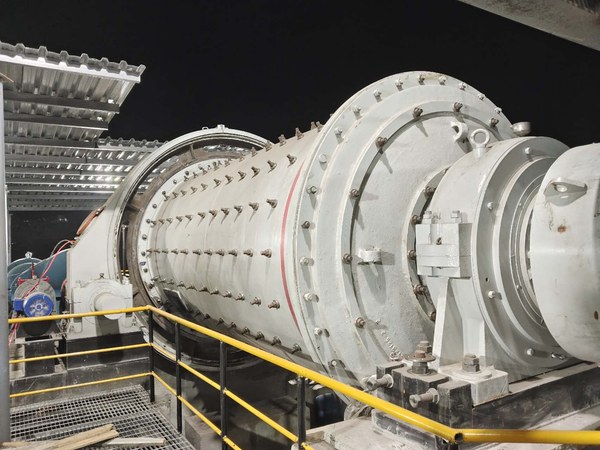
Ball mill on the grinding circuit
Cr2O3 tells a smelter how much chromium arrives. The Cr:Fe ratio tells it how much alloy comes out and how much slag has to be dealt with.
Iron in the concentrate reports to the furnace, consumes carbon and power, and leaves as slag. A concentrate that meets the Cr2O3 number but carries a low Cr:Fe ratio still runs the furnace harder for less metal in the tap. That is why a metallurgical buyer reads the ratio before the grade.
It is also the ratio that beneficiation can move. Chromite is weakly magnetic; the iron-bearing minerals associated with it — magnetite above all — respond far more strongly. High-intensity magnetic separation therefore does two jobs at once: it recovers fine chromite that gravity loses, and it strips the iron carriers that cap the ratio.
Silica is the other limit that decides acceptance. In a submerged arc furnace it adds slag volume, which costs energy for no metal.
Metallurgical specs hold SiO2 near 1%. Chemical and refractory grades allow several percent, and foundry sands can be tighter still, because the physical grade is judged on grain rather than chemistry alone.
Getting silica down is mostly a gravity and magnetics problem. Chromite sits around 4.2–4.8 g/cm3 against 2.5–2.8 for serpentine and talc, so a well-tuned gravity circuit already sheds much of the silicate. Where the silica is fine-grained or locked, magnetic separation takes over — published work on Turkish chromite reports cutting silica from 8% to 2% with high-intensity magnetic separators.
The three grades map onto three separation strategies.
Gravity-led. Suited to coarse chromite where the silica limit is loose. Jigs, spirals and shaking tables carry the circuit, with low reagent cost and no chemicals.
Magnetics-led. Needed when the Cr:Fe ratio is the binding constraint, or when the chromite is fine and gravity recovery drops. A three-stage high-gradient circuit, with scavenger concentrate returning to the cleaner, holds both ratio and recovery.
Flotation-assisted. Reserved for fine dissemination and complex ores where neither gravity nor magnetics gets the silica or the ratio into spec. Reagent cost makes it a last resort rather than a default.
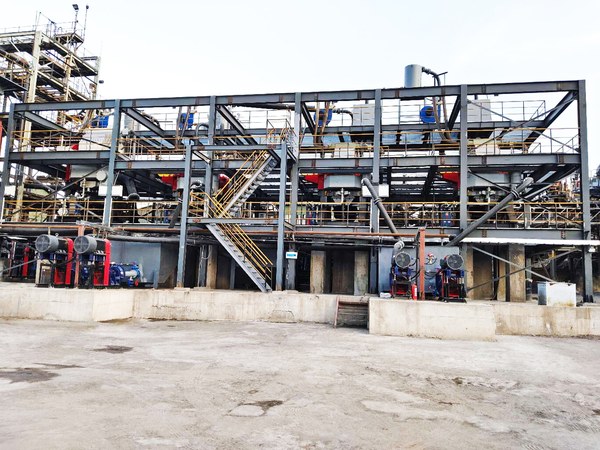
Plant building housing the magnetic and flotation circuits
A South African chrome concentrator shows what changing the separation strategy can do. The plant ran 360,000 t/y on gravity and had drifted: throughput was down, concentrate grade was short of the metallurgical spec, and the ore going into the mill had changed as underground mining went deeper.
Xinhai redesigned the circuit around magnetic separation instead. A vertical ring high-gradient separator runs roughing, cleaning and scavenging, with the scavenger concentrate returned to the cleaner in closed circuit. Fine ore is ground, screened, given a weak magnetic pass to pull tramp iron, then put through the three magnetic stages.
| Measure | Before | After |
|---|---|---|
| Capacity | 360,000 t/y | 480,000 t/y |
| Concentrate grade | Short of spec | Up more than 20% |
| Concentrate moisture | — | Below 15% |
The magnetic tailings were reground to 90% passing 200 mesh and floated in two roughing, two scavenging and three cleaning stages to recover platinum and palladium. That circuit repaid itself in about 18 months, and it is the part of the project a chrome-only flowsheet would have thrown away.
These results apply to that ore and that plant. They are not a guarantee of what another deposit will reach.
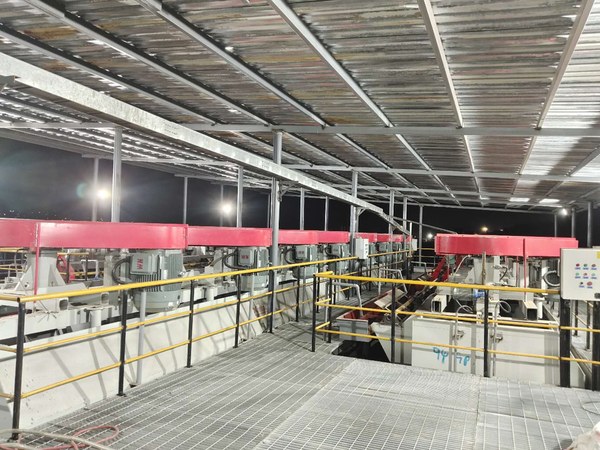
Flotation bank recovering platinum and palladium
It depends on the buyer. Metallurgical concentrate is commonly quoted at 52% Cr2O3 and above, chemical grade around 45%, and refractory grade as low as 30–35% where silica and physical properties are right.
Iron in the furnace consumes carbon and power and leaves as slag. A high Cr2O3 concentrate with a low Cr:Fe ratio still smelts poorly, so metallurgical buyers usually treat the ratio as the primary acceptance test.
Yes, but the separation end point has to be movable. Running separate circuits, or switching set points between campaigns, is normal. Trying to hit two specs at once with fixed settings usually means missing both.
For coarse ore with a loose silica limit, often yes. When the Cr:Fe ratio is the constraint, or the chromite is fine, high-intensity magnetic separation is what moves the number.
A concentrate is only as good as the spec it was designed against.
At Xinhai, we believe the first question is not which equipment, but which buyer.
Share your chromite project with us. Let's start from the concentrate spec you need to sell.
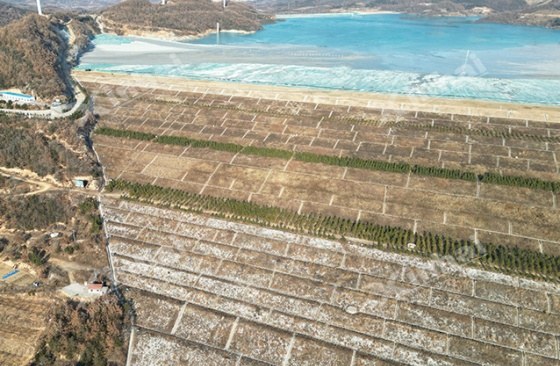
Tailings storage facility
Sources
Chromite concentrate specifications for metallurgical, chemical, refractory and foundry grades (Cr2O3, Cr:Fe, SiO2 limits) — published trade specifications from concentrate suppliers, October 2026. Ranges move with each contract and are indicative, not fixed acceptance limits.
Chromite density 4.2–4.8 g/cm3 against serpentine and talc at 2.5–2.8; silica reduction from 8% to 2% with high-intensity magnetic separation on Turkish chromite — as reported in Xinhai technical documentation on chromite beneficiation.
South African chrome concentrator upgrade (360,000 t/y to 480,000 t/y, concentrate grade up more than 20%, moisture below 15%, magnetic tailings reground to 90% passing 200 mesh, two roughing, two scavenging and three cleaning flotation stages for platinum and palladium, payback about 18 months) — Xinhai project records, Cheetah Chrome SA.
Gravity, magnetic and flotation roles in chromite circuits — Xinhai chrome ore processing documentation and equipment specifications.
 +86 13811510145
