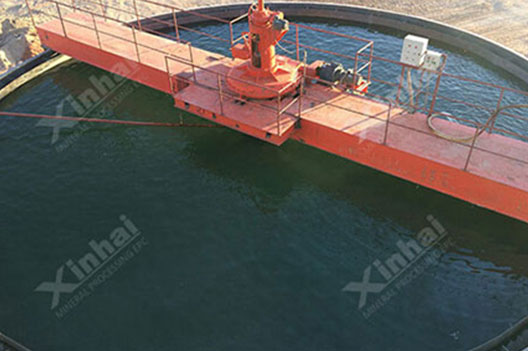
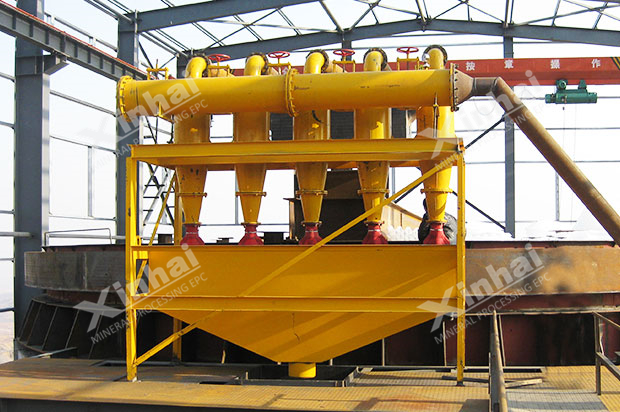
Xinhai tailings re-processing line, with the thought of protecting ecosystem and fully using resources, provide a re-processing for those valuable metal or non-metal tailings. According different property of all kinds of ore tailings, Xinhai can design reasonable process and fully find the value in the tailings.
Iron tailings come in large volumes, fine sizes and variable mineralogy. Recovery draws on magnetic separation, flotation, acid leaching and flocculation, selected against the iron minerals actually present. Magnetic separation suits magnetite-bearing tailings, while hematite and limonite need gravity, flotation or a combined route. The first question is always what iron mineral remains and at what size, because that decides whether a cheap magnetic pass can do the job or a finer circuit is justified.
All-slime cyanidation with carbon-in-pulp recovers gold from gold tailings. The cyanide circuit is paired with dry tailings stacking: classification and dewatering recycle process water while removing cyanide from the solids. Magnetic and gravity separation take out iron ahead of the leach where needed, because iron that reaches the leach consumes reagent without returning gold. Treating the water and the solids together is what makes a cyanide tailing circuit acceptable to run.
Lead-zinc tailings are mostly quartz and sericite. Beyond pond storage, dry stacking and mine backfill, gravity, flotation, magnetic and combined gravity-flotation routes recover the remaining value. Copper tailings with high heavy-metal content respond to flotation; where magnetite is present, acid leaching precipitates the copper before magnetic separation. The choice turns on whether the residual metal is locked, finely disseminated or present as a free mineral, which an assay of the tailing reveals.
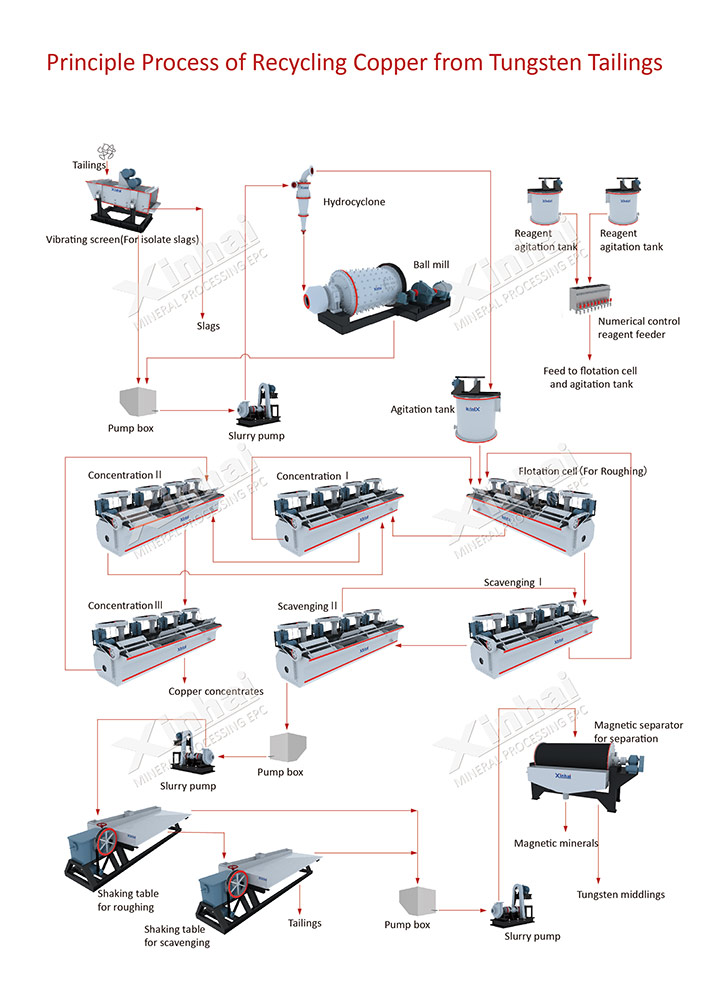
Fluorite tailings are reselected by roughing and repeated cleaning after thorough pulp-reagent mixing. Tungsten tailings are treated by gravity separation in most cases, using spiral chutes and centrifugal separators to rough and shaking tables and flotation to clean. Phosphate, graphite and bauxite tailings each take a route matched to their residual mineralogy. Across all of them the same rule holds: gravity circuits handle the coarse liberated fraction cheaply, flotation takes the fines, and neither is applied until a test shows the value is still there to recover.
The line is organised by tailings type because the same circuit cannot serve them all: iron tailings are treated as a low-grade iron resource, gold tailings as a cyanidation feed with strict water and cyanide control, and tungsten or tin tailings as gravity-recovery duties. Xinhai selects the route from the assay of the tailings, and does not apply a single flowsheet across all of them. An iron tailing with magnetite can go through a magnetic drum at low cost, while a tungsten tailing needs spirals and tables to catch the fine cassiterite or wolframite that a magnetic drum would ignore. Starting from the assay avoids the common mistake of building one reprocessing line and expecting it to pay on every stream in the plant.
 +86 13811510145