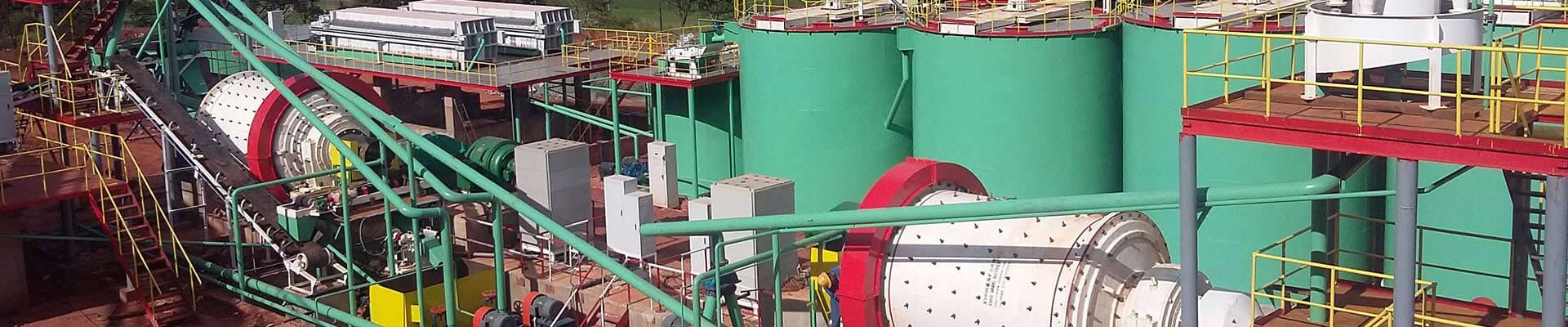
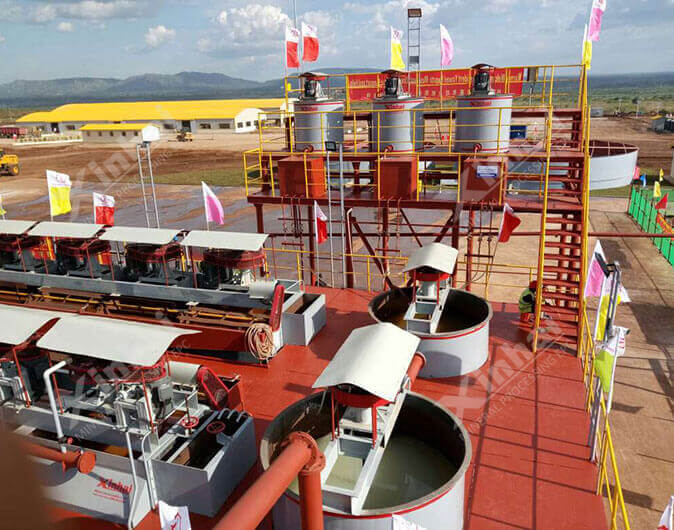
The ore consisted of iron, phosphorus and other metallic elements as well as loose igneous carbonatite weathering residue and hypergenesis-based crandallite and argillaceous hematite clay. The existence of huge slime caused difficulty in the separation and purification of apatite and magnetite. All minerals were inter-wrapped and associated so that liberalization was difficult. The isomorphism was dominant as titanium, iron, manganese, aluminum and magnesium lattices replaced each other. As a result, the ore composition was much complicated....
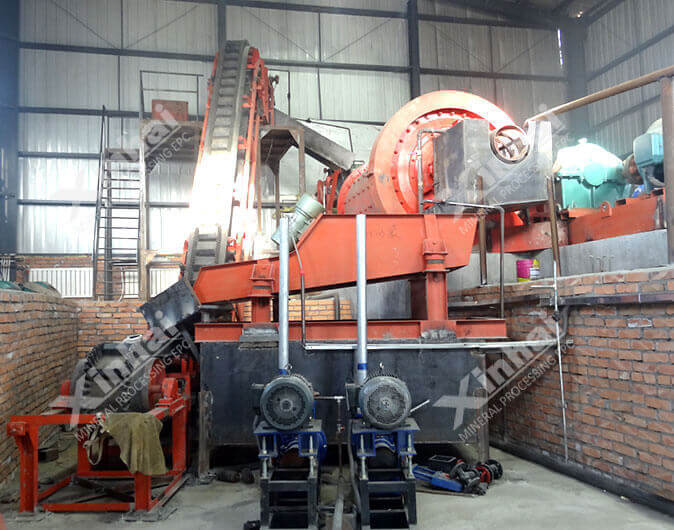
The raw ore was tungsten ore with a WO3 grade of about 7% which was ≤200mm in size and had medium hardness. The slime and water contents were both smaller than 6%. The grinding fineness was -1mm because tungsten was not liberalized in the fraction of over 1mm....
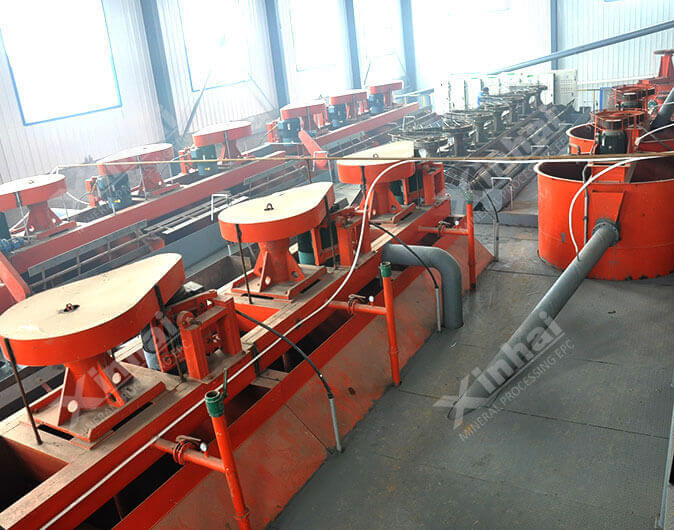
The original plant produced poor economic results due to inappropriate capacity, low raw ore grade and concentrate yield and high product costs. It adopted a two-stage open-circuit crushing process where small-scale crushing equipment was used and a one-stage closed-circuit grinding process comprising the ball mill and single spiral classifier. In the crushing stage, the product was coarse in size, which violated the principle of crushing more and grinding less. In the grinding stage, the grinding fineness was -200 mesh (92%), meaning that energy consumption was large and affected separation indices. The grade of final molybdenum concentrates was 39.58%. Compared with other similar projects, the concentrate grade was relatively low....
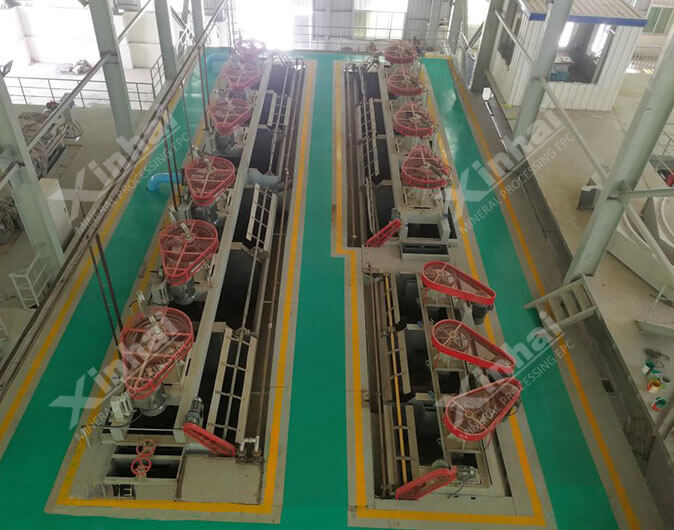
The raw ore was characterized by simple composition. It consisted of metallic minerals (copper pyrite and pyrite) and non-metallic minerals (quartz and chlorite). The multi-element analysis results showed that Cu was the valuable element. The Cu grade of the raw ore was 0.80%....
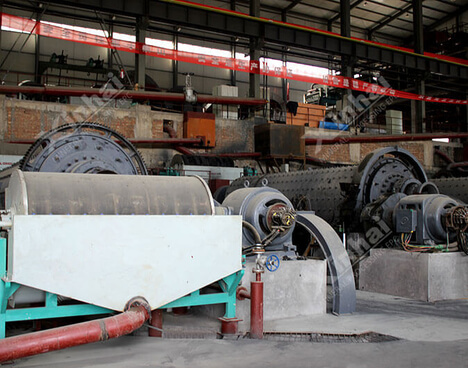
China Shanxi 1200t/d iron ore beneficiation project is a full mining industry chain service (EPC+ M+O) project....
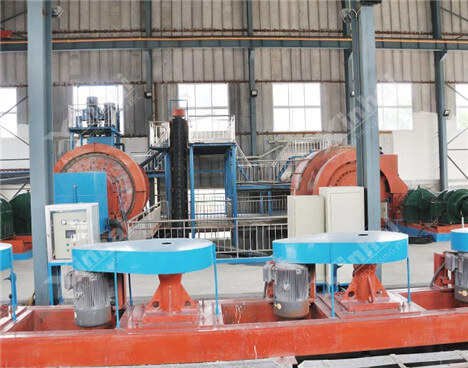
The deposit was characterized by standard minerals. There were repeated different stages of mineralization featuring an extreme low grade of sulfide. The raw ore consisted of metallic minerals (silver-gold ore, gold ore, blende, galena and hematite) and gangue minerals (quartz, sericite, feldspar, calcite, chlorite, zircon and apatite). The major deficiency of the deposit was the existence of the 5-20cm thick fault which distributed along the main crack. The ore was in the form of dark grey and off-white slime....
 +86 13811510145
